The Langtang Gosaikunda Trek is a highly rewarding Himalayan journey that combines cultural immersion, sacred lakes and monasteries, and scenic landscapes in one trail. This trek is one of the diverse trekking routes that offers a balanced mix of spiritual significance, natural beauty, and adventure.
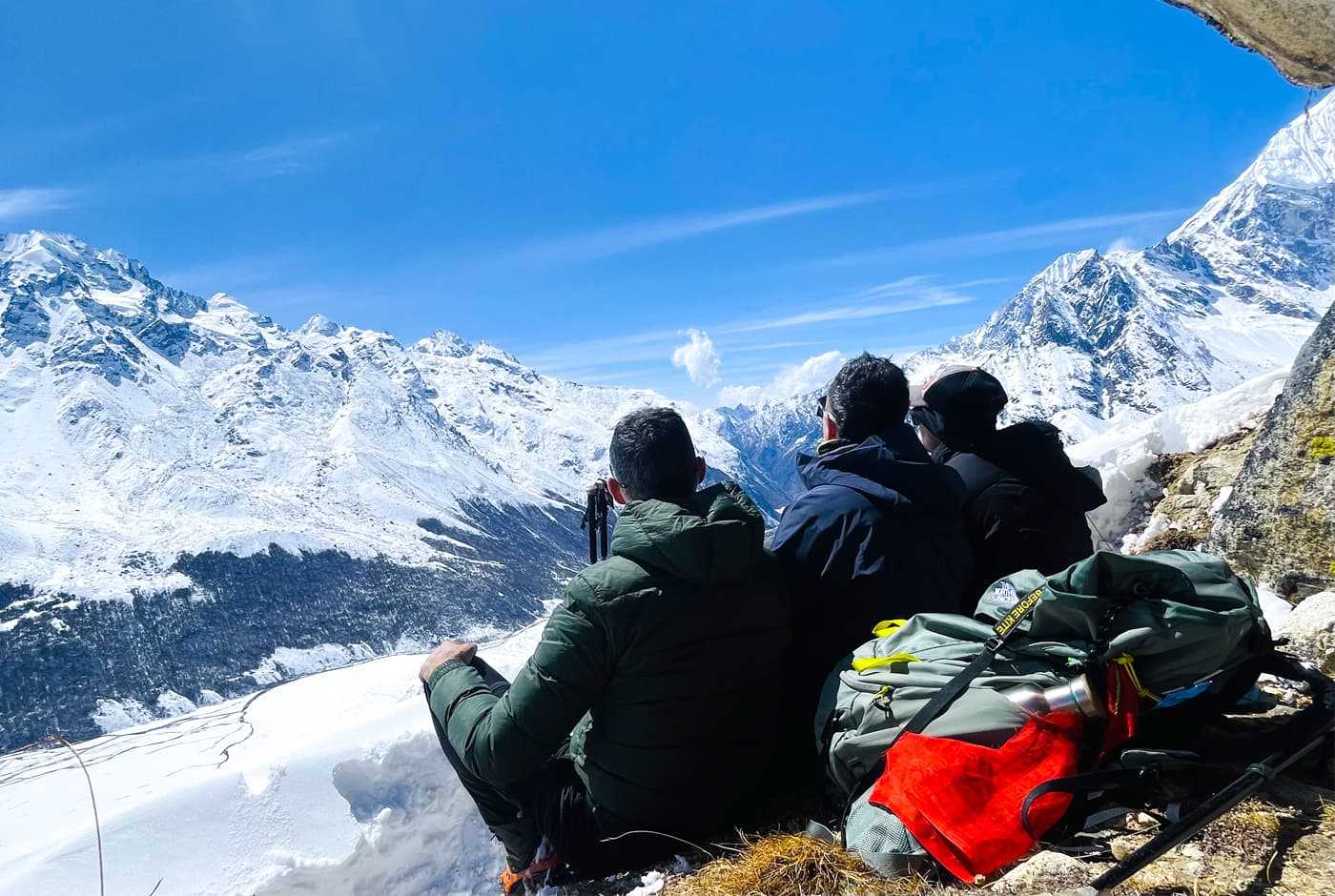
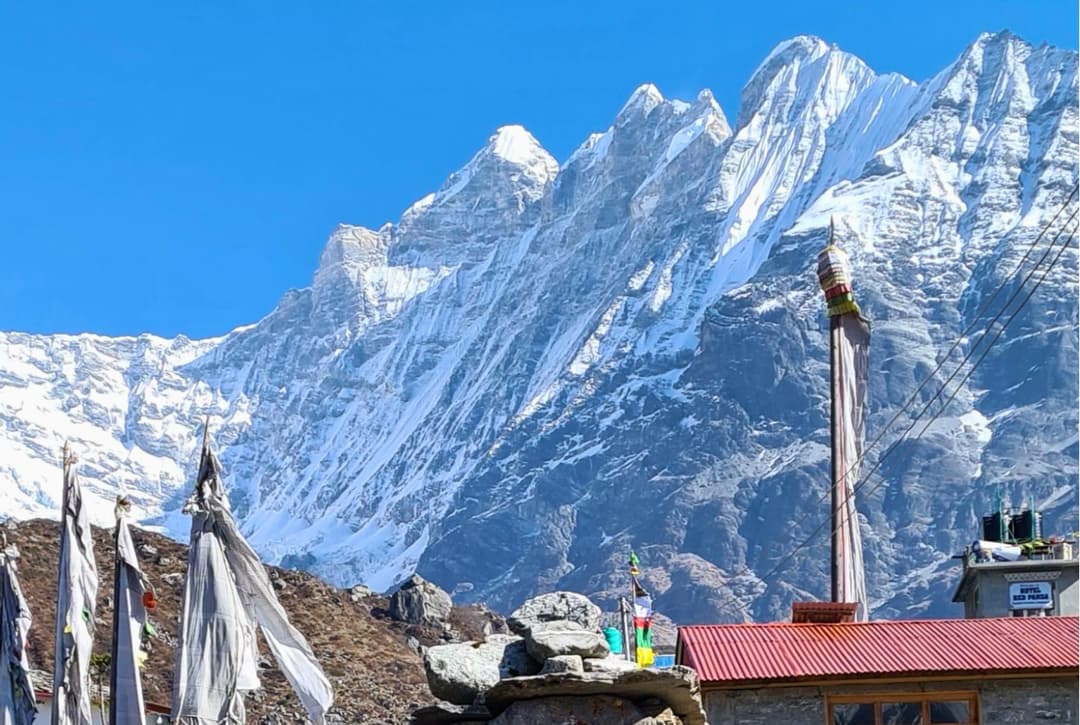
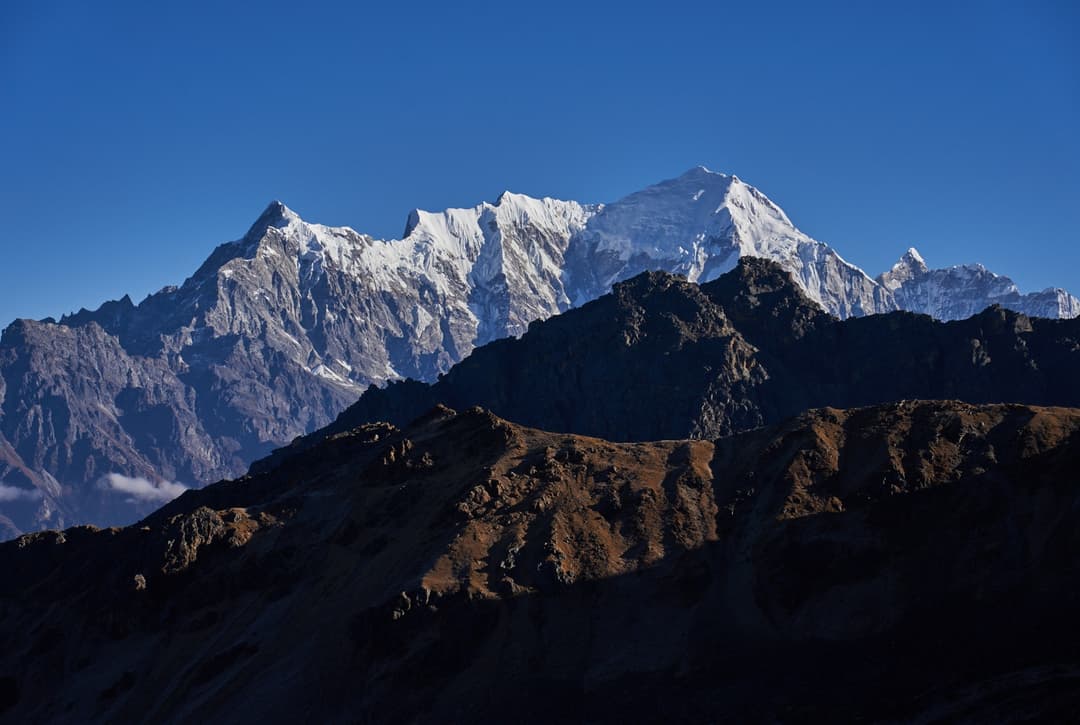
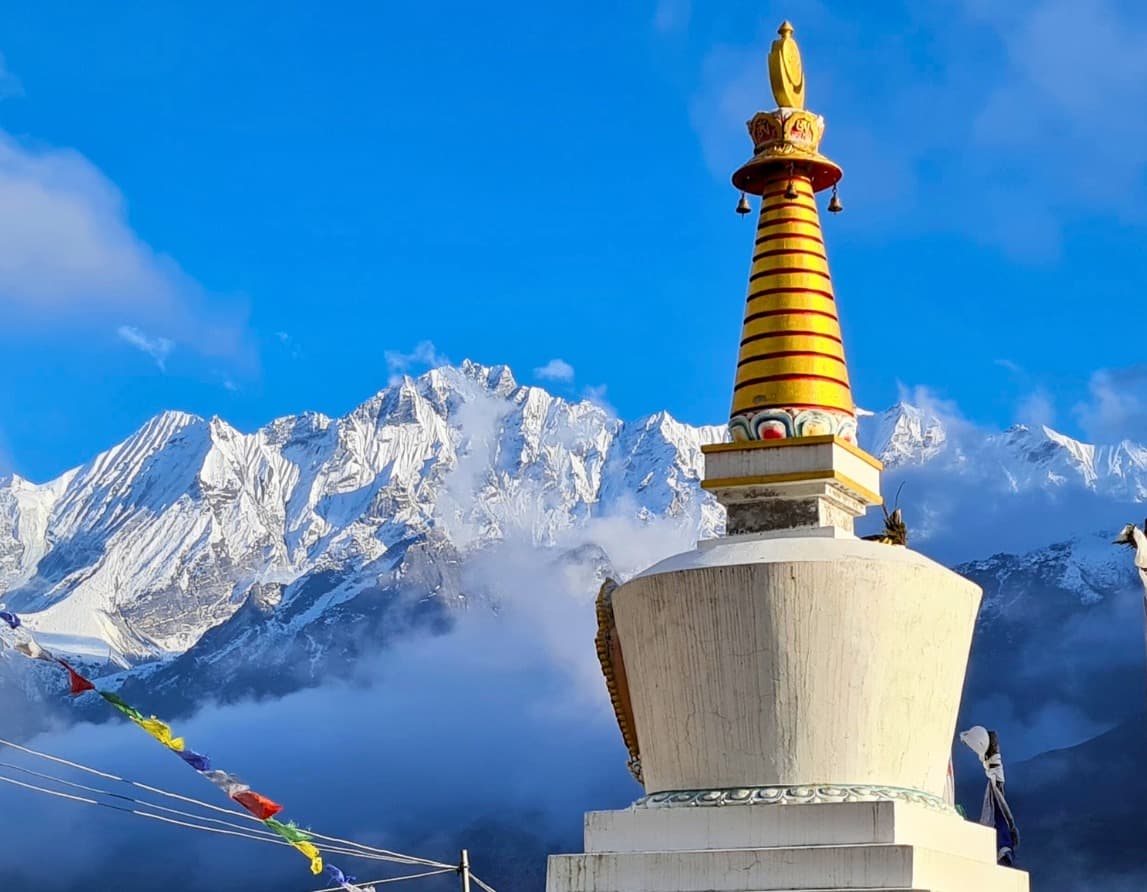
The trail lies within Langtang National Park and passes through subtropical forests, traditional villages, alpine lakes, and glacial rivers. The journey offers close-up views of Langtang Lirung, Dorje Lakpa, and Ganesh Himal, with an optional hike to viewpoints such as Cherko Ri and Kyanjin Ri.
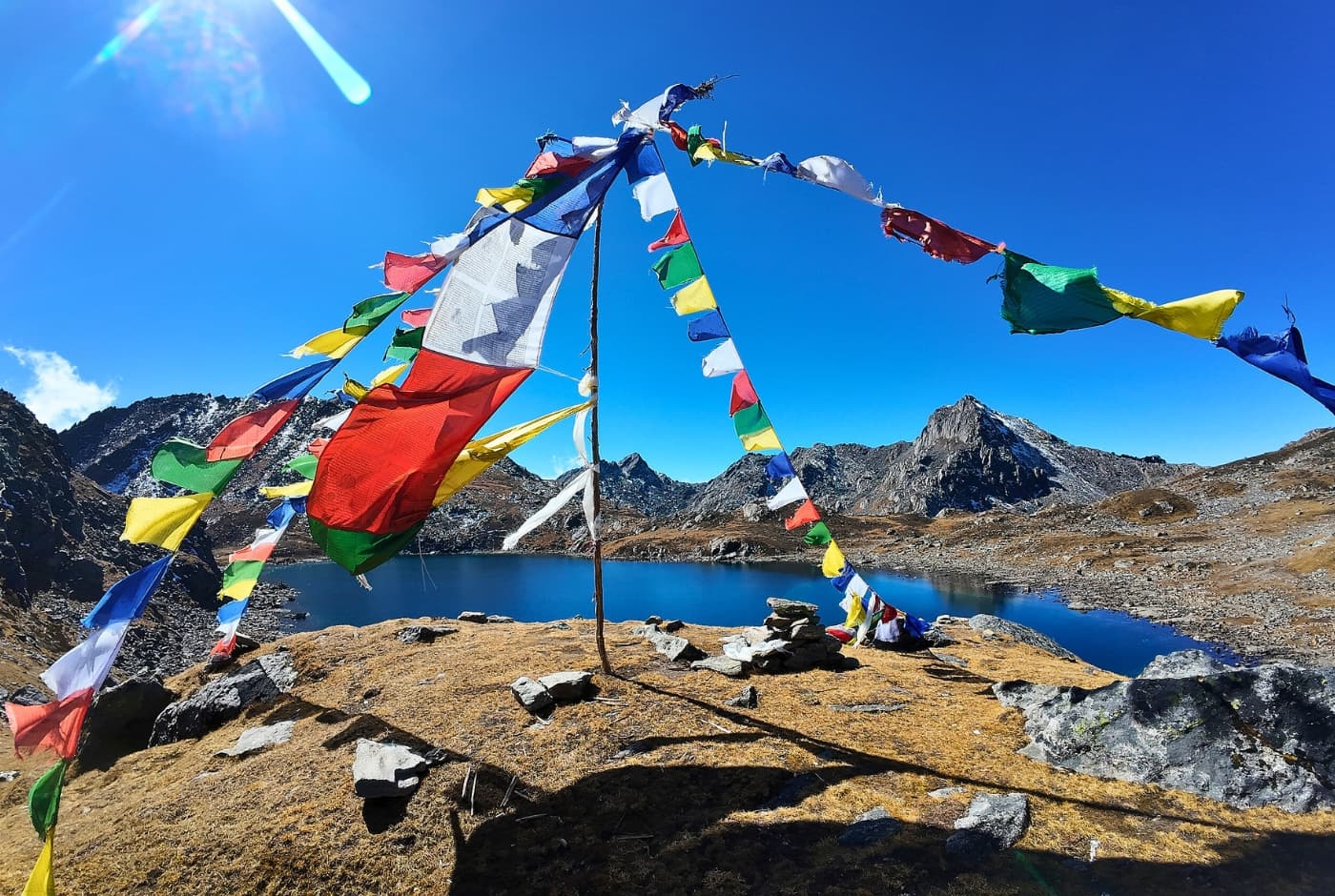
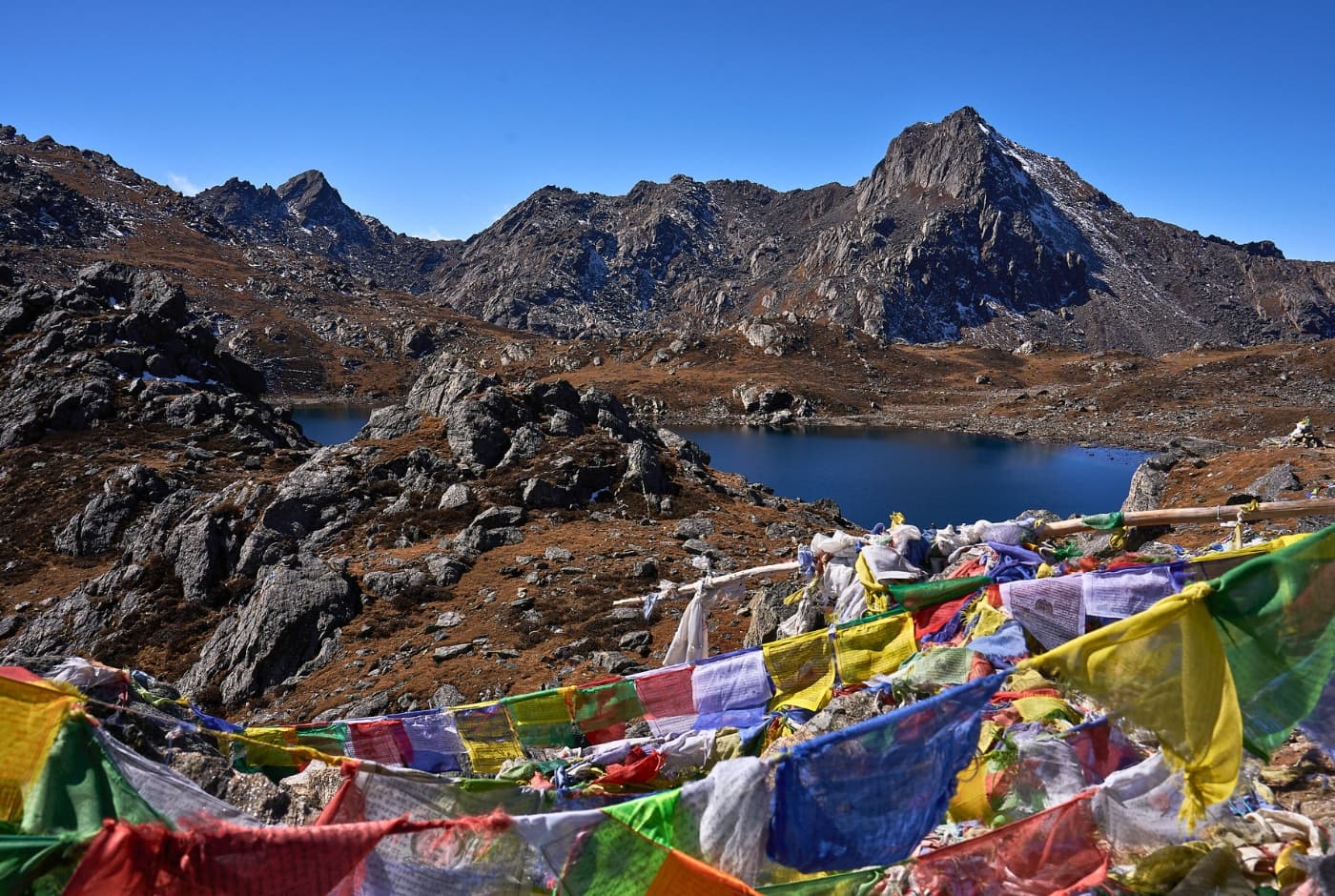
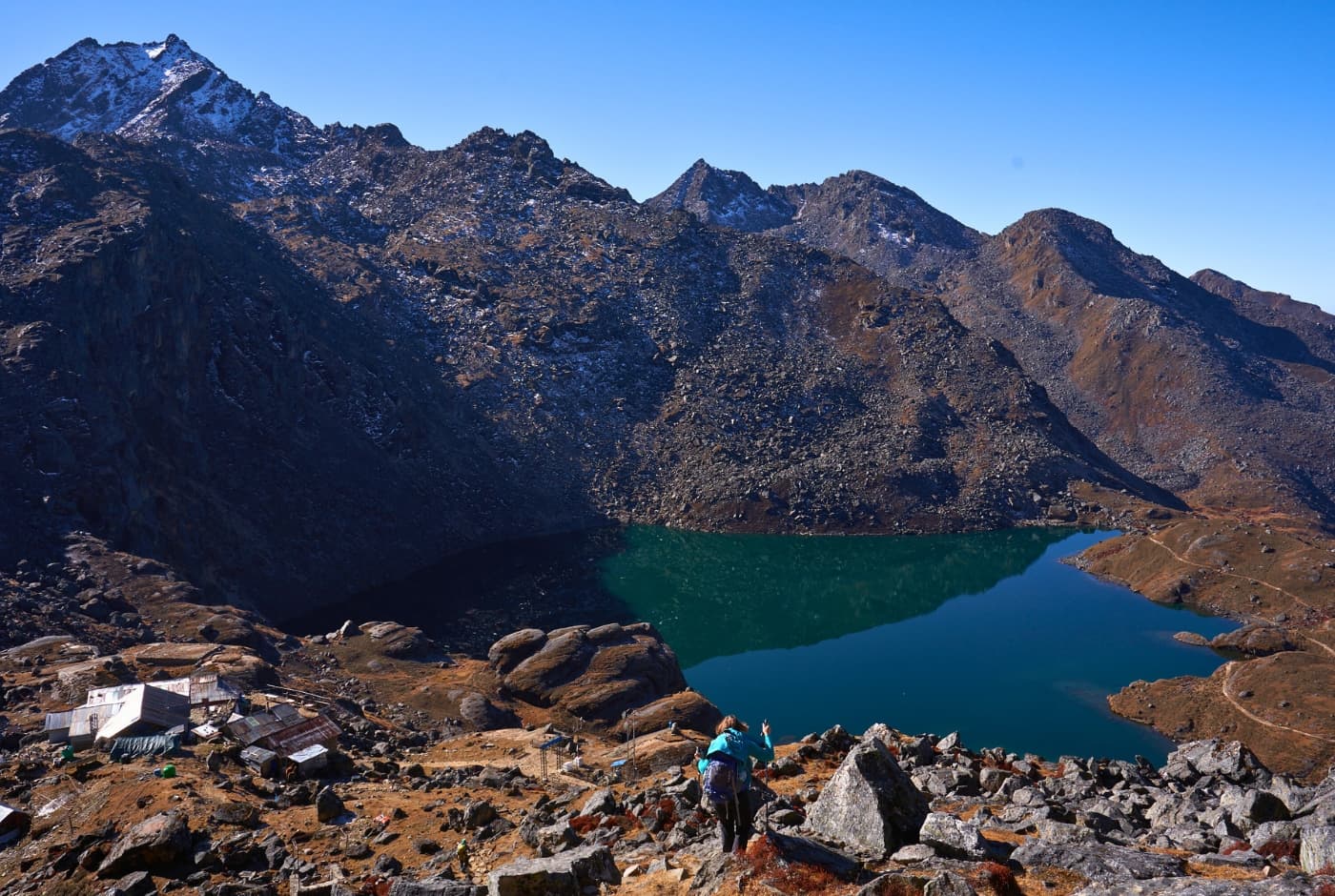
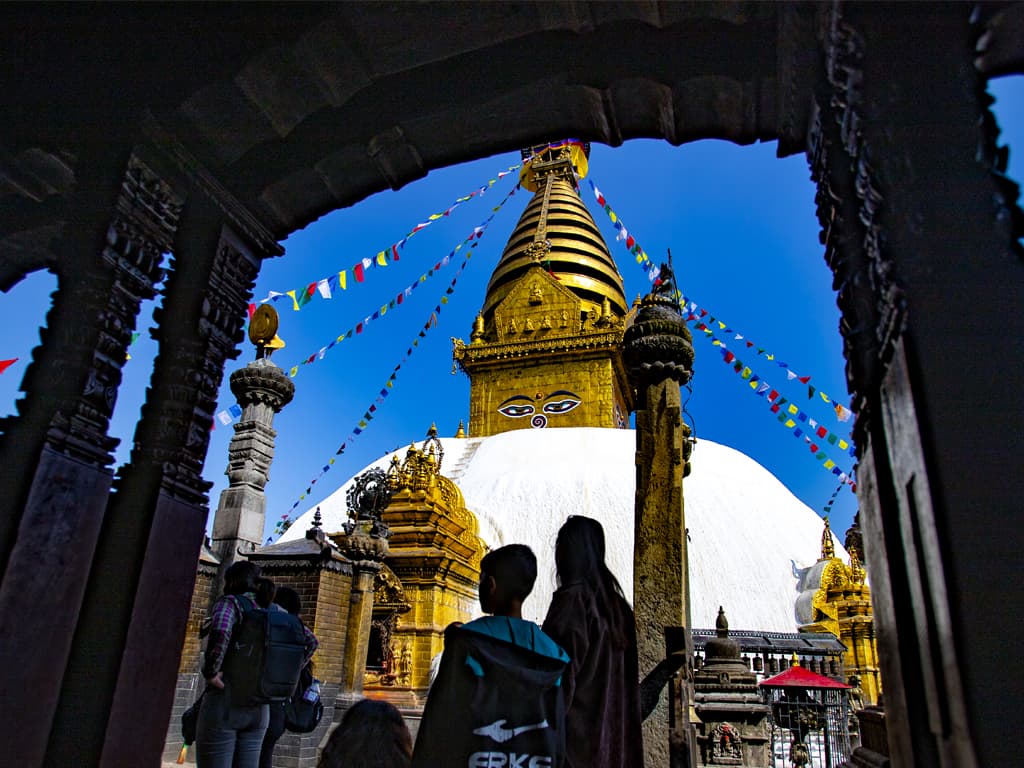
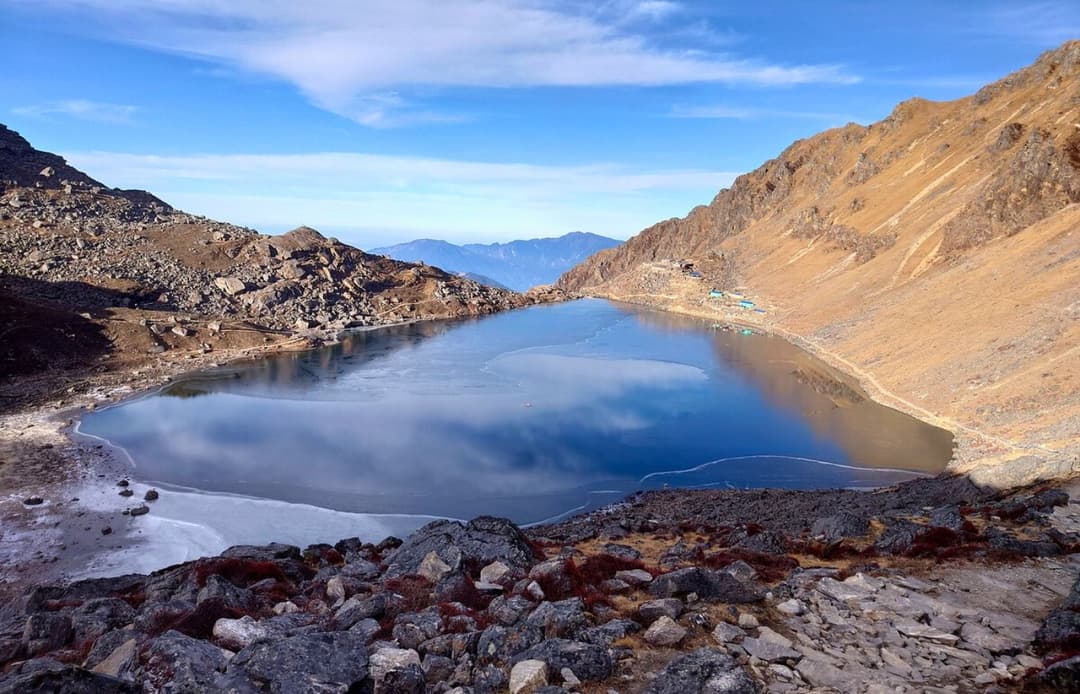
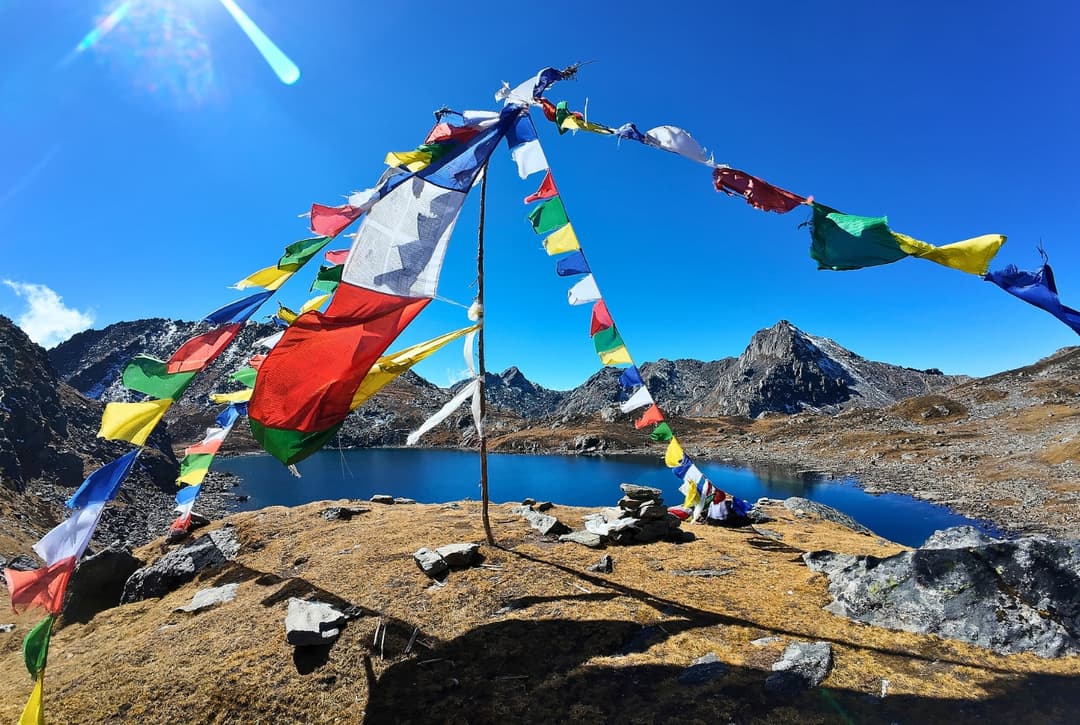
Near the Gosaikunda Lake region, the landscape transitions to rugged alpine terrain. The turquoise lake adds spiritual significance to the trek and is revered as the holy abode of Lord Shiva and Gauri. In short, the Langtang Gosaikunda Trek is ideal for trekkers seeking diverse scenery, rich culture, and up-close views of the Himalayas, with a quieter trail experience.
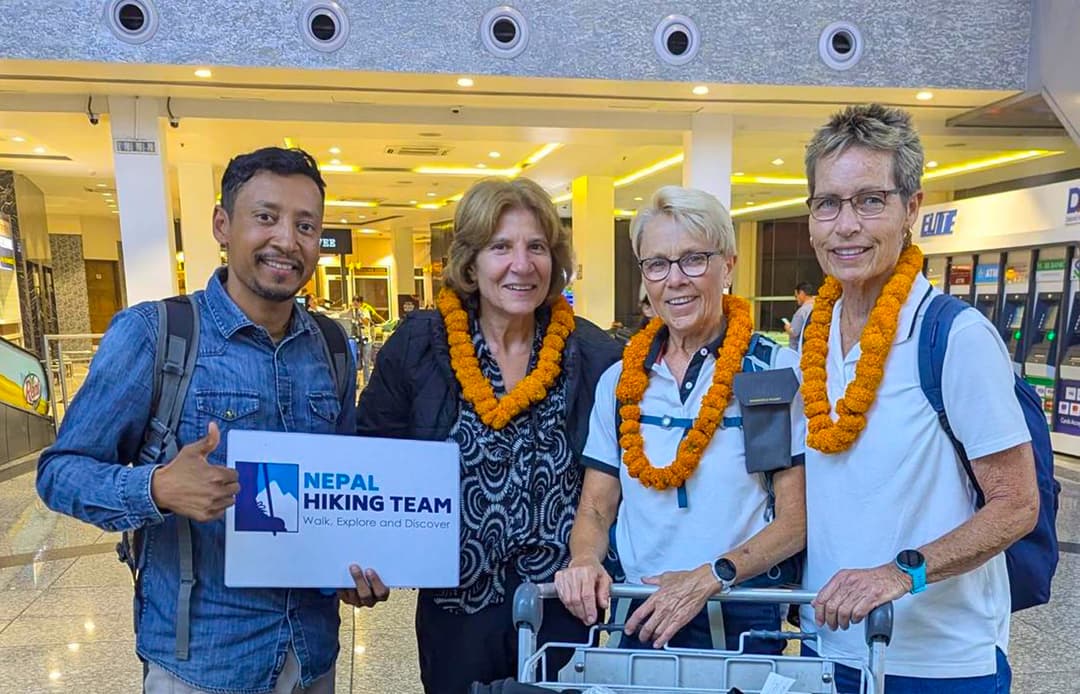
Your Langtang Gosaikunda Trek starts the day you arrive at Tribhuvan International Airport. Our guide will assist you at the airport and transfer you to the designated hotel for a short pre-trek briefing.
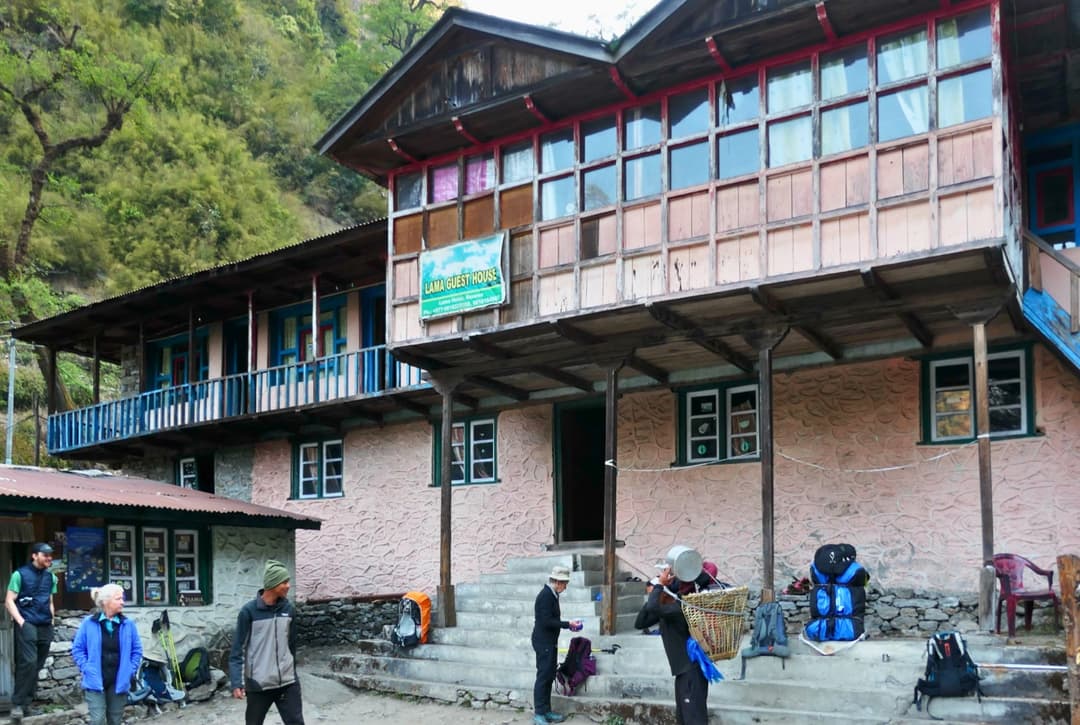
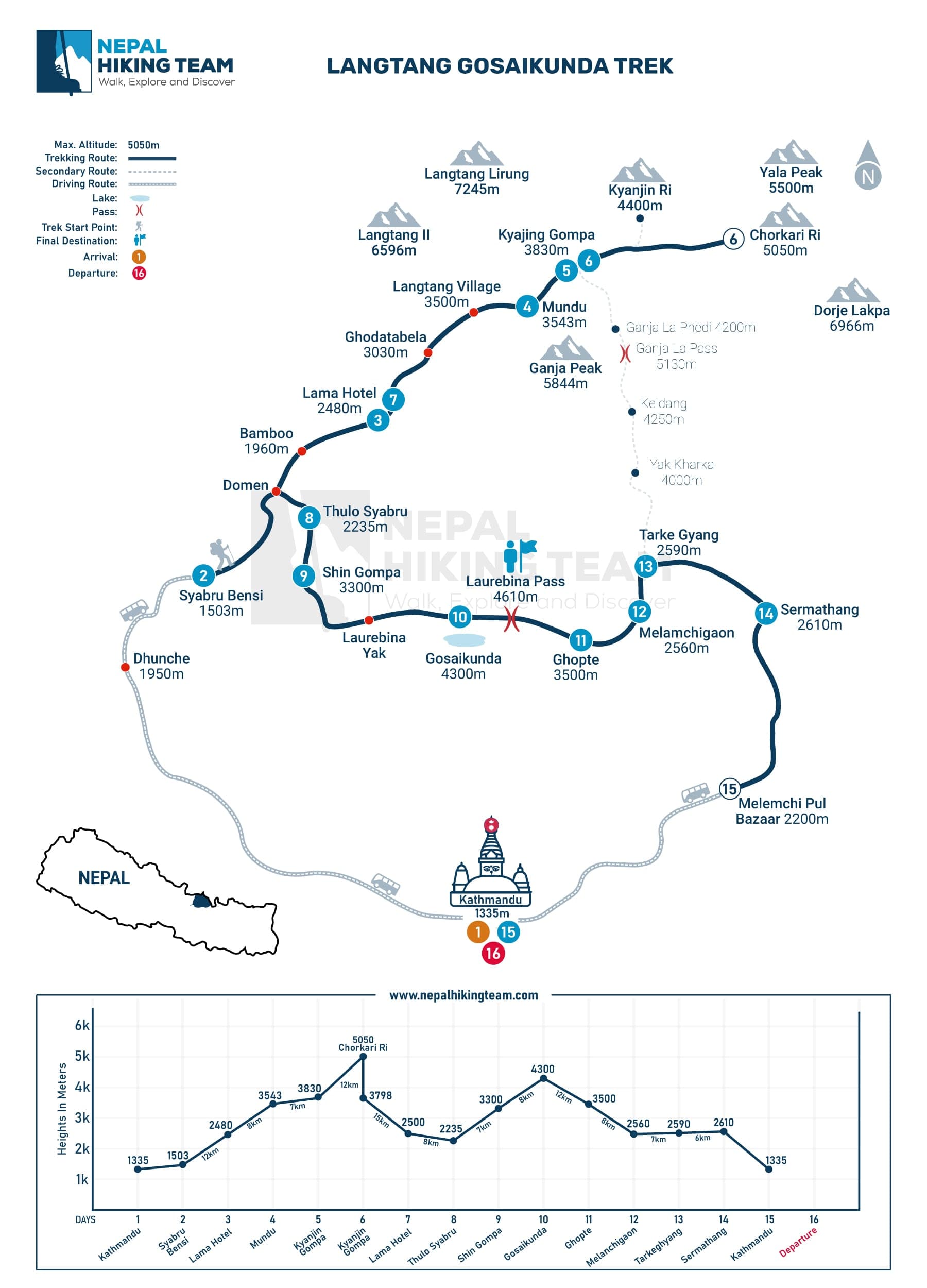
The journey begins with a scenic drive from Kathmandu to Syabrubesi, the trek's trailhead. The journey continues along the Langtang River and through forested trails deep into the national park to Lama Hotel.
The trail passes through Tamang settlements and alpine terrain en route to Langtang Valley and Kyanjin Gompa, offering close mountain views. From Langtang, the route enters the Gosaikunda region, passes a series of sacred glacial lakes, and crosses high passes such as Lauribina La.
From here, the trails descend into the Helambu region, where forests are greener and vegetation is more lush. The journey continues through the Helambu region, passing Melamchi Gaun, Tarkeghyang, and Sermathang, and ultimately returning to Kathmandu. This concludes your 16-day trek through the Langtang Gosaikunda region, and your departure marks the end of your trip.
You can opt for shorter alternative treks listed below if the Langtang Gosaikunda Trek feels too long.
| Trip Name | Duration | Difficulty | Price | Key Feature |
| Langtang Valley Trek | 10 Days | Moderate | $750 | Visit the Swiss-founded Yak Cheese Factory in Kyanjin Gompa (3,870m), a unique cultural and alpine highlight. |
| Tamang Heritage Trek | 14 Days | Moderate | $920 | Includes a homestay experience in Briddim to immerse in authentic Tamang culture and rituals. |
| Helambu Trek | 9 Days | Easy to Moderate | $780 | Summit Ama Yangri (3,771m), the trek’s highest point, for panoramic Himalayan views. |
The listed price is the per-person cost for trekkers on the minimum two-person package with Nepal Hiking Team. Costs can be lower for larger groups and higher for solo trekkers.
Choosing the right travel company for the Langtang Gosaikunda Trek is crucial to a smooth, adventurous trekking experience. The route combines subtropical forests, remote valleys, high-altitude lakes, glaciers, and demanding mountain passes, requiring proper planning and local guide expertise.
At Nepal Hiking Team, we provide a carefully structured itinerary that balances acclimatization and adventure. Poorly managed treks can lead to missed highlights, unnecessary stress, and altitude sickness. Trekking with our professional guides, who have local expertise, ensures safety and comfort throughout the trek.
Our guides are professionally trained for medical emergencies and altitude sickness, and are familiar with Langtang's terrain, culture, and seasonal challenges. With expert knowledge, logistics, and flexible pacing, NHT helps trekkers experience a secure and unforgettable Himalayan adventure.
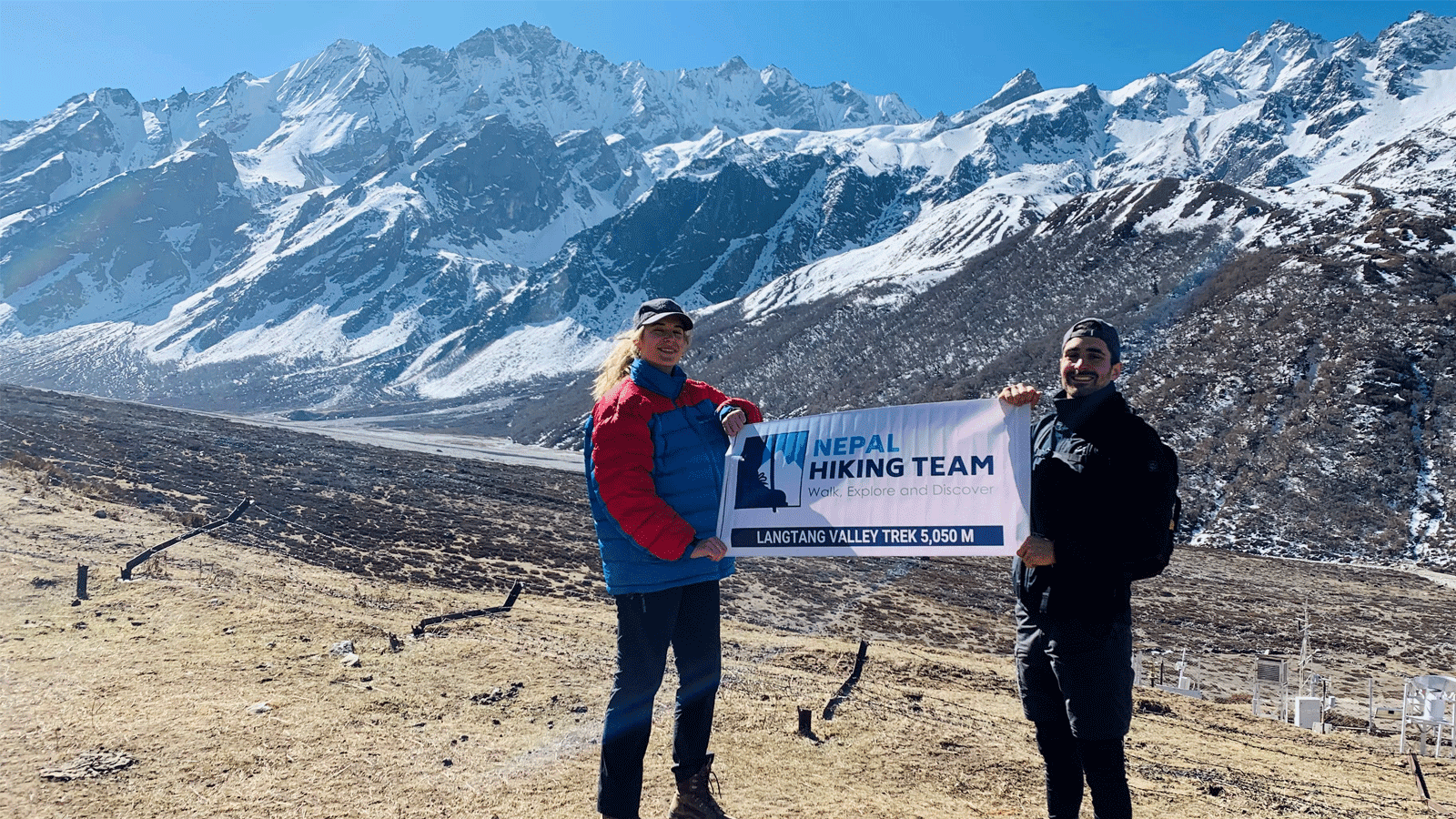
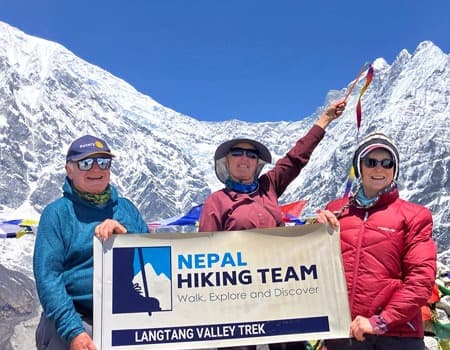
You will meet staff from NHT waiting for you at the airport. For the recognition, they will be holding the “Nepal Hiking Team” banner with a welcoming smile. They will transfer you to the hotel for the trip. At the Hotel, we will conduct a pre-briefing session to explain to you about the trek. Afterwards, there is no scheduled activity for the day, so you may take a rest or stroll around the markets of Thamel.


The following day, your guide will pick you up from the hotel and take you to the bus stand for a 6 to 8-hour drive to Syabru Besi. This is the trailhead for your 16-day trekking journey through the Langtang region.
Throughout the drive, you will travel along the Trisuli River’s bank, witnessing terraced farmlands, roadside settlements, green hills, and Ganesh Himal.
Upon arrival at Syabry Besi, we will check you in at the guesthouse that we pre-booked. You will spend the night here and prepare for the trek with warn meal.


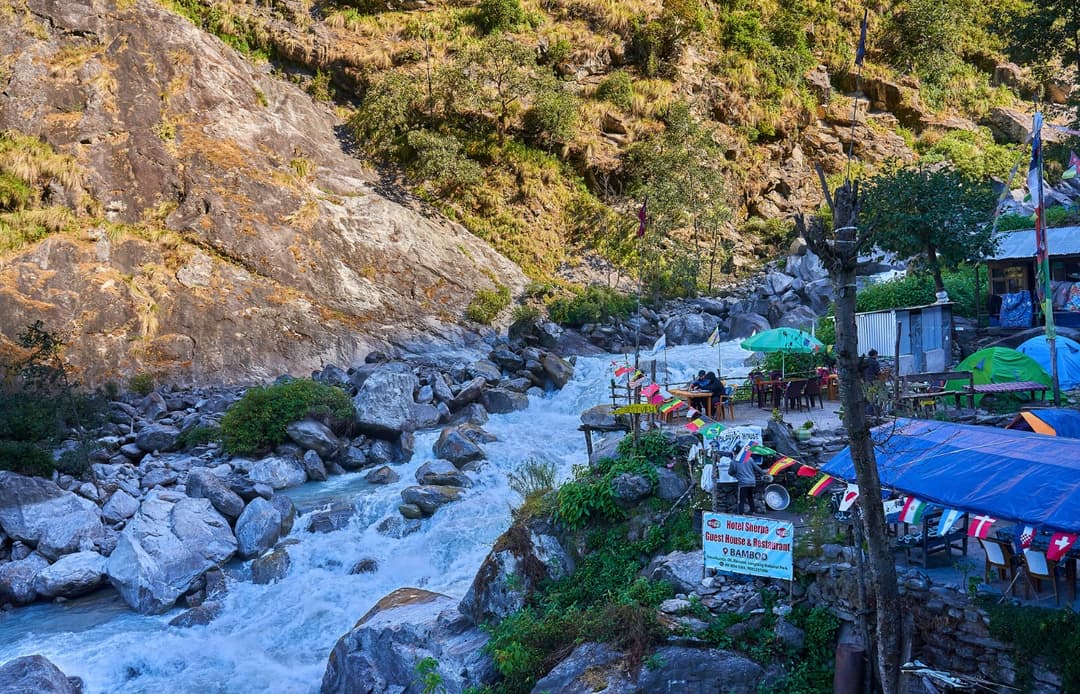
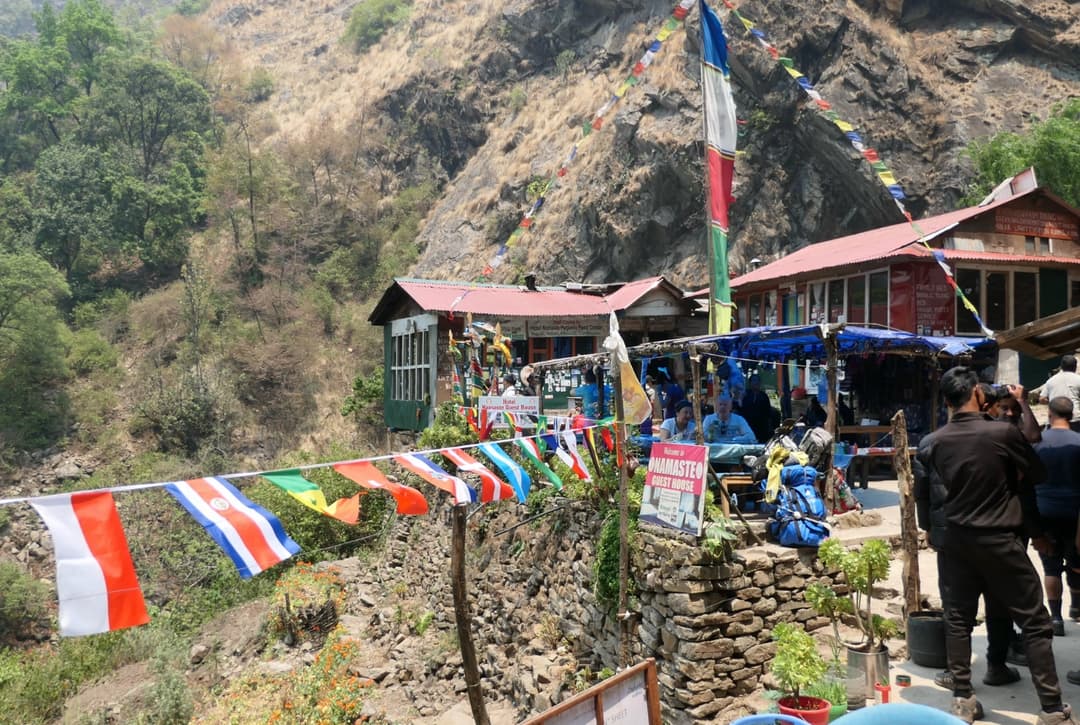
From Syabru Besi, you will start the trek along the Langtang River, passing through lush bamboo and rhododendron forests along the Bhote Koshi River. The trail is 11-12 km long and passes through small stone houses, the unique Tamang culture, and suspension bridges.
You will gradually ascend to the local village of Ramche, a popular stopping point along the route for a short break. Continuing your journey, you will spend the night at Lama Hotel, enjoying warm meals and the surrounding views of snow-capped peaks.


Today’s route is 7-8 km long and passes through Gumanechok and Ghodatabela. The Ghodatabela, which translates to “Horse stable” or “Horse pasture,” is a popular landmark along the trail.
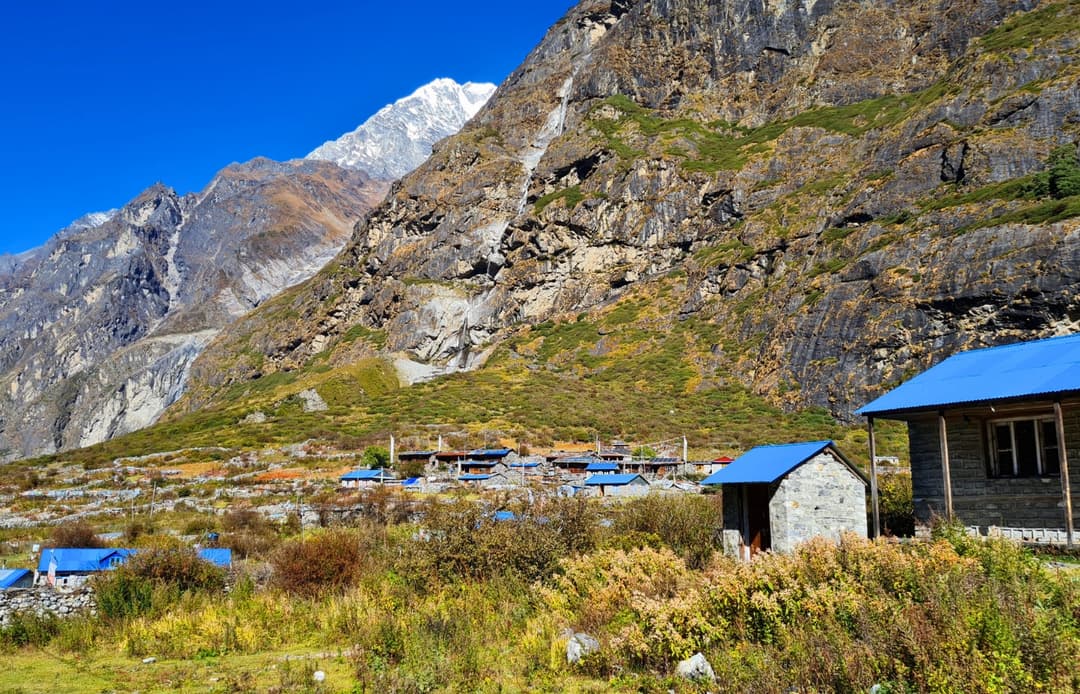
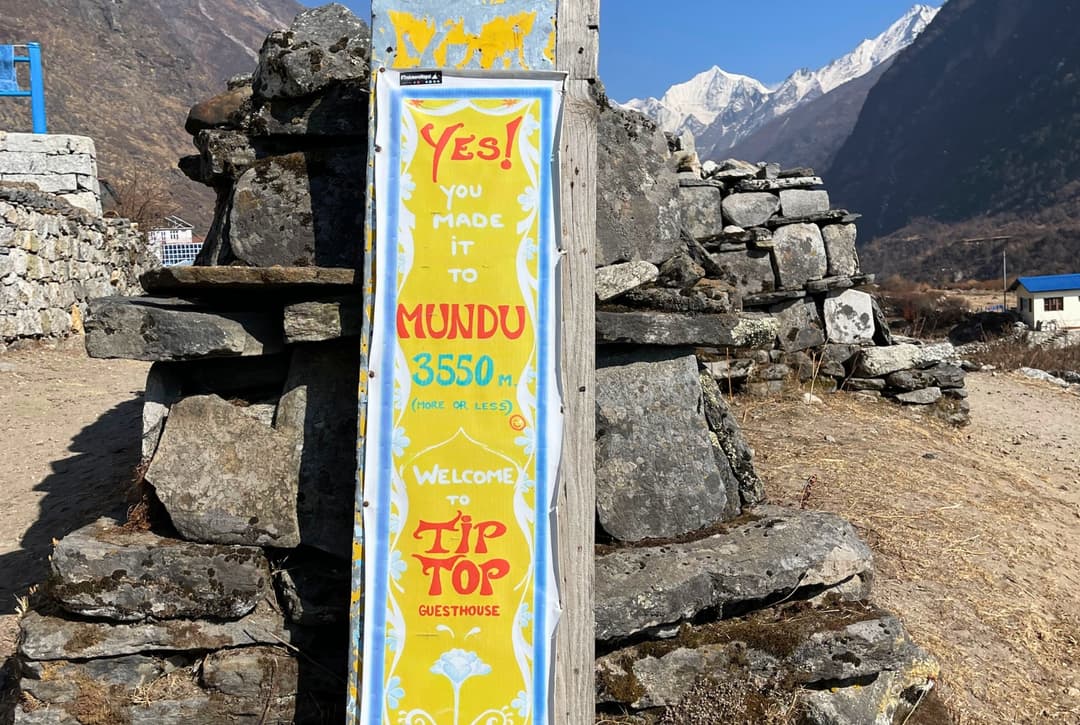
In addition, the route climbs through open ridges and forest to Mundu, your overnight stop. Mundu is a quiet village at 3,543 m, offering close-up views of Langtang Lirung (7,227 m) and its massive glacier. This settlement is approximately 30 minutes from Langtang village.


After a hearty breakfast at the guesthouse, we will continue our trek toward Yamphu, passing through suspension bridges over the Laja Khola River and Sindum village. Today’s 3 to 4-hour trek leads you to Kyanjin Gompa (3,830 m), the heart of the Langtang Valley.
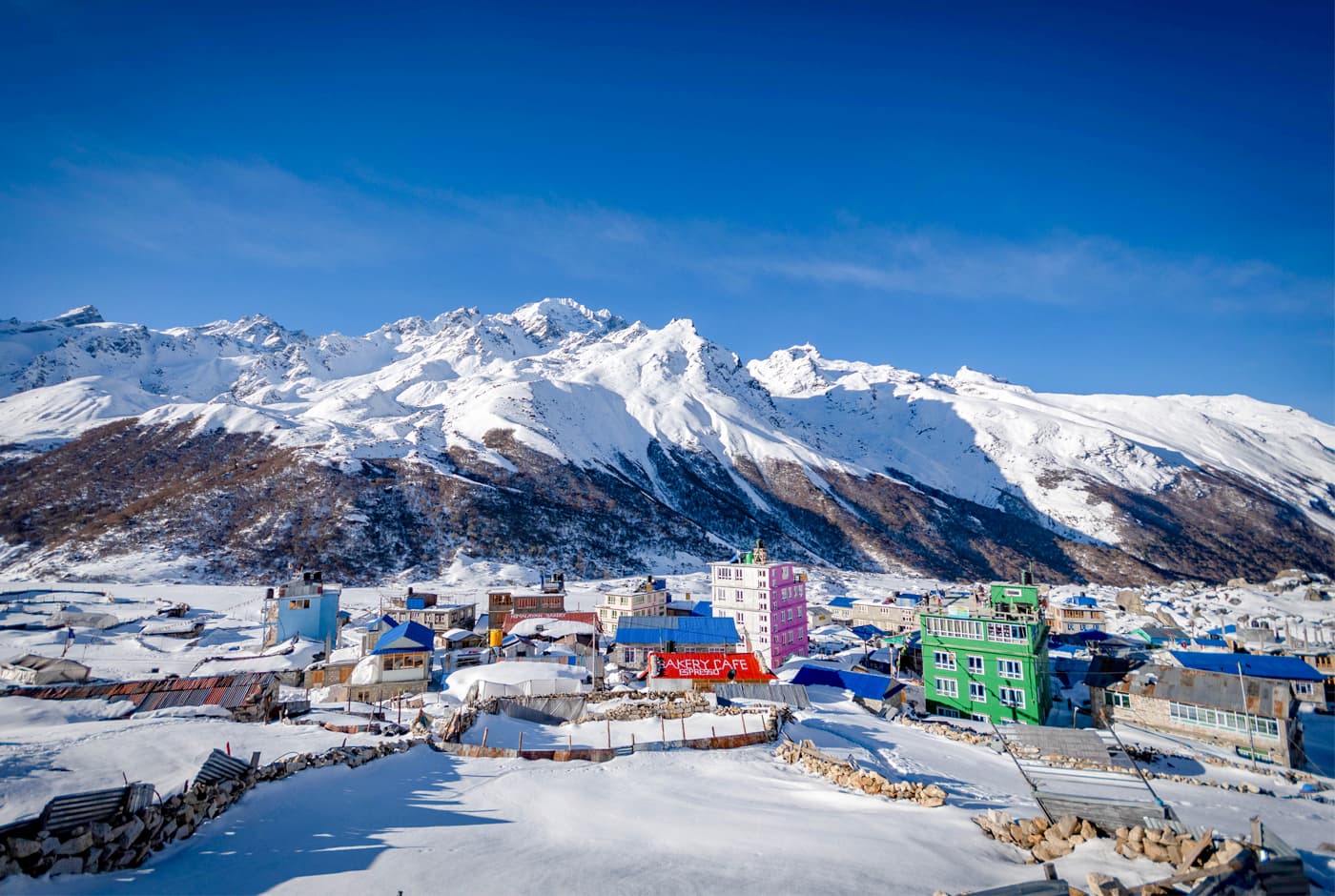
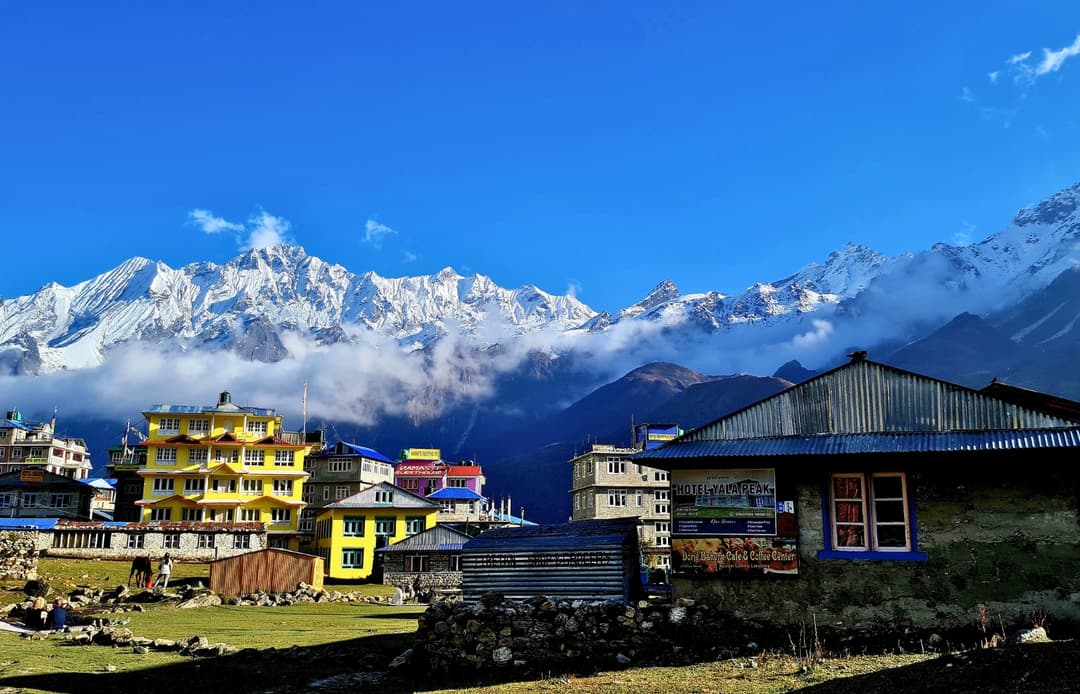
The serene village is surrounded by the Langtang range, offering an up-close experience of the Tamang people and culture, Tibetan-influenced Buddhist traditions, and a close-knit mountain lifestyle. This settlement is known for yak cheese production, an ancient monastery, and the peaceful Himalayan environment.


After 5 days of walking, you will spend the first day acclimatizing and relaxing around the village before heading back. You can explore the village, local cheese factory, experience local cuisine, or take a short hike up to Chorkari Ri (5,050 m).
Chorkari Ri is the highest point on this trek and offers a close-up view of Langtang Peak. These acclimatization hikes help trekkers adapt to altitude without overexertion, making the descent safer and more enjoyable.


Your guide will lead you back to Lama Hotel, covering approximately 14-15 km. Although you’re retracing your steps, passing through valleys, rivers, and forests offers a new perspective and scenery along the trail.
This 5 to 6-hour rewarding descent helps you prepare for the Gosaikunda section of the trek. Overall, the descent is equally relaxed, reflective, and scenic, providing satisfaction upon completing the high-altitude portion of the Langtang side.


The trail gently descends through the forests, terraced fields, villages, and scenic landscape toward Thulo Syabru. You can feel the air warming and becoming denser as you walk toward the lower altitude for the night.
Throughout the 5 to 6-hour descent, you can encounter endangered Red Panda, if lucky, and varieties of other wildlife. Overall, this 7-8 km journey is immersive and peaceful, combining natural beauty, cultural immersion, and an up-close look at the Tamang lifestyle.


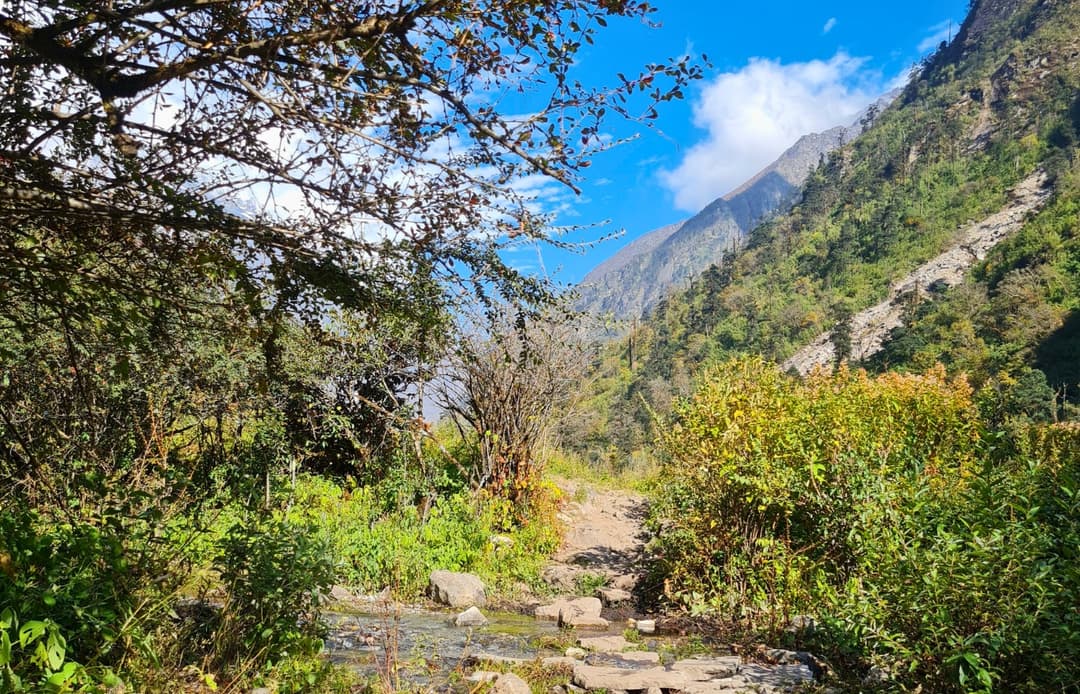
From Thulo Syabru, you will continue your trek toward Shim Gompa (3,300 m), transitioning from lower-forested valleys to higher alpine landscapes. The trail becomes rockier as you continue your ascent, passing through dense rhododendron and pine forests.
As you walk, you will catch a glimpse of the Langtang Himal and alpine scenery. After a 3 to 5-hour hike, you will reach Shin Gompa, a small Buddhist settlement, and spend the night here before heading deeper into the Langtang National Park.


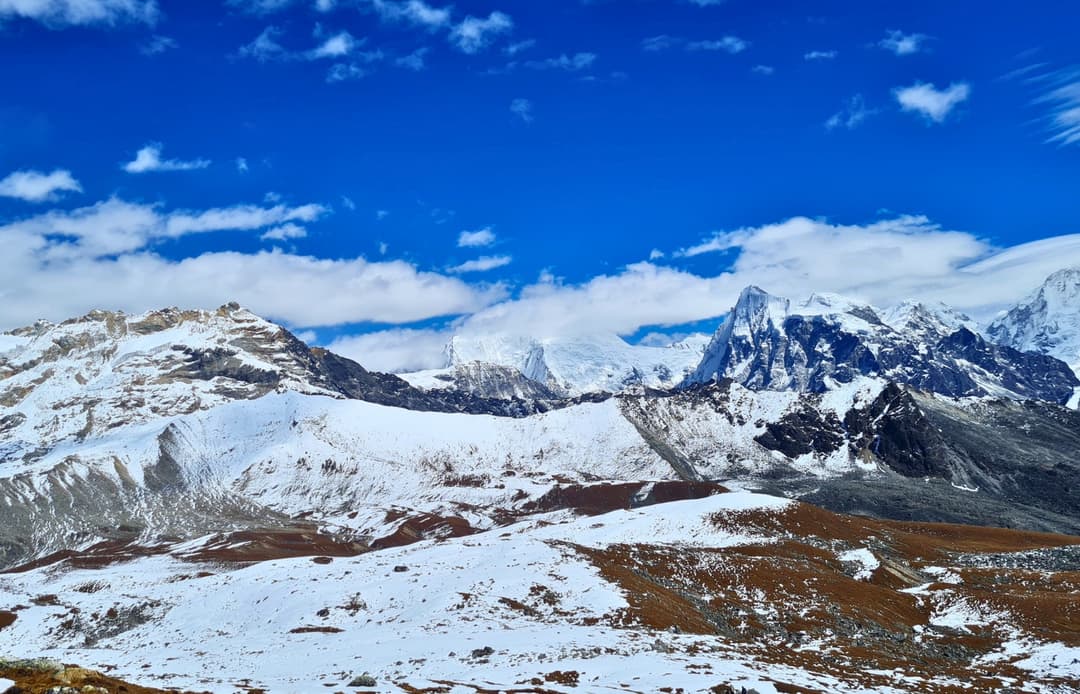
Starting from Shin Gompa, you will continue toward Gosaikunda, the holy lake said to be created by Lord Shiva. The trail gradually ascends from the settlement to high-altitude alpine meadows and rugged terrain, with scattered glaciers and surrounding peaks.
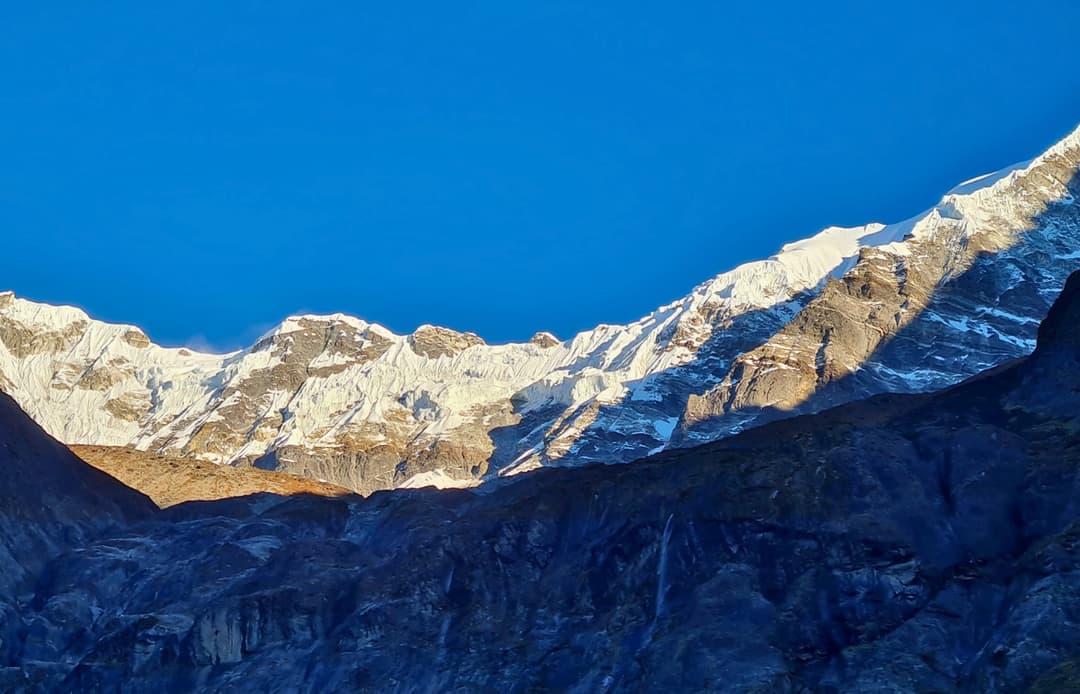
From the lake, you can witness snow-kissed peaks, including Langtang Lirung, Ganesh Himal, and Manaslu, with a glimpse of Paldor Peak and Ganchenpo. The entire journey is 7-8 kms long and takes about 5-6 hours to complete at a steady pace with proper acclimatization. You will stay at a pre-booked teahouse near the lake and enjoy a 360-degree view of the mountains.


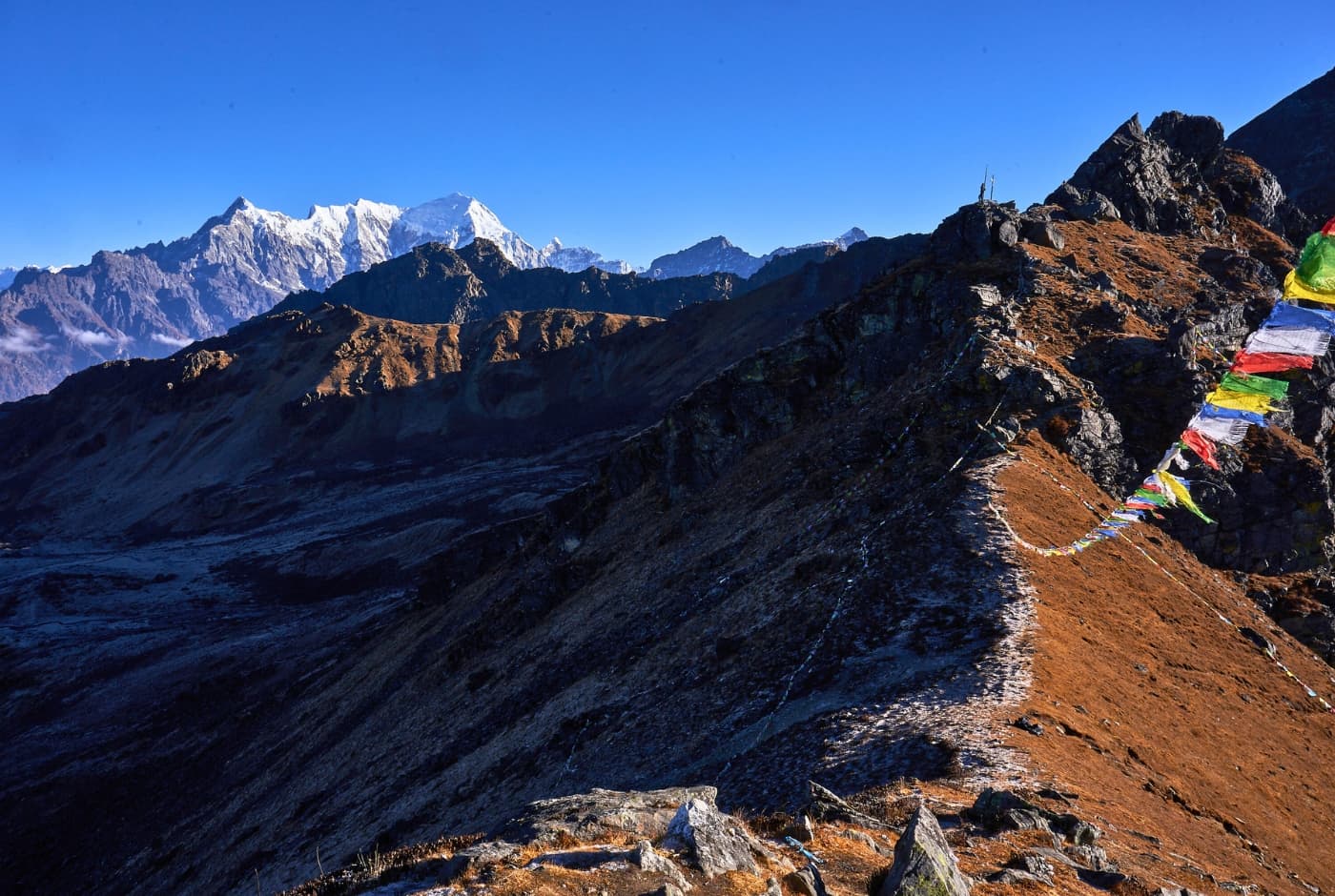
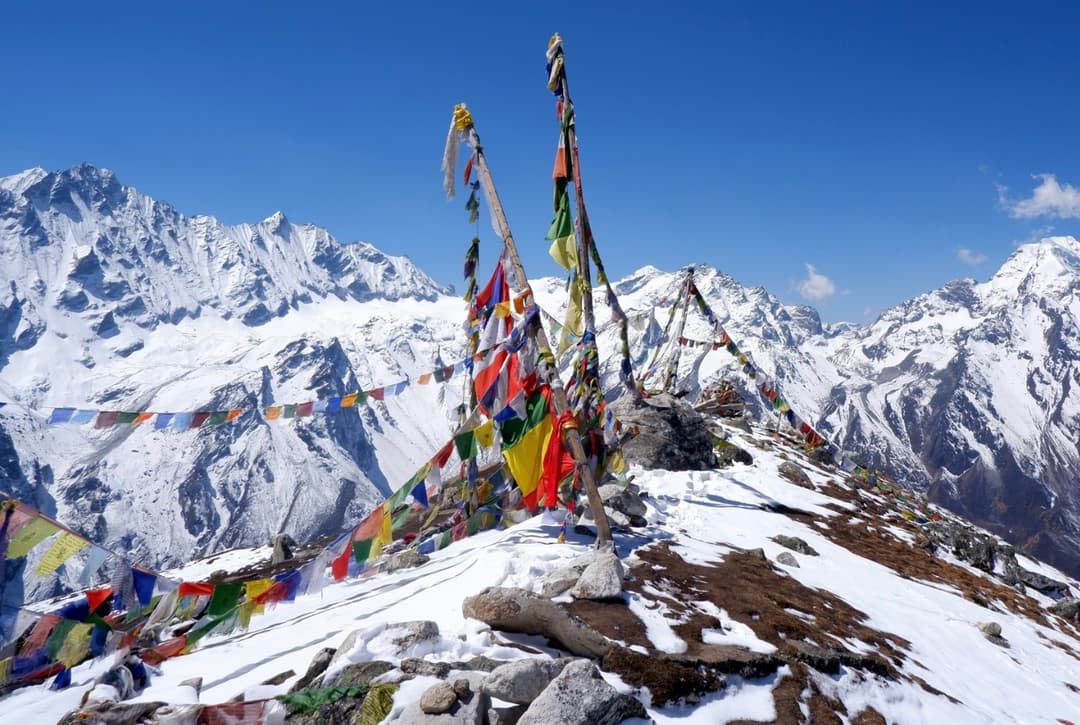
Leaving Gosaikunda, you will head to Ghopte, a small rest stop, via the Laurebinayak Pass at 4,610 m. The trail is raw and is one of the powerful sections of the Langtang-Helambu route, which feels like a true Himalayan crossing. Also, adventure enthusiasts find this part of the trek a true highlight.
Crossing the narrow and rugged trailways, ridgelines, and open slopes, you will enter the Helambu region, full of rhododendron and pine forests. You will spend the night at Ghopte, a settlement tucked inside the dense forest, offering warm beds and meals.


From Ghopte, the trail descends to Melamchi Gaun, passing through open hills, villages, and wide valley views. The scenery shifts from alpine landscapes to lower, forested regions with dense green vegetation and low shrubs.
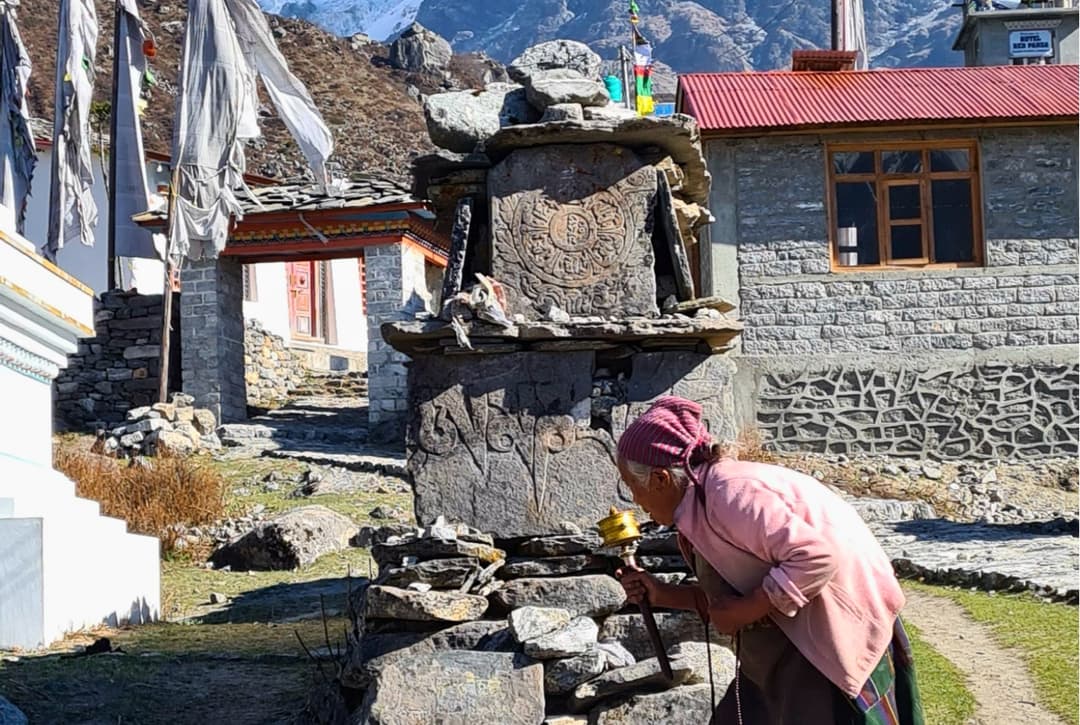
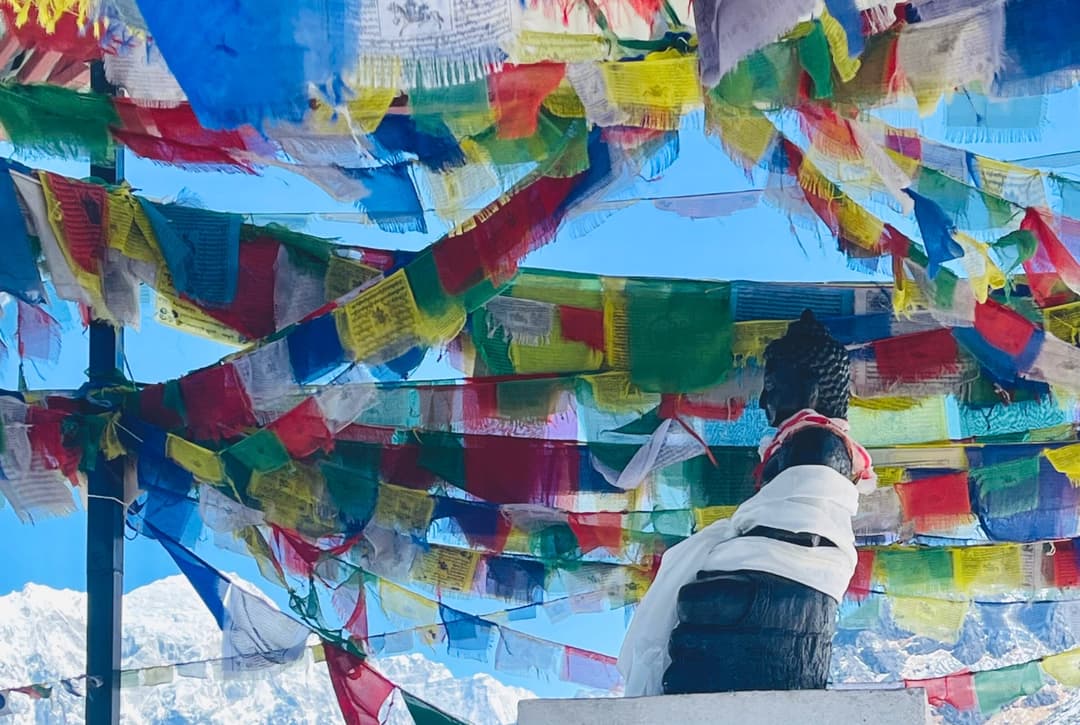
Along the trail, trekkers can see mani walls and small chortens, terraced fields, and distant villages perched on ridges. After 6 to 7 hours of walking, you will reach Melamchi Gaun, a traditional village in Helambu, home to the Hyolo community. Trekkers will spend the night at the village, experiencing the warm hospitality and learning about the community.
After a relaxing night in Melamchi Gaun, trekkers will continue towards Tarkeghyang, a small Sherpa community settlement. The village is popular for Sherpa culture and the traditional Himalayan lifestyle, offering up-close insights into their customs and traditions.
In this part of the trail, trekkers will encounter pleasant, culturally rich, and visually balanced scenery. The trail begins with a mostly downhill section and passes through stone houses, potato fields, and terraces. The weather feels soft and warmer than the high alpine zones. After reaching Tarkeghyang, spend the night at the hotel with some freshly made food.
From Tarkeghyan, trekkers will pass through forests, villages, and open hills before reaching the final overnight stop, Sermathang. This section of the route is considered the easiest and most culturally rich on the Helambu trail. Most people in this part follow Drukpa Kagyu Buddhism, Bhutan’s national religion.
The trekking trail is full of rhododendron, pine, and oak trees, making it a refreshing segment of the trek. While crossing this section, you will witness locals traveling and animals carrying goods. You will stay overnight at one of the guesthouses we have booked in advance.
The descending journey from Sermathang to Melamchi Pul Bazar is relaxing and slow, both mentally and physically. Starting with a steady downhill walk, you will cross pine and bamboo forests, open hillsides, small settlements, and terraced fields, before reaching Melamchi Pul Bazar.
From here, you will drive back to Kathmandu, bidding farewell to the mountains and returning to the city. This final stretch feels like a gentle landing with a mix of relief and nostalgia from the mountains you leave behind. This scenic journey back to Kathmandu also marks the end of the trekking part.
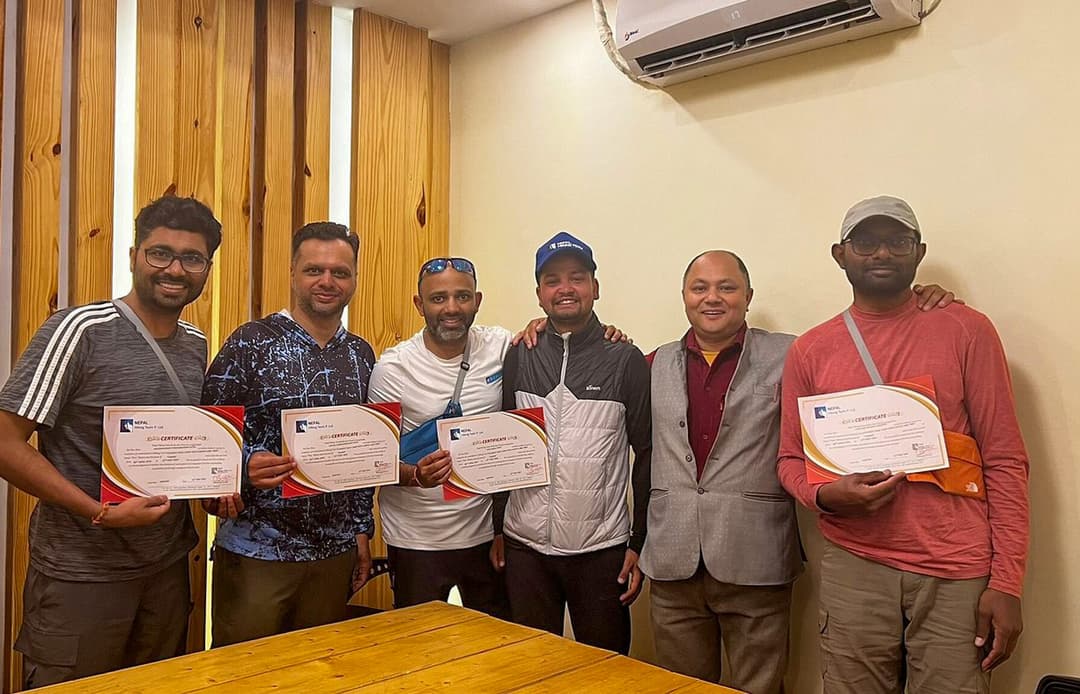
Upon arrival in Kathmandu, you will be checked in for the night and presented with an achievement certificate from our team. This marks the successful completion of your trek in the Langtang Gosainkunda region, and we are honored to present you with an NHT T-shirt and cap.


On your final day, after a hearty breakfast, our Nepal Hiking Team representative will drive you to Tribhuwan International Airport, three hours before your departure. This ensures a timely check-in and immigration process, allowing you ample time to prepare for your departure flight.
This day marks the end of your 16-day Langtang Gosaikunda Trek with the Nepal Hiking Team. As you prepare to return home, you will take hundreds of photos from the trip and memories of the mountain, the Himalayan lifestyle, local culture, and traditions that will last a lifetime.

Book your Langtang Gosaikunda Trek with Nepal Hiking Team for a safe, scenic, and soul-stirring Langtang Region adventure.
Read our genuine feedback from past travelers with Nepal Hiking Team sourced from TripAdvisor, Google, Facebook, and Trustpilot.
I loved trekking with Nepal Hiking Team so much that I returned for a third adventure, and once again the experience was exceptional. The owner, Balaram, did a fantastic job arranging every detail, adapting the trip to my preferences, and making sure I felt safe, comfortable, and well cared for throughout the journey. Everything was handled with great care and professionalism.
I specifically requested my guide, DB, who had previously led me on the Annapurna Base Camp trek, because he is truly outstanding. He patiently answered all of my many questions about Nepal, from history and culture to daily life, the economy, and the country’s progress and challenges. His deep knowledge and genuine passion for the mountains made the trek even more meaningful. We often found ourselves stopping in complete silence, simply taking in the views. Along the way, we also practiced Nepali, English, and French, which he speaks very well.
Langtang Valley itself is absolutely stunning. The mountain views are breathtaking, the rhododendron forests feel magical, and Gosaikunda Lake is incredibly peaceful. Trekking in December was ideal, with quieter teahouses and excellent weather. This trek once again reminded me why Nepal Hiking Team is such a special company, and I would highly recommend them to anyone planning a trek in Nepal.
If you want, I can make a slightly shorter version for a package highlight section or a more emotional version for a testimonial slider.
+
+
We trekked through Langtang National Park, including Gosaikunda and Helambu, from late October to early November 2025 and had a wonderful experience with Nepal Hiking Team.
After researching trekking companies, we chose Nepal Hiking Team because their pricing was competitive and they were very flexible with our plans. We extended their 16-day Langtang–Gosaikunda trek by adding extra days so we could do side hikes from Kyanjin Gompa and allow more time for acclimatization if needed. Ganga was very responsive and helpful throughout the planning process, answering all our questions promptly.
Our guide Bhisma and porter Tuk were exceptional. Tuk, whom we nicknamed “Super Tuk,” carried loads with ease even on challenging terrain. Bhisma ensured the trek was both enjoyable and informative, sharing insights into Nepali culture, religion, and daily life while also making sure we had plenty of opportunities for photography and rest.
We appreciated the flexibility of the itinerary, which allowed us to adjust plans based on weather conditions and how we were feeling physically. Over 13 days of hiking, we climbed roughly 9,000 meters and descended around 8,500 meters. After a day of heavy rain and some long trekking days, we decided to finish one day earlier than planned. Bhisma organized a relaxed cultural visit to Patan, which turned out to be a highlight of our time in Kathmandu. Patan Durbar Square felt calm, well preserved, and less crowded than central Kathmandu.
We enjoyed the Langtang Valley trek even more than the Annapurna Base Camp trek we completed nine years ago. The scenery changes constantly and remains impressive throughout the journey. We would gladly return to Langtang again in the spring season to experience the rhododendron bloom.
We highly recommend Nepal Hiking Team’s Langtang Valley, Gosaikunda, and Helambu trek to anyone looking for a flexible, well-managed, and rewarding trekking experience in Nepal.
The Langtang Gosaikunda Trek is incredibly scenic and rewarding. I could not have asked for better companions than my guide, Rajk, and porter, Milan. They were professional, caring, and truly dedicated throughout the journey. Over the course of the trek, we became a great team, which made the experience even more enjoyable.
A big thank you to Rajk and Milan for their outstanding support on the trail, and to Nepal Hiking Team for their excellent customer service and smooth organization. I would gladly trek with them again anytime.
+
+
+
We had a fantastic trek up the Langtang Valley organised by Nepal Hiking Team. Ganga worked with our tight time frames and came up with a great itinerary.
The trek itself is challenging, and the altitude is not to be taken lightly, but with the dedicated work of our guides Asha and Porter Bikash, we made it up to Kanjin Ri, and the views were spectacular.
January is a great time to visit Langtang. Clear blue skies and cooler weather make for comfortable trekking and quiet trails, though it does get cold higher up overnight. However, the jacket and sleeping bag provided are of high quality.
I highly recommend Nepal Hiking Team and visiting Langtang in January.
They know exactly what they’re doing and do it with high-level excellence. We were a ragtag team of seven, aged between 40 and 65 years, and they got us safely up to 16,500 feet and back without a problem.
Arun Ji (our guide) was truly special—he could do in advance what we needed, make adjustments along the way, and handle all the twists and turns that come with trekking in remote areas, where access is limited, and you have to adapt and overcome.
Ganga ji (the owner, ji at the end of the name, which is used in terms of respect) was incredibly supportive throughout the planning to end phase. He helped us navigate every shifting date and requirement, tossed in a few extras, and made the whole trip an amazing one.
I highly recommend this team if you’re looking for a personalized trekking experience. Make sure to ask for Arun Ji as your guide—you’ll thank me later!
Trekking Langtang and Gosaikunda with NHT blends the best of culture, high-alpine scenery, and safe and secure logistics. You can explore Tamang villages and Langtang Valley, stand at Kyanjin and panoramic ridgelines, and visit the sacred Gosaikunda lakes. This trek includes experienced local guides, vetted tea-house logistics, and responsible planning that prioritizes acclimatization and safety.
Our scheduled group treks usually run with average groups of 8 trekkers (typically above two and below 10 trekkers). We confirm departures and handle logistics for every booking. Only in extreme situations (major natural disasters or severe political instability) would we propose alternatives or rescheduling.
Absolutely. Solo trekkers are welcome for our group departures. Even if you’re the only person booked on a given date, we still operate the trek at our solo traveler rate. We always make sure you receive full guide support, safety briefings, and our services.
Yes, we also offer private trips for the Langtang Gosaikunda Trek for families, friends, and solo travelers. Private departures allow flexible scheduling and customized pacing for groups of two or more. We can also arrange the trek package for solo trekkers who require private arrangements. The price will be adjusted according to the personalized service level.
This is our fixed package for our group package of the Langtang Gosaikunda Helambu Trek. But for private departures, we can customize departures, extend or shorten itineraries, change accommodation standards, and add extra acclimatization days. Tell us your dates, fitness level, and preferences, and we’ll draft a tailored plan.
You can simply book with us by completing our online booking form with traveler details (flight/insurance can follow later). A 20% deposit secures your reservation and confirms the trek. Once received, we confirm your booking and reserve guides/permits. The remaining balance is usually paid on arrival in Kathmandu (cash or card accepted).
The standard 20% deposit is non-refundable. However, we convert that deposit into a travel credit (with no expiry), which you can apply to any future trip with us. See our booking policy for details.
Yes. Nepal issues Tourist Visas on arrival at Tribhuvan International Airport for most nationalities. You can also complete an online application beforehand to accelerate the process. Make sure your passport has at least six months’ validity. For the latest rules and fees, check Nepal Immigration.
Yes, this Langtang Gosaikunda package includes airport transfers. One of our representatives will meet you outside the terminal, holding a “Nepal Hiking Team" placard, and will transfer you to your hotel. At the end of the trip, we’ll provide timely transfers back to the airport.
Standard packages include comfortable 3-star hotel accommodation in Thamel. You can request upgrades to 4- or 5-star hotels at extra cost—we’ll confirm available options and pricing when you book.
Yes, your hotel in Kathmandu would have a security arrangement for your extra luggage while you go on the trail. We also provide a duffel for your trekking gear & porter handling, so you can carry only essentials and bring them along with valuables.
Typically, an additional night in Kathmandu would cost USD 45 for a single room and USD 50 per night for a twin/double room, including breakfast and taxes. Let us know if you would like to arrive earlier or extend your stay, and we shall do the arrangements.
During the pre-trek briefing, you'll meet the guide, discuss the itinerary, leave copies of your passport and travel insurance, and pay any remaining balance. This is the best time to ask any last-minute questions and confirm pickups, porter arrangements, and emergency contacts.
In this standard group package, the mode of transportation is by public bus transfer from Kathmandu to Syarbubesi. And the starting point of the trailhead is Syarbubesi. Yes, if you prefer not to travel by public bus, we can arrange a private vehicle for you.
For this transportation service, it will cost you an additional $150 from Kathmandu to Syabrubesi.
The journey from Kathmandu to Syabrubesi starts on a partly paved road, but after Trishuli Bazaar, it turns rough, unpaved, and bumpy. During the monsoon, heavy rain can cause landslides and sometimes block the road.
The Langtang Gosainkunda Trek is considered moderate in terms of difficulty. This trek is a combination of climbs and descents with slow, steep rises. At the same time, the most challenging part of the trail is the ascent to Cherko Ri and Laurebina La Pass, requiring good acclimatization and energy levels from trekkers. Both beginners and experienced trekkers can tackle this adventure, but we recommend maintaining a basic level of fitness before the trek.
The Langtang Gosaikunda Helambu Trail, starting from Syarbubes and ending in Melamchi Pul Bazaar, is about 88-100 km in the course of 11 trekking days. To cover this distance, hikers typically spend about 6–7 hours per day hiking at a stable pace.
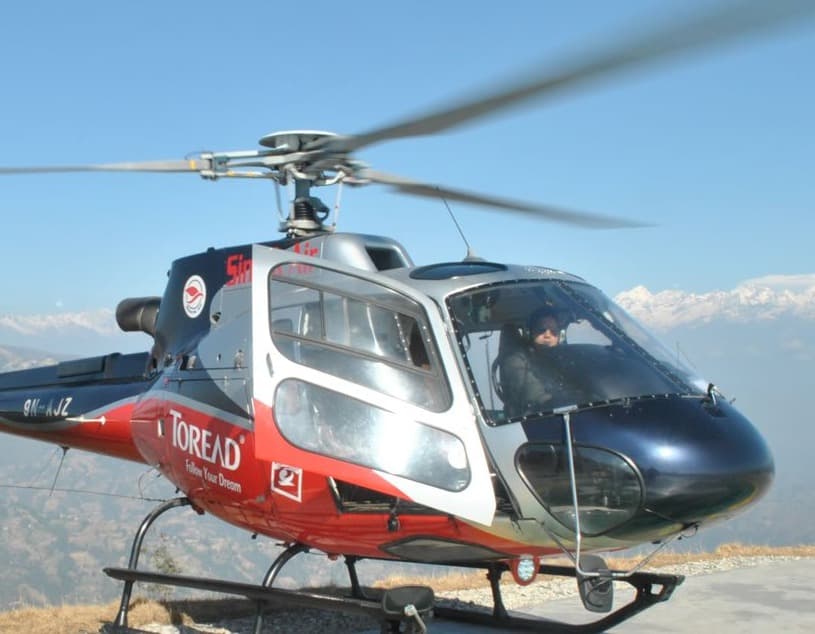
Our guides carry first-aid kits, pulse oximeters (to spot falling oxygen saturation), and basic altitude medicines to coordinate evacuations if needed. They monitor trekkers’ condition day-to-day, enforce acclimatization rules, and arrange safe descents or helicopter evacuations in emergencies. Please let your guides know if you experience any difficulty on the trek.
The best seasons for this trek are Spring (March–May) and Autumn (September–November). The trek benefits from clear skies, stable weather, rhododendron blooms, and breathtaking mountain views in the spring. While you can also trek in the summer (monsoon) and winter, expect wet/muddy trails, landslide/road delays in the monsoon, snow/ice, colder temperatures, and shorter daylight in the winter. Off-season treks are quieter but require stronger logistical preparation and appropriate gear. We usually do not recommend this trek in summer or winter.
Yes, travel insurance that explicitly covers high-altitude trekking, emergency medical evacuation (including helicopter rescue), and trip cancellation is required for this trip. Please ensure that your policy includes coverage for the altitude up to 5,050 m of helicopter evacuation in case of any emergencies.
Start training 4–8 weeks before departure: cardio (running, cycling), stair climbing, and long weekend hikes (4–6 hrs) with a loaded daypack. You can also practice uphill and downhill walking and break in your hiking boots. Include lower-body strength work and at least one longer practice hike carrying the pack weight you expect. Build gradual endurance rather than short, intense efforts.
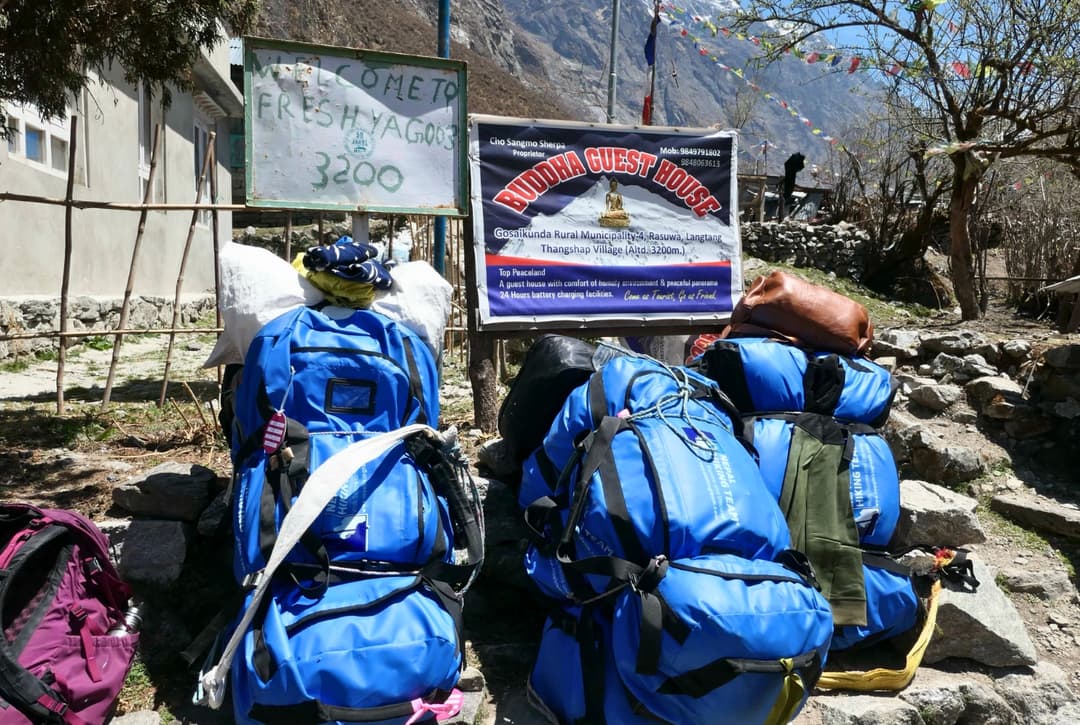
We provide trekking items, such as a duffel bag, sleeping bag, and down jacket (seasonal). Our guides also carry first-aid kits, water purification tablets, and basic altitude medications. Please verify the specific items included in your package to avoid any duplication or omissions.
You can use a 30–40 L daypack for daily essentials (water, camera, warm layer, snacks). Porters typically carry the heavy duffel for two trekkers, which is about 20–25 kg total (roughly 12 kg per trekker of your shared kit).
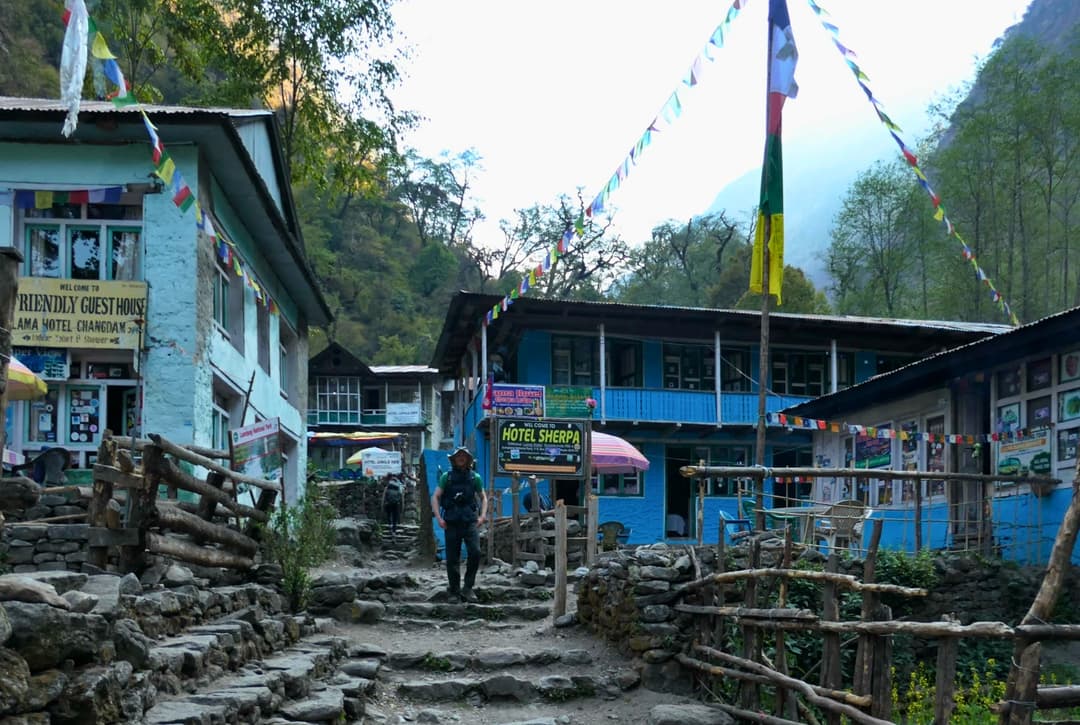
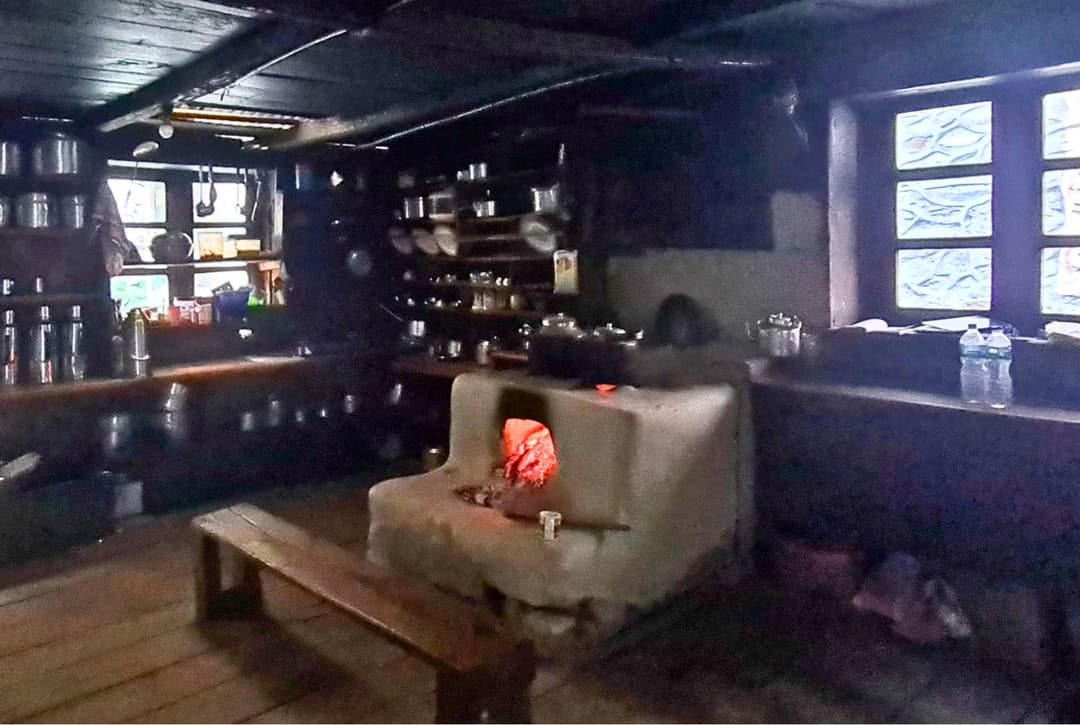
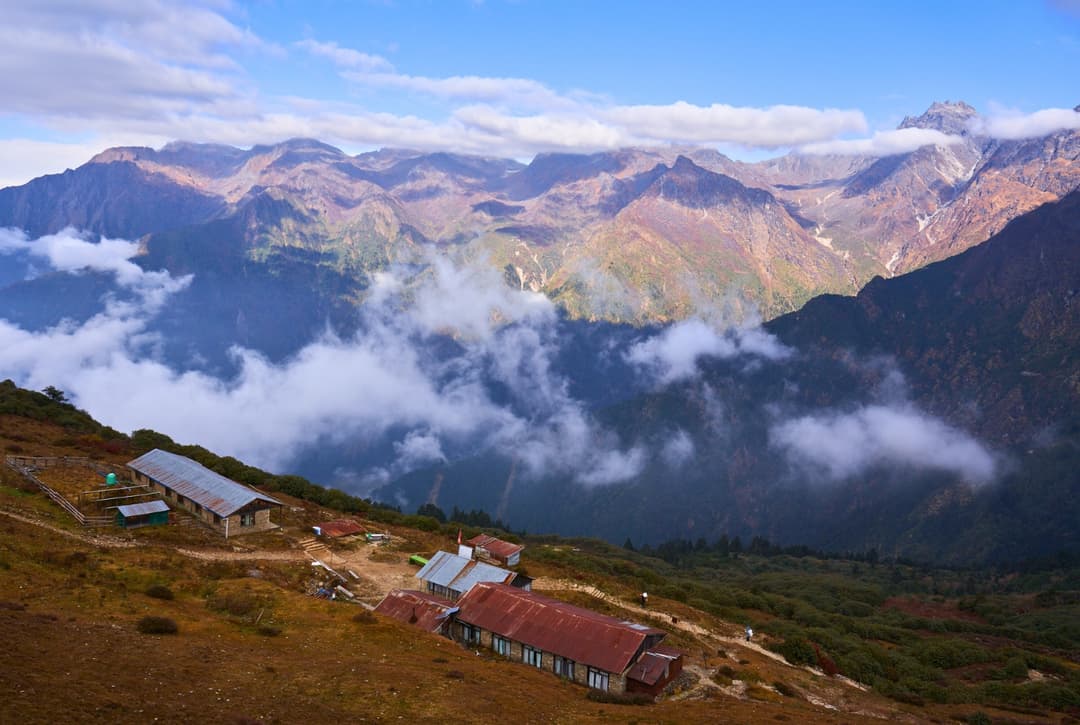
During the Langtang Gosainkunda Trek, you stay mostly at simple family-run teahouses or lodges with basic facilities. Rooms are twin-sharing with attached bathrooms except at Lama Hotel. In the Lama Hotel, the bathrooms are around the housing area but not attached. The accommodations are convenient and provide an excellent opportunity to interact with local people.
Lower villages such as Syabrubesi, the Lama Hotel area, and Langtang Village commonly provide Wi-Fi in teahouses. This service usually comes at a small daily fee (NPR 300–500 per day). Mobile networks are available in lower sections and often up to Kyanjin Gompa, but coverage weakens with altitude and may disappear completely around high passes and the Gosaikunda lakes. You can buy SIM cards from either NTC or Ncell in Kathmandu before starting your trek.
Most teahouses offer charging facilities for phones/cameras/power banks, but these are typically limited, sometimes available only during specific hours, and often charged per device or per hour. During busy times, power can be rationed. Bringing your own power bank is strongly recommended. Many lodges rely on solar panels and small generators for lighting and charging. These systems can struggle in extended cloudy or snowy weather (reduced solar input). Expect charging fees of about NPR 200 to 500 at higher altitudes.
Many teahouses offer single rooms in lower villages, but rooms are often small and basic. In higher, remote places (close to Kyanjin, Gosaikunda, or other high camps), single rooms may be very limited or unavailable, especially in high season.
Teahouse menus offer a wide range of options, including Nepali, Indian, Italian, and Chinese dishes, as well as desserts and cold drinks. You can order any meal from the menu according to your preferences. Meals are cooked fresh and designed to keep you energized for high-altitude trekking.
Yes, you can get vegetarian, vegan, and gluten-free meals throughout the Langtang Valley Trek. Please inform our guide if you have any food allergies. They will coordinate with teahouses and ensure you get a nutritious diet.
You can find water from natural sources like spring water, taps, and rivers during this trek. However, we strongly recommend that trekkers purify water using water purification tablets, filter bottles, or other filtering tools to avoid waterborne diseases.
You can also buy boiled water from the teahouses. It is important to stay hydrated on the trek while protecting the environment, so we suggest you use a reusable water bottle throughout the trek.
We recommend carrying about NPR 25,000 in cash to cover on-trail expenses (Wi-Fi, hot showers, device charging, snacks, etc.). ATMs are rare and often offline in the Langtang Valley, so please withdraw sufficient cash in Kathmandu before you depart.
You can tip guides and porters at the end of the trail, i.e., at Melamchi Bazaar, when you say goodbye. It is optional but really appreciated by guides and porters. You can give a sum that reflects your budget and satisfaction with the service you received during the trek.