16 Days
Check Our Risk-Free Booking Policy View Details

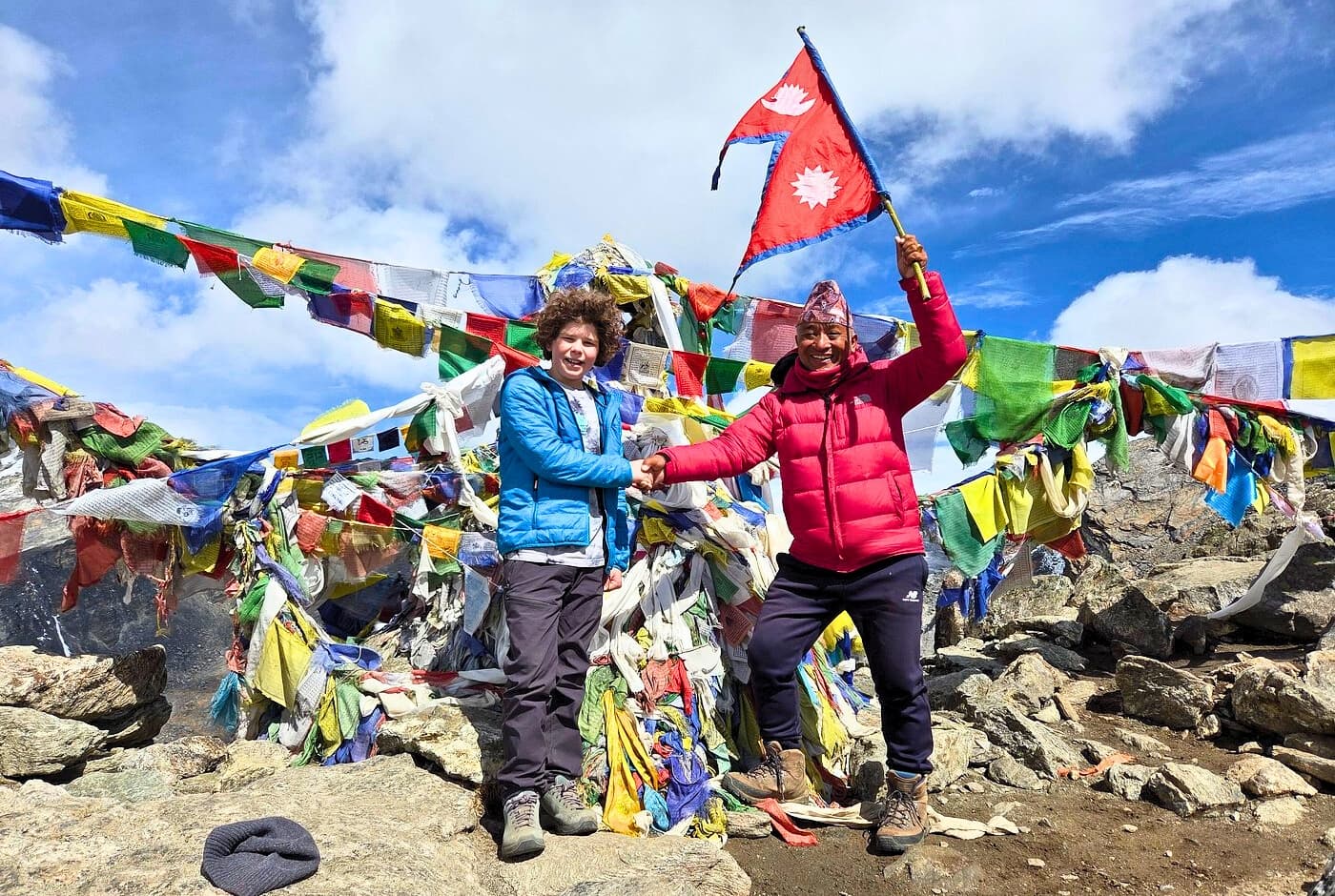
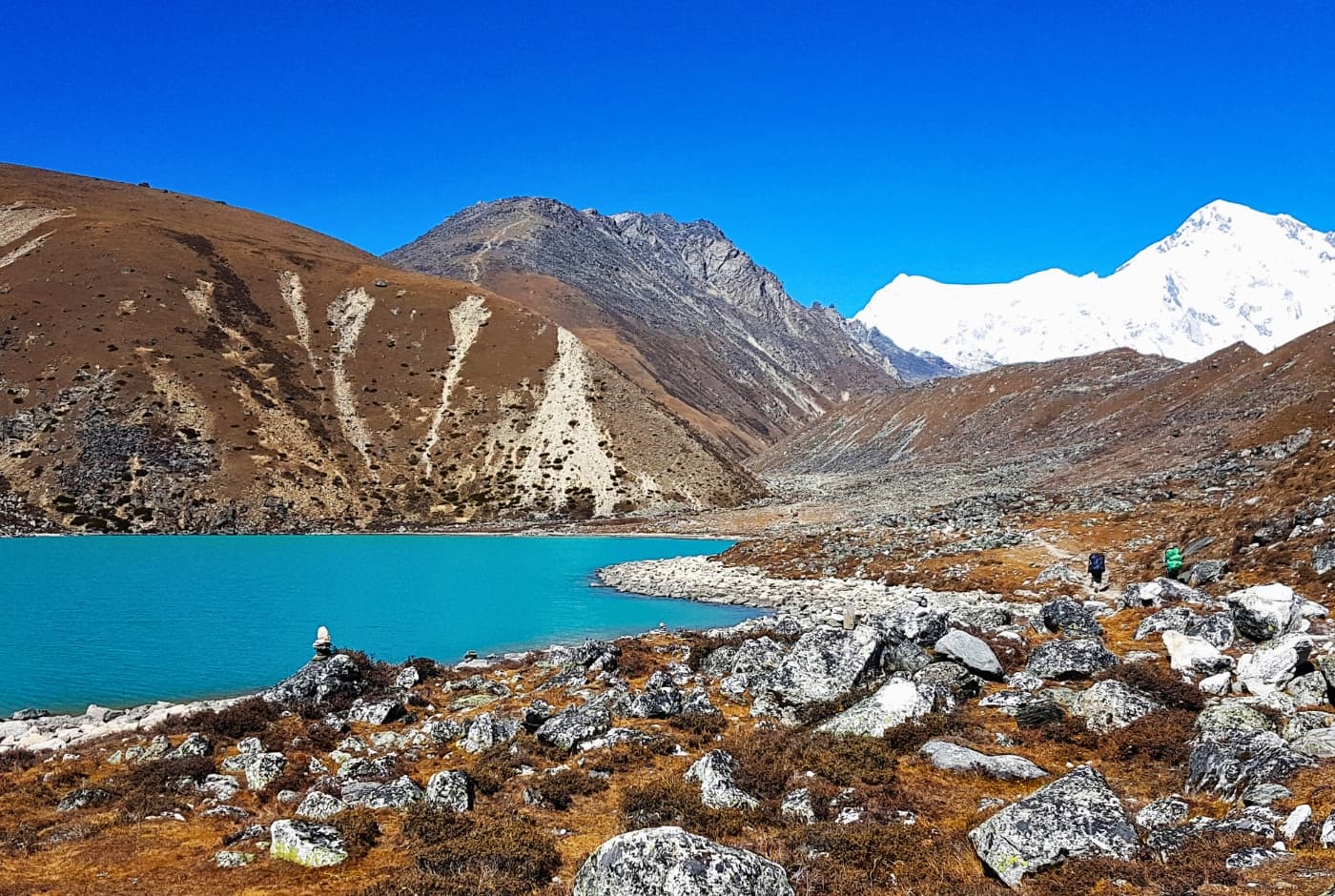
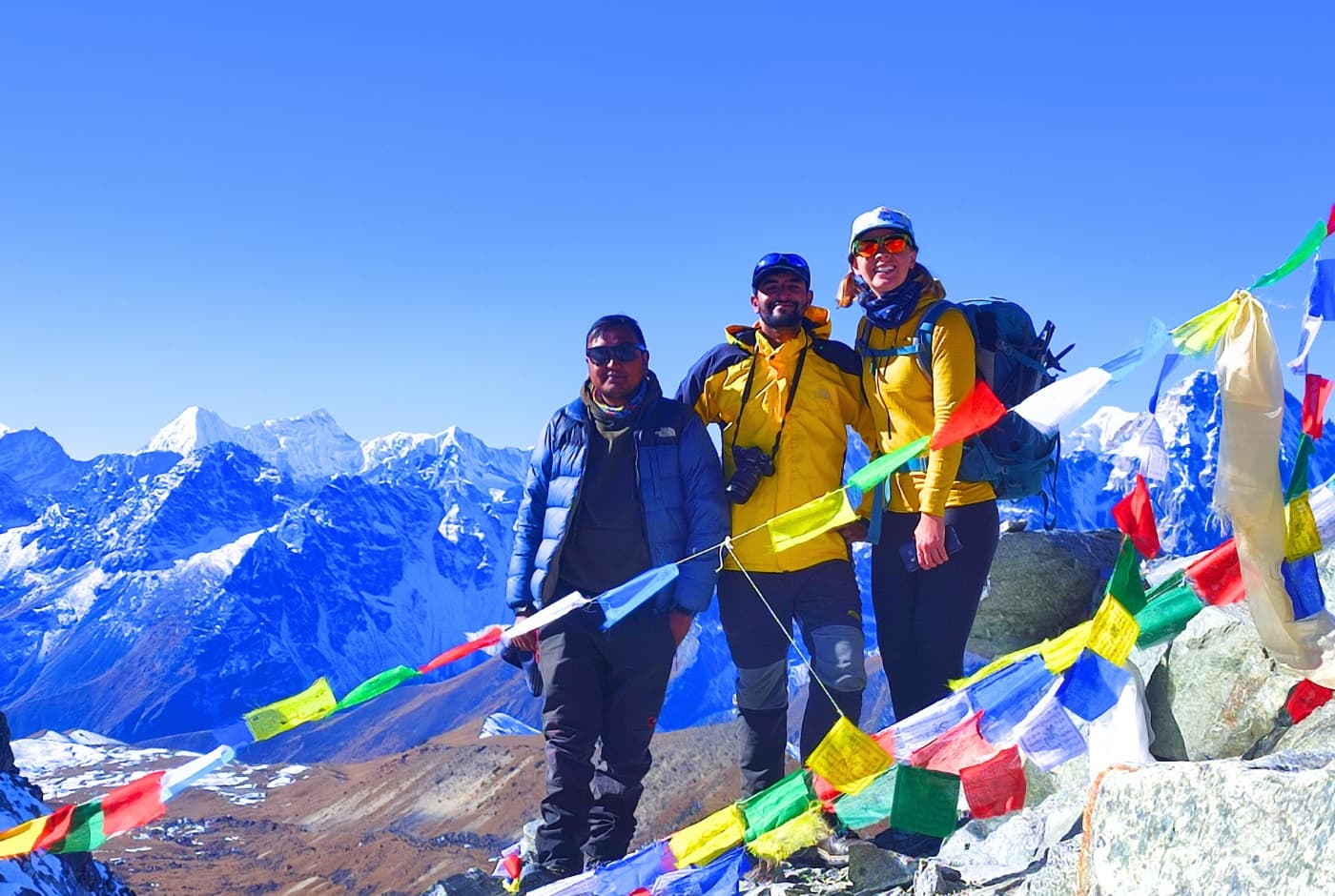
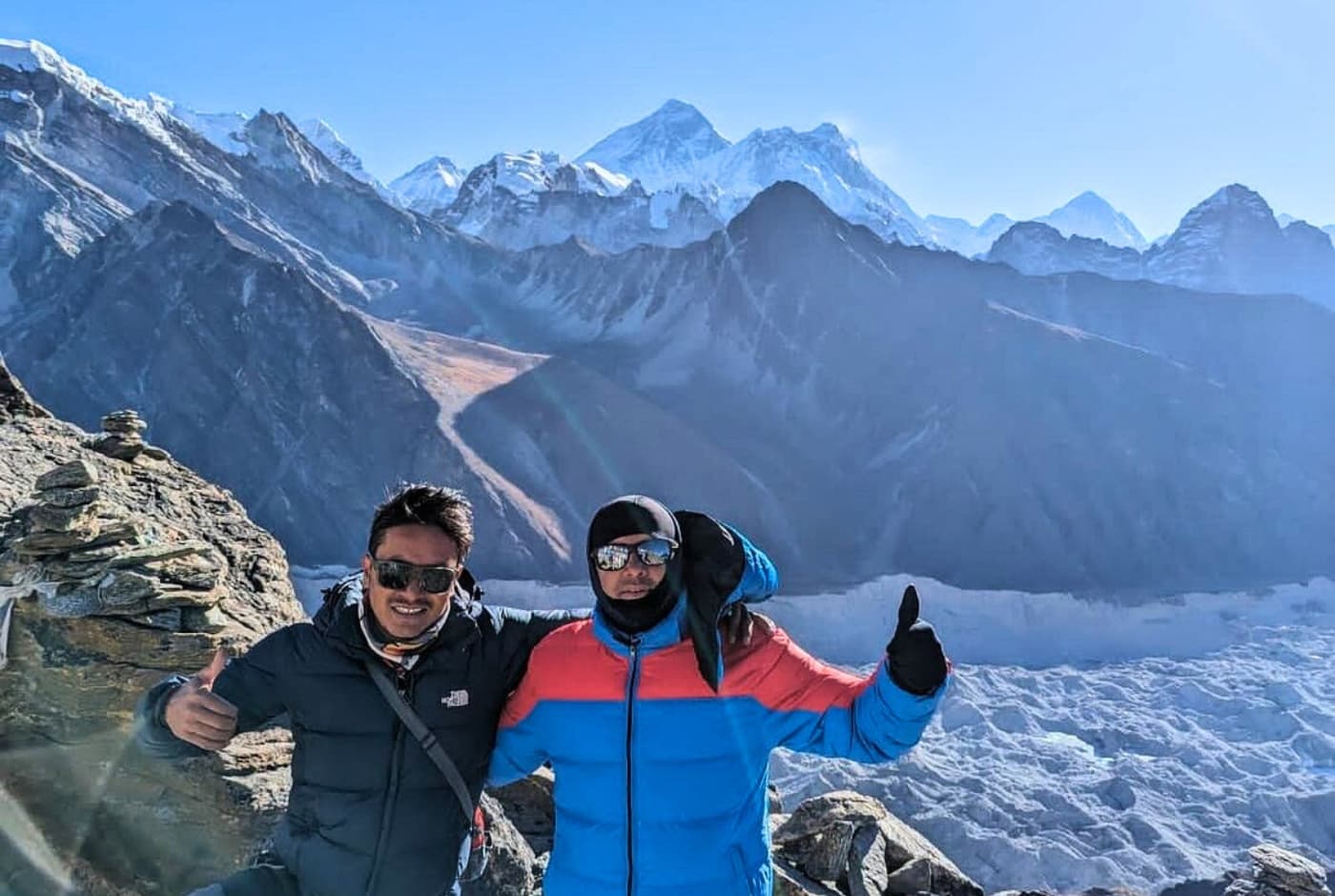
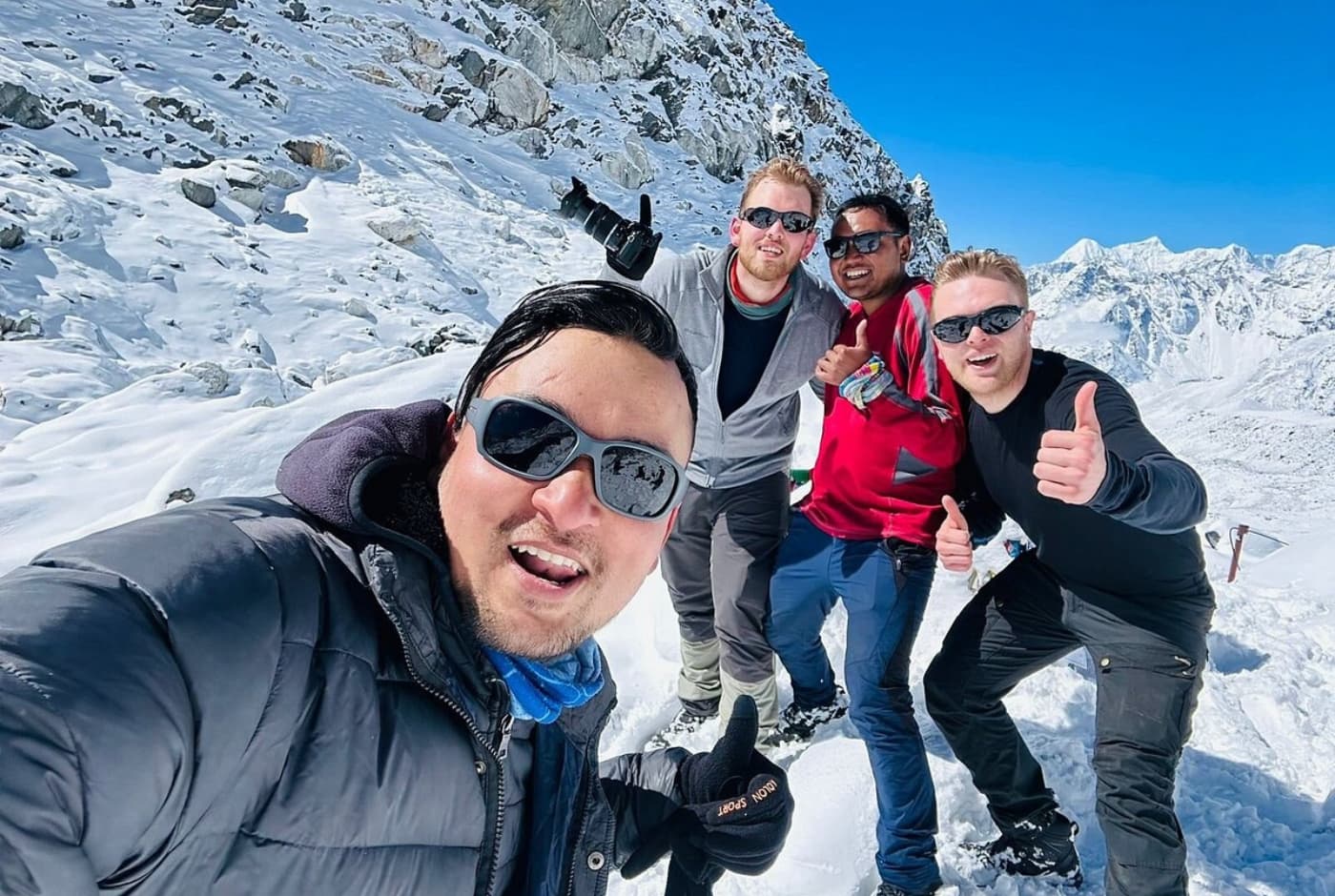
This journey focuses on mesmerizing mountain landscapes, glacial lakes, and a high-altitude pass. This also combines the stunning beauty of Gokyo Lakes with the challenge of crossing the Renjo La Pass, offering enthralling views of some of the world's highest peaks.
The Gokyo Lake Renjo La Pass Trek offers a journey through the less-traveled paths of the Everest region. Being off the mainstream trails, it provides a more exotic and less crowded experience. Moreover, the scenery along this route is arguably more stunning than that of the classic Everest Base Camp trek. The trek is situated in the Solukhumbu District of Nepal, within the boundaries of Sagarmatha National Park. A highlight of this adventure includes crossing one of the highest passes, known as Renjo La.
The region is home to the local people of Sherpas and other ethnic communities. These people are living in harmony and have a friendly hospitable nature. People from these communities have opened guesthouses and lodges along these routes, offering comfortable and hygienic stays.
The Renjo La Pass is the highest destination on this trek, offering an incredible view of the Everest range.
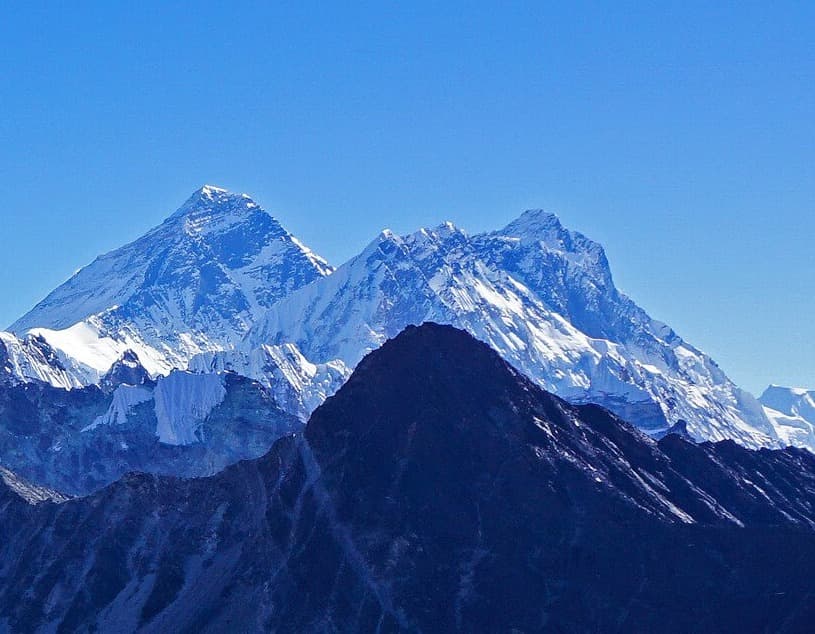
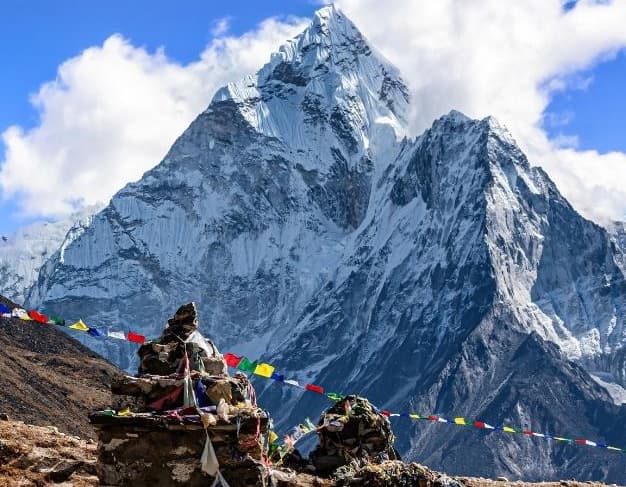
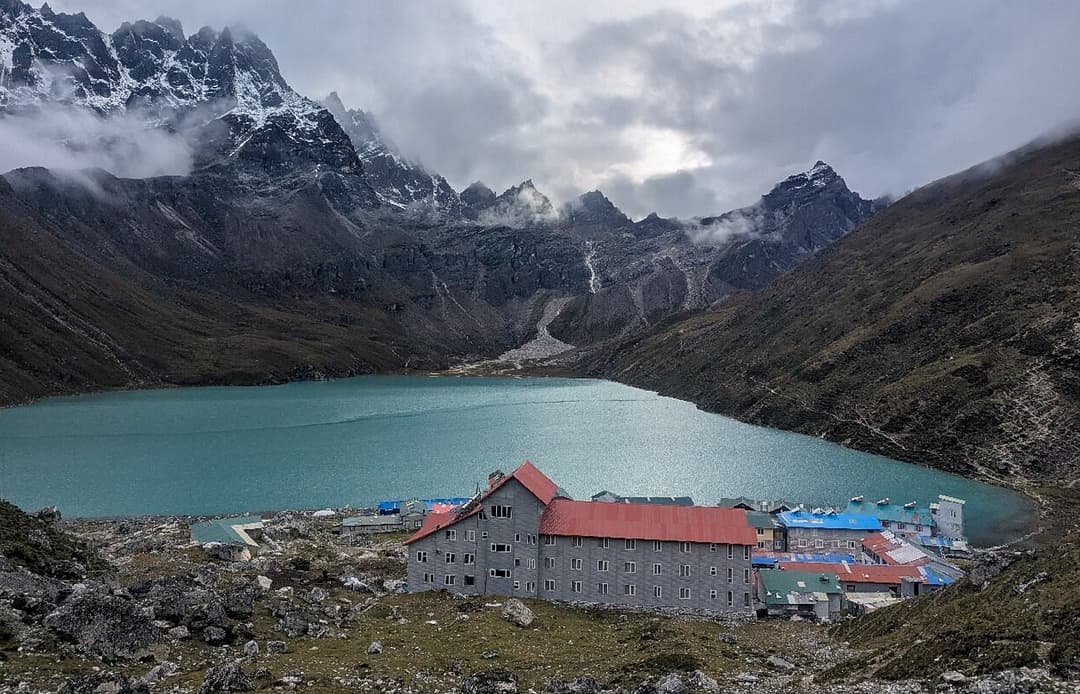
From this viewpoint, you’ll get a great view of the Gokyo lakes with snowy peaks in the backdrop. This pass was once a trade route to Tibet, where the Sherpas would walk across Nangpa La. You’ll also have a chance to view Mt Everest, Lhotse, Makalu, Cho Oyu, Aba Dablam, and other snow-capped peaks of the region. Also, you might be able to witness some endangered species like red pandas, snow leopards, and many more.
With the Nepal Hiking Team, we assure you that the Gokyo Lake Renjo La Pass trek will be the experience of a lifetime. It is a great option for those looking for a less crowded, more off-beaten path trekking experience.
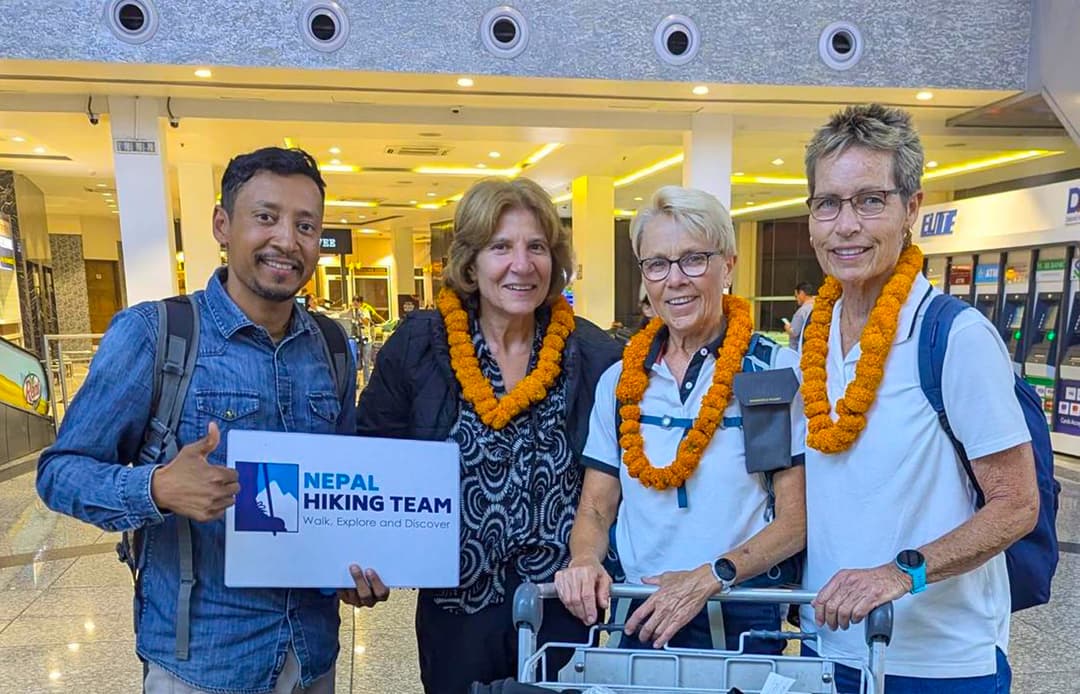
As you land at the Tribhuvan International Airport, one of our representatives will greet you from the Nepal Hiking Team. You'll then be transferred to the hotel in Kathmandu and for the rest of the evening, you can either relax or explore on your own.
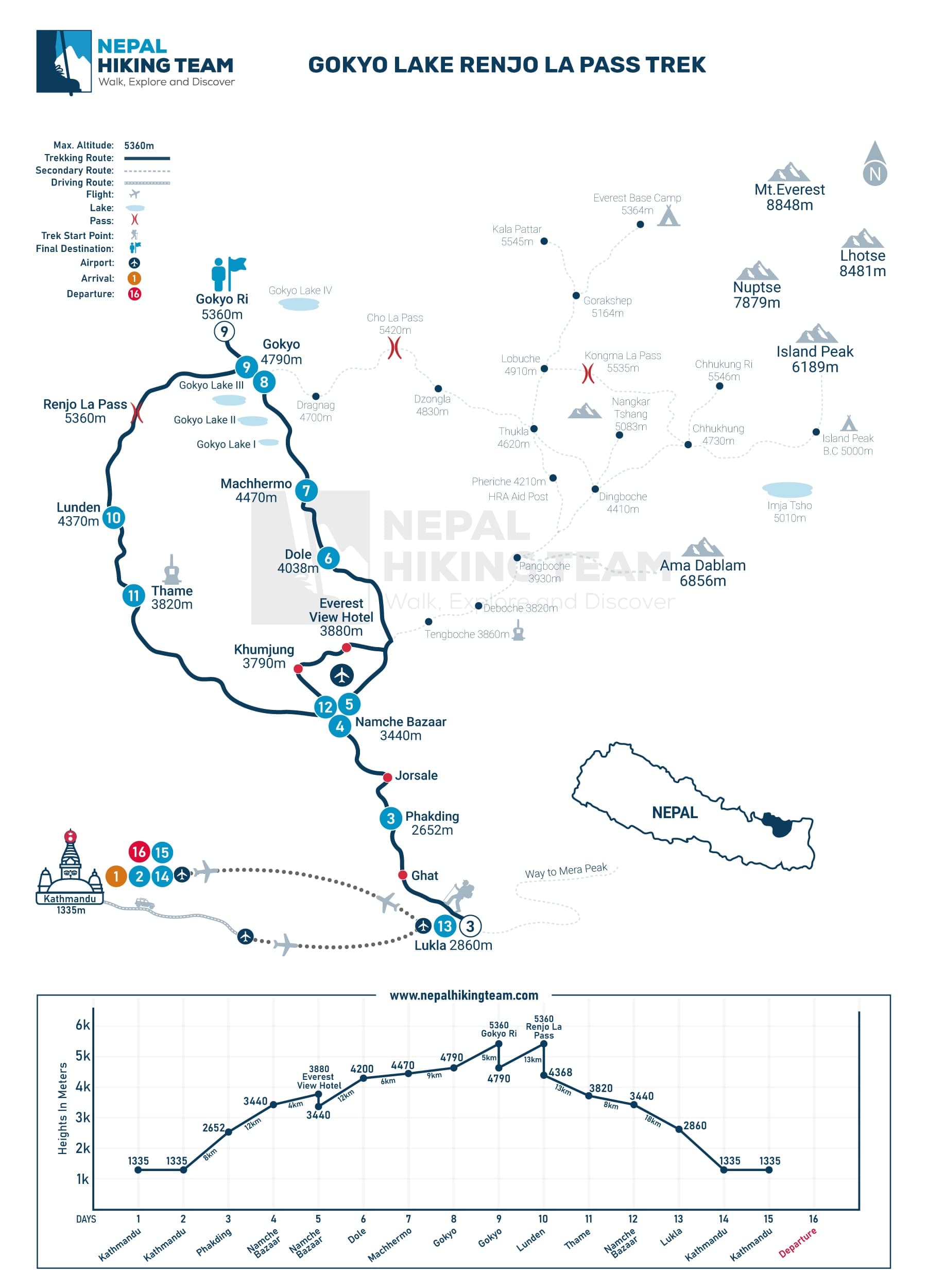
Your journey will initiate with a flight from Kathmandu/Ramechhap to Lukla, where you’ll set foot on the trail for the first time. The first part of the trek is relatively easy as you will make your way through beautiful forests to a small village called Phakding. Exploring the Sagarmatha National Park, you will hike to the bustling town of Namche Bazaar. Here, you'll let your body acclimate to the high altitude and hike up to Everest View Hotel. You can also stroll around the village and visit the Sherpa Museum as well.
After taking a day to acclimatize in Namche, you will continue your journey to the beautiful villages of Dole and Machhermo. As you reach the stunning Gokyo Lakes, you’ll take a day to explore and prepare for the next day's hike to the famous viewpoint, Gokyo Ri.
Now you'll ascend towards the Renjo La Pass, which is at 5360 m elevation, and reach Lunden. You’ll now make your way to Thame and then to Namche Bazar. Retracing your steps along the way to Lukla, you will spend your final night there.
Finally, you'll fly back to Kathmandu to bring your unforgettable journey in the Nepalese Himalayas to a close. Before heading back home, you'll take a day to relax or explore Kathmandu.
If you also wish to go on this thrilling trek, then you can contact the Nepal Hiking Trek (NHT). We customize any treks as per your preference and have experienced guides to assist you in your journey.
After you arrive in Kathmandu, Our representative will greet you and explain the itinerary further. There are no planned activities for the day, so check into the hotel. Enjoy your overnight stay at the hotel.
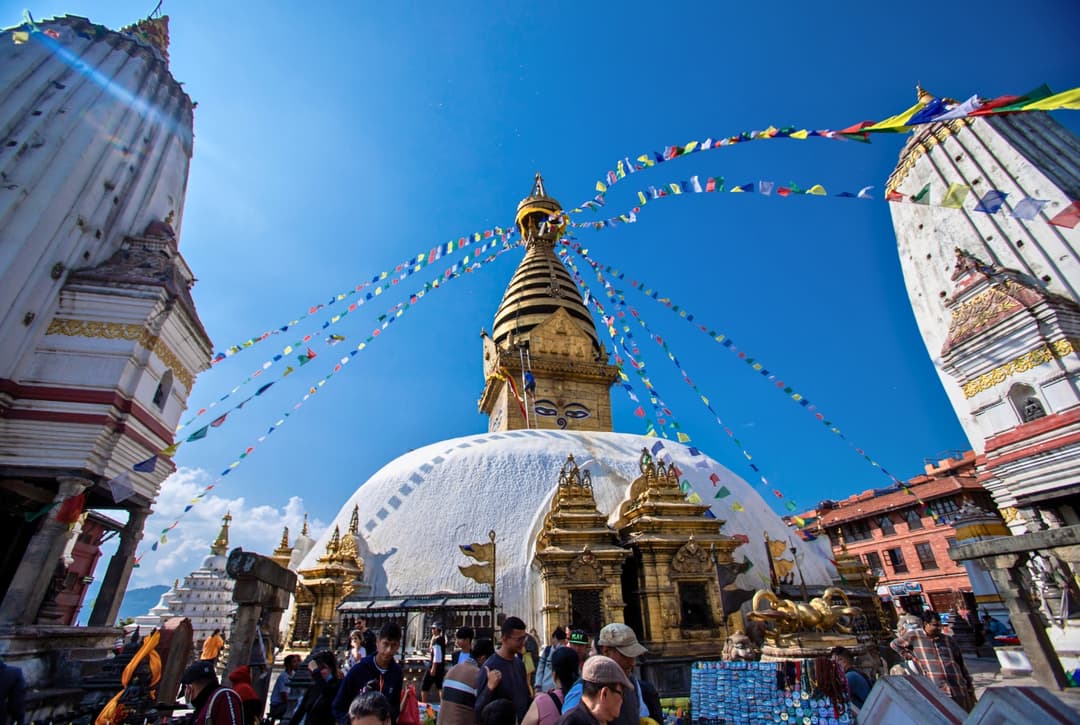
This day is scheduled for jet lag recovery and trek preparation for the Gokyo Lake & Renjo La Pass trip. A Nepal Hiking Team (NHT) member will provide a detailed Gokyo Lake Renjo La Pass itinerary briefing covering the trekking route, accommodations, weather updates, safety guidelines, and altitude acclimatization.
We provide essential trekking equipment if required, including a 70-liter duffel bag, a sleeping bag, a down jacket, and a detailed route map of Gokyo and Renjo La Pass. These items must be returned after the trip.
Additionally, as a complimentary gift, we offer a Nepal Hiking Team T-shirt and a cap to our trekkers.
Early morning today, you’ll head to the airport for your Lukla flight. The flight to Lukla is a lifetime experience in itself. After landing, you’ll trek to Phakding along green landscapes and a view of Kusum Kangraru.
Note: Flights will be operated via Ramechhap during the peak season, from the end of March to early May in the spring season, and from late September to the end of November in the autumn season. Ramechhap is 142 km away, a 4-hour drive. We will need to depart from Kathmandu at 2 AM for the flight to Lukla.
Today, you follow the Dudh Koshi River, and ascend through the pine and cedar forests, to the famous village of Namche Bazaar. You will spend two days at Namche for acclimatization, where you can visit the local markets, and spend time with your team. During the hike, you’ll capture your first glimpses of the Everest and surrounding peaks.
This day is especially sectioned for acclimatization. We will hike to Syangboche Airport (3700m), supposed to be the highest airport in the world, then continue climbing to Everest View Hotel for great panoramic views of Everest, Lhotse, Amadablam, Tawache, etc. On the way back, we visit the Sherpa Culture Museum and Everest Photo Gallery.
The trail is easy in the beginning up to Kyangjuma & climbs steeply out of the valley through rhododendron forests. It gives way to the fragrance of juniper and conifers as the elevation increases. This trek is especially beautiful in spring when the rhododendrons are in full bloom.
The trails pass through Kharkas, which is a summer settlement used by Sherpas bringing herds of yaks to graze in these high pastures. The route passes through the settlements of Tongba (3950m) and Gyele (3960m) to Dole. The views of Khumbila and Tawache are incredible throughout the trek.
Today, this trail climbs up to Lambara at (4220m) and Luza at (4360m). The trail is steep in most places as it climbs through juniper plants. The trail continues to climb along the side of the valley, high above the river, to Machhermo.
Today, you’ll climb a ridge for an excellent view of both valleys to Kantega and towards Cho-Oyu (8201m). After crossing the ridge the valley becomes wide as the trail passes through Pangka at (4390m).
The route then descends to the riverbank before beginning the climb to the Ngozumpa Glacier. It's a steep climb up the moraine, alongside the stream to the first small Lake.
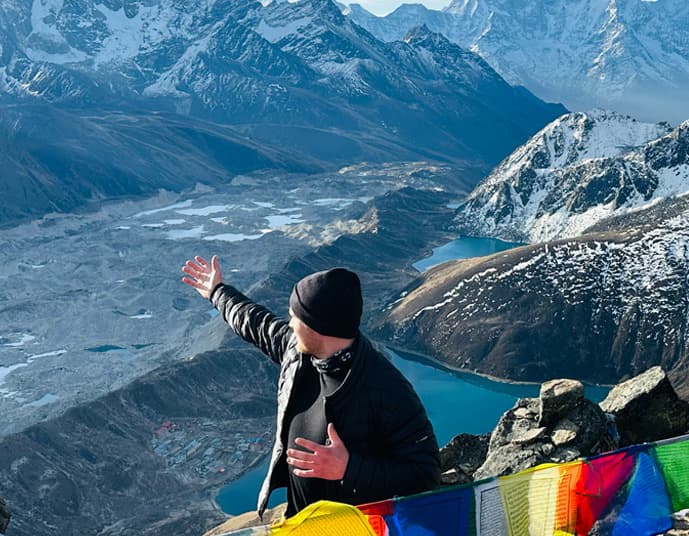
You wake up early and climb up to the Gokyo-Ri, for the panoramic view of Mahalangur Himalayan range. It takes a few hours to climb to the top of the peak, providing a 360-degree view of Cho-Oyu, Gyachung Kang, Everest, Lhotse, Makalu, and Cholatse.
Also witness the Mesmerizing Ngozumpa glacier, the largest glacier in Nepal.
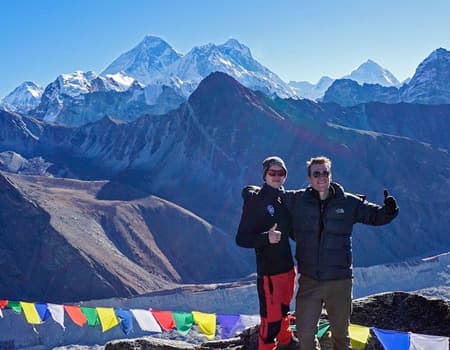
We start our trek from Gokyo to Lunden via Renjo La Pass early in the morning, reaching an elevation of 5,360 meters. As you ascend, you'll be treated to the most beautiful and exciting day of the journey, with panoramic views that include the Gokyo Lakes, Mount Everest, and other towering peaks.
Upon reaching the pass, take a moment to savor the vistas before descending into the remote northern valley, reminiscent of Tibetan landscapes.
We conclude our journey in Lunden, surrounded by solitude and stunning natural beauty.
After breakfast, you’ll descend down to Thame for more amazing snow-clad peaks. You may also witness a Tibetan trader encampments along the way for pictures of a rare lifestyle. You’ll also get a chance to visit Thame Monastery, a picturesque monastery, set amongst on the side of a hill overlooking the valley. This is the site for the spring celebration of the Mani Rimdu festival, held in the middle of May each year.
We will continue our trek, following the flat terrain before descending to our first resting place, Thamo, and then heading towards Namche Bazaar. The trek back is terrific. You will have completed a circuit upon arriving at Namche.
Today marks the last day of our trek. We'll depart Namche in the morning and retrace our steps to Lukla via Jorsalle, Monjo, Phakding, and Choplung, concluding our trek. Upon reaching Lukla, you'll have time to relax and recover in your guesthouse as we prepare to bid farewell to the majestic landscape.
After breakfast, take a morning flight from Lukla to Kathmandu (or Ramechhap, depending on the season). Enjoy a final view of the mountains before landing. Upon landing at the Kathmandu Airport, you will be driven from the Tribhuvan International Airport to your hotel.
At the end of your trek, we provide a Trip Completion Certificate, highlighting your achievement and mentioning the highest elevation reached (5,360m) during the Gokyo Lake with Renjo La Pass Trek in Nepal.
If you arrive on schedule without any flight delays from Lukla, you have a free day to spend as you wish. Options include: Explore Kathmandu Valley on your own, relax at your hotel (recover), or opt for a guided day tour in Kathmandu Valley (available at an extra cost).
The airport representative from Nepal Hiking Team will transport you to Kathmandu International Airport around 3 hours before your scheduled flight from where you will depart. Meals: Breakfast included.
The Gokyo Renjo La Pass trek is considered a moderately difficult to challenging trek, mainly due to its high altitude, steep sections, and the need for good physical fitness and acclimatization to cross the Renjo La Pass, which sits at around 5,360 meters (17,585 feet) elevation. Even though Renjo La Pass is not the most difficult pass in the Everest region, it still demands preparation and a good level of fitness to complete successfully.
Difficulty factors of Gokyo Lake Trek with Renjo La Pass are High altitude, which can lead to altitude sickness if not properly acclimatized; some sections of the trail, especially near the Renjo La Pass, involve steep ascents and descents on rocky terrain. Weather conditions in the Everest Region are unpredictable, with potential snow and strong winds, adding complexity to the trek.
Apart from these, trekkers need to walk for 5 - 7 hours of trekking per day for 14 - 16 days.
The best time to trek the Gokyo Renjo La Pass is in spring (early March to late May) and autumn (September to late November). During these months, the weather is stable in the Everest Region, the skies are clear, and the trails are less likely to be muddy or snowy.
One of the perfect times to trek Gokyo and cross Renjo La is spring. During spring, rhododendrons are in full bloom, days are longer and sunnier, and the weather is also pretty good, with average temperatures ranging from 11–18°C.
Another good time is the autumn season. During autumn, skies are usually clearer, the average temperature ranges from 7–14°C, and the days are clear and beautiful. Note: The trails can be crowded during peak seasons.
However, we recommend that trekkers avoid this trek from June to August, which is the monsoon season, when the trails are slippery, and the views may be obscured. Also, avoid trekking in December, January, and February, as winter is not a good time due to snow (High passes are blocked by snow) and ice. During summer and winter, the climate in the Himalayas is unpredictable, and the weather can change quickly.
The cost of the Gokyo Renjo La Pass Trek in Nepal ranges from US $1,450 to US $1,800 per person, depending on the group size and tour operator.
With Nepal Hiking Team, the price for the Gokyo Lake with High Altitude Renjo La Pass Trek is $1,780 per person, but we offer an all-inclusive price of $1,625 per person for groups of 2 to 4 trekkers. For larger groups of 5 to 10 people, the cost per person is $1,525, while for solo trekkers, the price remains $1,780.
This cost covers 15 nights of accommodation, including guesthouses during the trek and hotels in Kathmandu, as well as meals during the trek (breakfast, lunch, and dinner) and breakfast while in Kathmandu.
Additionally, trekking permits and government taxes are included, along with the services of a licensed guide and porter.
The package also provides essential trekking gear, such as a duffel bag, sleeping bag, and down jacket, all of which must be returned after the trip. Moreover, the price includes round-trip domestic flights between Kathmandu and Lukla and all necessary transportation.
Yes, a trek combining Gokyo Lakes with the Renjo La Pass is considered very much worth it, as it offers stunning views of Mount Everest (the highest peak in the world), along with other high peaks such as Cho Oyu, Nuptse, Lhotse, and others. Trekkers can also witness mountain glaciers and breathtaking landscapes while following a less crowded route in the Everest region, making it a rewarding experience for both beginner and experienced trekkers seeking a challenging yet scenic high-altitude adventure.
One of the main reasons to try this trek in Nepal is the spectacular panoramic vistas of Mount Everest, Cho Oyu, Lhotse, and other Himalayan giants, which can be seen from both Gokyo Ri and the Renjo La Pass. Compared to the standard Everest Base Camp trek, this route provides a different perspective of the mountains and glaciers, making it a unique alternative to the all-time best treks in the region. The trekking trail of Renjo La is considered less crowded compared to the main trails of Everest, allowing for a more tranquil and peaceful trekking experience.
Beyond the incredible views, the route passes through a diverse landscape with varied terrain, including alpine meadows, glaciers, rocky ridges, and rhododendron forests. Trekkers will also have the chance to encounter local Sherpa villages and experience their unique culture, adding a cultural dimension to this already spectacular journey.
Renjo La Pass in Nepal stands at a height of 5,360 meters (17,560 feet) above sea level and is one of the most renowned high-altitude passes in the Khumbu region.
Everest Renjo La Pass is located within Sagarmatha National Park and serves as a connection between Lungden Village and the Gokyo Lakes region.
As part of the Everest Three Passes Trek, Renjo La is considered a challenging mountain pass due to its steep ascents and descents, requiring good physical fitness and endurance.
If not prepared well, trekkers may face the risk of altitude sickness. So, proper acclimatization is crucial for this Trek in Nepal. The other two passes in the Everest Three Passes Trek are Kongma La and Cho La, but Renjo La is the only pass that does not require a glacier crossing. It is also possible to trek over Renjo La from Gokyo to Namche Bazaar in a single day.
From the summit, trekkers are rewarded with a 360-degree panoramic view of the Himalayas, including Everest, Cho Oyu, Nuptse, Makalu, and other towering peaks.
The Gokyo Lakes in Nepal, located at an elevation of 4,700–5,000 meters (15,400–16,400 feet), form the world’s highest freshwater lake system. These stunning lakes of Gokyo are situated in the Gokyo Valley within Sagarmatha National Park. This protected area is a UNESCO World Heritage Site.
The largest lake in the system is Thonak Tsho, while Gokyo Cho (Dudh Pokhari), the third lake, is the most visited due to its striking turquoise color and religious significance for both Hindus and Buddhists.
The Gokyo lakes are part of a Ramsar site. It is widely recognized for its ecological and cultural importance. Gokyo Lakes Trekking with RenjoLa Pass is a popular alternative to the iconic Everest Base Camp Trek. It offers breathtaking views of Everest, Lhotse, Makalu, and Cho Oyu.
A major highlight of this trek is Gokyo Ri (17,585 ft / 5,360m), which provides one of the best panoramic viewpoints in the Everest region.
Important facts: Though the lakes are part of the Everest Three Passes Trek, they are not directly named after Gokyo Ri, but rather the entire Gokyo region that encompasses the lakes, valleys, and peaks. The trek through this region follows a scenic route, making it a must-visit for adventure enthusiasts and nature lovers alike.
Read our genuine feedback from past travelers with Nepal Hiking Team sourced from TripAdvisor, Google, Facebook, and Trustpilot.
We had an incredible experience with Nepal Hiking Team on the Gokyo Ri and Renjo La Pass trek, and we highly recommend them. From our initial enquiry until the end of our journey, their communication was excellent, and every request was handled with care. They were happy to customise our itinerary so we could visit the places that mattered most to us, and we felt supported throughout the entire trip.
A big part of what made this trek so unforgettable was our guide, Sun Kaji Tamang, and our porter, Robin. They worked together brilliantly and went above and beyond to ensure we had the best possible experience. When my husband became ill and had to be taken to the hospital, they showed us exceptional kindness and support, helping us through a very stressful situation with genuine compassion.
During the trek, Sun Kaji constantly looked after our well-being. He made sure we ate properly, reminded us to stay hydrated, and kept a close eye on how we were coping with the altitude. Every morning before leaving the teahouse, he checked our room to make sure we hadn't left anything behind. It may seem like a small gesture, but after long days of hiking it was incredibly helpful and showed how attentive he was.
Robin also worked tirelessly every day and was always ready to help whenever we needed him. Before continuing to the next teahouse, he often waited to ensure we were comfortable before heading off with our luggage. While crossing Renjo La Pass in snowy conditions, he even carried our daypacks in addition to our main bags to make the journey easier for us. It was an incredibly thoughtful act, and we truly appreciated his generosity.
One of the highlights of our trip was celebrating my husband's 50th birthday. We climbed Gokyo Ri that morning, and after two attempts, I finally reached the summit thanks to Sun Kaji's patience, encouragement, and unwavering support. Throughout the ascent, he gently reminded me to go "slowly, slowly," helping me stay calm and focused. Reaching the top together and celebrating such a special milestone with those breathtaking views is a memory we will always treasure. That evening, Sun Kaji and Robin surprised us with a birthday cake, music, and a wonderful celebration that made the day even more meaningful.
As a final touch, Nepal Hiking Team surprised us with a complimentary hotel room upgrade in Kathmandu. It was a lovely gesture and a perfect way to end an unforgettable adventure.
Thank you to everyone at Nepal Hiking Team for creating such an amazing experience. We are especially grateful to Sun Kaji Tamang and Robin, whose kindness, professionalism, and genuine care made this journey truly exceptional. We wholeheartedly recommend Nepal Hiking Team to anyone planning a trek in Nepal. If you have the chance to trek with Sun Kaji as your guide and Robin as your porter, you will be in excellent hands.
This was our second trek with Nepal Hiking Team in the Everest region, and they were just as amazing as the first time. On this trip, we booked the Gokyo Lakes and Renjo La trek, and the experience was smooth from beginning to end.
Ganga and Balaram are extremely knowledgeable and provided expert advice throughout the planning process, which made us feel confident and well supported. We were fortunate to have the same guide again, and Shyam was outstanding once more. Our porter was also excellent.
The team truly goes above and beyond to make sure you are well looked after, and they are a great company along the way. We already cannot wait to return in about 18 months, and we will definitely be booking with Nepal Hiking Team again.
Nepal Hiking Team has taken care of us twice now while trekking in the Everest region, and both experiences were excellent from start to finish. Everything was well organized and easy throughout the entire process.
We had the same guide on both trips, as we specifically requested Shyam again after our first experience. He was extremely knowledgeable and very attentive in monitoring our health, including any concerns related to altitude sickness. Our porters were also top-notch.
Everyone at Nepal Hiking Team truly goes above and beyond to make sure you are well looked after.
I completed the Gokyo–Renjo La Pass trek with my 58-year-old mother. Despite persistent bad weather during the journey, the overall experience remained positive, which is expected when traveling in the late monsoon season.
Our guide, Bishal, ensured the trip was well managed. He provided detailed information about the mountains and local culture, assisted us throughout, and was consistently supportive. He showed patience with my mother, who occasionally needed more time on the trail. With his approach, we felt comfortable and secure throughout the trek.
Our porter, Indra, was highly reliable and carried out his responsibilities effectively. His contribution, along with Bishal’s, added significant value to the trek.
We fully recommend Nepal Hiking Team, particularly Bishal and Indra, for this route
 +
+ +
+ +
+ +
+
I highly recommend Nepal Hiking Team. I did the Gokyo Lakes–Renjo La Pass trek in the Everest region and had an amazing experience. My guide, Rajesh, was exactly what you’d hope for in a guide—my health and safety were always his top priority, and he made sure I was comfortable and enjoying the journey. He also shared so much knowledge about the mountains, wildlife, and local culture, which made the trek even more meaningful.
Amir, my porter, was always smiling and brought such positive energy to the trail. The team also handled accommodations and meals very smoothly. Overall, it was a wonderful way to experience the Himalayas.
 +
+ +
+ +
+
Nepal Hiking Team (NHT) specializes in organizing less-crowded, high-altitude treks in the Everest region with exceptional attention to detail. For the 16-day Gokyo Lake Renjo La Pass Trek, they manage all logistics including private vehicle transportation, 3-star hotel stays in Kathmandu, full board meals during the trek, best available twin-sharing lodges (with private bathrooms and hot showers in Phakding, Namche, and Lukla), experienced guides and porters, and all required permits. Past travelers who have done this trek with NHT praise the company's expertise. One review for the "Gokyo Lake Renjo La Pass Trek" stated: "This was our second trek with Nepal Hiking Team in the Everest region, and they were just as amazing as the first time. Ganga and Balaram are extremely knowledgeable and provided expert advice throughout the planning process, which made us feel confident and well supported."
NHT provides highly experienced, helpful, and friendly guides like Shyam, Bishal, Rajesh, and Uttam who are praised for their knowledge, attentiveness, and care for trekkers' health. The package includes three daily meals with tea/coffee, seasonal fruit snacks, a duffle bag for trekking, and the use of a down jacket and sleeping bag. Porters (1 porter for 2 people) carry your main luggage. The company arranges all permits and provides a trekking map and trip achievement certificate. A traveler noted: "Our guide, Shyam, was outstanding once more. He was extremely knowledgeable and very attentive in monitoring our health, including any concerns related to altitude sickness. Our porters were also top-notch. Everyone at Nepal Hiking Team truly goes above and beyond to make sure you are well looked after."
A traveler who completed the trek with her 58-year-old mother wrote: "Our guide, Bishal, ensured the trip was well managed. He provided detailed information about the mountains and local culture, assisted us throughout, and was consistently supportive. He showed patience with my mother, who occasionally needed more time on the trail. With his approach, we felt comfortable and secure throughout the trek. Our porter, Indra, was highly reliable." Another trekker praised guide Rajesh: "My health and safety were always his top priority, and he made sure I was comfortable and enjoying the journey. He also shared so much knowledge about the mountains, wildlife, and local culture, which made the trek even more meaningful." A third review for the Three Passes trek (which includes Renjo La) stated: "Their skills, care, and guidance really made a difference during the few times we had to traverse rough terrain in snowy, rainy, and windy weather, as well as when dealing with the effects of altitude and dry mountain air."
Upon arrival at Tribhuvan International Airport, a Nepal Hiking Team representative will greet you and transfer you to your 3-star category hotel in Kathmandu. This airport transfer is included in the package. You have four nights' accommodation with breakfast in Kathmandu (Days 1, 2, 15, and the night after the trek before departure). Day 2 is specifically scheduled for jet lag recovery and trek preparation, including a detailed itinerary briefing covering the trekking route, accommodations, weather updates, safety guidelines, and altitude acclimatization.
The Nepal entry visa is not included in the package cost. You can obtain a tourist visa on arrival at Tribhuvan International Airport. A multiple-entry tourist visa valid for 30 days costs US $40 (or equivalent foreign currency). A 90-day visa costs US $100. You will need to bring two passport-size photos and have your passport ready. Since this is a 16-day trek, the 30-day visa is sufficient.
All required permits for the trek are included in the package. This includes the Sagarmatha National Park entry permit and the Khumbu Pasang Lhamu Rural Municipality permit. The trek lies within the boundaries of Sagarmatha National Park, a UNESCO World Heritage Site. Your guide handles all permit arrangements. No TIMS card is required for this region.
You can book by filling out the inquiry form on the Nepal Hiking Team website or by contacting them directly via email. A deposit (typically 20–30% of the total package cost) is required to confirm your booking. The minimum group size for this tour is 1 person, so solo travelers are welcome. The package cost is $1,780 for solo trekkers, $1,625 per person for groups of 2–4, and $1,525 per person for groups of 5–10. NHT accepts credit cards, bank transfers, and PayPal.
NHT accepts major credit cards, wire transfers, and online payments. The package includes: all ground transportation in private vehicles with airport transfers; four nights at a 3-star hotel in Kathmandu with breakfast; full board meals (breakfast, lunch, dinner) with tea/coffee during the trek; best available twin-sharing lodge accommodation (private bathrooms with hot showers in Phakding, Namche, and Lukla); seasonal fruit snacks; an experienced guide and porter (1 porter for 2 people) with all their expenses; round-trip flights between Kathmandu and Lukla; use of a down jacket and sleeping bag; a duffle bag; trekking map; trip achievement certificate; first-aid kit; all permits; and government taxes. Exclusions are: meals not specified (lunch/dinner in Kathmandu); travel insurance; international airfare; Nepal entry visa; soft drinks including water; snacks; hot showers except in Phakding, Namche, and Lukla; personal trekking equipment; WiFi/phone calls; and tips for staff.
Yes, the minimum group size is 1 person, so solo travelers are welcome. The package cost for solo trekkers is $1,780. You will have a private guide and porter (1 porter for 1 trekker) and private accommodations. Solo travelers receive personalized attention throughout the trek.
All ground transportation in private vehicles is included for airport transfers in Kathmandu. The package includes round-trip flights between Kathmandu (or Ramechhap) and Lukla, including departure taxes. During peak seasons (spring: late March–early May; autumn: late September–November), flights operate via Ramechhap, which is a 4-hour drive from Kathmandu. On those days, you will depart Kathmandu at 2 AM for the drive to Ramechhap.
The flight from Kathmandu/Ramechhap to Lukla is described as "a lifetime experience in itself." Lukla Airport (Tenzing-Hillary Airport) is one of the highest-altitude airports in the world, with a short runway set in the hills. The flight offers breathtaking mountain views. Weather can affect flight schedules; the itinerary includes buffer days (Day 15 is a leisure day) to accommodate potential delays.
During peak seasons, flights to Lukla operate from Ramechhap. Ramechhap is 142 km from Kathmandu, approximately a 4-hour drive. You will depart Kathmandu at 2 AM to reach Ramechhap in time for the early morning flight. The return drive from Ramechhap to Kathmandu is similar. Private vehicles are provided for these transfers.
The trek is rated "Moderate to Strenuous." Difficulty factors include high altitude (maximum elevation 5,360m at Renjo La Pass and Gokyo Ri), steep ascents and descents on rocky terrain, unpredictable weather conditions with potential snow and strong winds, and daily walking of 5–7 hours for 14–16 days. The package notes: "Even though Renjo La Pass is not the most difficult pass in the Everest region, it still demands preparation and a good level of fitness to complete successfully." Prior high-altitude trekking experience is recommended, though not strictly required if you are well-prepared.
This trek is challenging and generally not recommended for absolute beginners. However, a traveler successfully completed it with her 58-year-old mother, demonstrating that with good fitness, proper acclimatization, and a supportive guide, it is achievable. The guide noted: "He showed patience with my mother, who occasionally needed more time on the trail." You should have experience with multi-day trekking and be comfortable walking 5–7 hours per day on steep terrain. A good fitness routine (cardiovascular training, hiking with a pack) is essential preparation.
The highest point is Renjo La Pass at 5,360m (17,585 ft), and Gokyo Ri is at the same elevation. You also spend nights at high altitudes: Gokyo Lake at 4,790m and Lunden at 4,368m. The itinerary includes proper acclimatization: two nights at Namche Bazaar (3,440m) with a hike to Everest View Hotel (3,880m), and a night at Machhermo (4,470m) before reaching Gokyo. Your guide monitors your health for altitude sickness symptoms. Travel insurance covering high-altitude trekking and medical evacuation is required.
Your guide carries a first-aid medicine kit and is trained in altitude sickness recognition and response. The itinerary includes proper acclimatization days. Porters carry your luggage, allowing you to conserve energy. The package includes the use of a down jacket and sleeping bag for warmth. A traveler noted: "Our guide, Shyam, was extremely knowledgeable and very attentive in monitoring our health, including any concerns related to altitude sickness." Another praised guide Rajesh: "My health and safety were always his top priority."
NHT employs highly experienced, helpful, and friendly guides like Shyam, Bishal, Rajesh, and Uttam who are praised for their expertise, patience, and care. Guides are knowledgeable about the mountains, wildlife, local culture, and altitude management. They have extensive experience on high-altitude passes. Porters are insured and properly equipped. A traveler noted: "Their skills, care, and guidance really made a difference during the few times we had to traverse rough terrain in snowy, rainy, and windy weather, as well as when dealing with the effects of altitude and dry mountain air."
For the Renjo La Pass (Day 10), you start early in the morning to ascend 5,360m. The trail involves steep sections and potentially snow/ice. Your guide will advise on footing and pacing. For Gokyo Ri (Day 9), you wake up early for the ascent to the viewpoint; take it slowly. Wear layers, use sunscreen, and stay hydrated. Be aware of altitude symptoms and inform your guide immediately if you feel unwell. Trekking poles are recommended for the steep sections.
Pack layers for cold, variable mountain weather: moisture-wicking base layers, a fleece or mid-layer, a waterproof/windproof jacket, an insulated down jacket (provided by NHT if needed), trekking pants, warm hat, gloves, buff or scarf, and sunglasses. Sturdy, broken-in hiking boots with good grip are essential. A daypack (20–30L) for carrying water, snacks, camera, and extra layers is necessary. NHT provides a duffle bag for your main luggage (carried by porter), a down jacket, and a sleeping bag during the trek. Personal items: sunscreen, lip balm, water bottle, headlamp, and personal medications.
NHT provides: a 70-liter duffle bag for trekking, a sleeping bag, a down jacket, a trekking map, a first-aid medicine kit, and a Nepal Hiking Team T-shirt and cap as complimentary gifts. These items (duffel bag, sleeping bag, down jacket) must be returned after the trip. Porters carry your duffle bag (max weight limit typically 10–12 kg per trekker).
For Renjo La Pass and Gokyo Ri, trekking poles are highly recommended for steep sections. A camera with extra batteries (batteries drain faster in cold) is essential for capturing panoramic views of Everest, Cho Oyu, Lhotse, and Makalu. Binoculars can enhance wildlife spotting (red pandas, snow leopards). For visiting Thame Monastery and other cultural sites, modest attire (shoulders and knees covered) is respectful.
You stay in "best available twin-sharing lodges" for accommodation during the trek. Private bathrooms with hot showers are provided at Phakding, Namche Bazaar, and Lukla. At higher elevations (Dole, Machhermo, Gokyo, Lunden, Thame), accommodations are basic teahouses with shared bathroom facilities. In Kathmandu, you stay four nights at a 3-star category hotel with breakfast. The package includes three daily meals with tea/coffee during the trek.
WiFi is available at many teahouses for a fee (unless free). Connectivity in the Everest region, especially at higher elevations, can be slow and unreliable. Your guide will have a mobile phone for communication. If you need consistent connectivity, consider purchasing a Nepal Telecom or Ncell SIM card with data in Kathmandu; coverage in Namche and other villages is generally available.
Electricity is available at most teahouses for charging devices, often for a small fee (especially at higher elevations). It's recommended to carry a power bank to ensure your devices stay charged. Nepal uses 230V, Type C, D, and M plugs; a universal adapter is useful. At Gokyo and other high-altitude lodges, charging may be limited to certain hours.
During the trek (Days 3–13), full board meals (breakfast, lunch, and dinner) with tea/coffee are included. Seasonal fruit snacks are also provided. In Kathmandu, breakfast is included at the hotel. Meals not specified (lunch and dinner in Kathmandu) are excluded. On the day of departure (Day 16), breakfast is included.
Teahouses offer a variety of Nepali, Tibetan, and continental meals. You can expect dal bhat (rice and lentils), momos, noodles, soups, porridge, eggs, pancakes, and pasta. The trek highlights include "indulge yourself in the local sherpa and Tibetan cuisines and taste the traditional spices used by the ethnic people." Vegetarian options are widely available. If you have dietary restrictions, inform NHT in advance.
Bottled water is available for purchase, but to reduce plastic waste, bring a reusable water bottle and use water purification tablets or a filter. Many teahouses offer boiled water for a small fee. Your guide can advise on safe water options. Staying hydrated is essential at high altitudes. Soft drinks including water are excluded from the package and available for purchase.
Yes, the package description states: "If the above Gokyo Lake Renjo La Pass Trek itinerary does not meet your needs, we can design individualized travel plans based on your preferences and specifications." You can request modifications such as adjusting the pace, adding rest days, combining with other passes (Cho La or Kongma La), or extending the trek. NHT specializes in tailor-made itineraries. Contact them with your ideas for a personalized quote.
The package is offered with pricing based on group size: $1,780 for solo trekkers, $1,625 per person for groups of 2–4, and $1,525 per person for groups of 5–10. This is for the standard group joining option. Private treks for solo or small groups can be arranged with the same pricing structure; the cost per person decreases as group size increases. Contact NHT for specific pricing based on your group size and travel dates.
Tipping is not included in the package and is customary for good service. Common guidelines: US $10–15 per day for the guide (shared across the group) and US $5–8 per day for the porter. For a 14-day trek, this would be approximately $140–210 for the guide and $70–112 for the porter per group. Tips are typically given at the end of the trek. Your guide can advise on local norms. Cash in USD or Nepalese Rupees is acceptable.
The Gokyo Lakes are the world's highest freshwater lake system, situated at 4,700–5,000m within Sagarmatha National Park (a UNESCO World Heritage Site and Ramsar site). The largest lake, Thonak Tsho, and the third lake, Gokyo Cho (Dudh Pokhari), are striking turquoise in color and hold religious significance for Hindus and Buddhists. Renjo La Pass (5,360m) offers a 360-degree panoramic view of Everest, Cho Oyu, Lhotse, Makalu, and other peaks, with the Gokyo Lakes in the foreground. This route is less crowded than the main Everest Base Camp trail, offering a more tranquil and peaceful trekking experience while still providing spectacular mountain vistas. The package notes: "Compared to the standard Everest Base Camp trek, this route provides a different perspective of the mountains and glaciers, making it a unique alternative to the all-time best treks in the region."
Gokyo Ri (5,360m) is the famous viewpoint that offers one of the best panoramic views in the Everest region, including Cho Oyu (8,201m), Gyachung Kang, Everest, Lhotse, Makalu, and Cholatse. From Gokyo Ri, you also witness the Ngozumpa Glacier, the largest glacier in the Nepalese Himalayas. The trek includes a day hike to Gokyo Ri on Day 9, where you wake up early for the ascent to the summit.
The trek includes a visit to Thame Monastery, a picturesque monastery set on the side of a hill overlooking the valley. This is the site for the spring celebration of the Mani Rimdu festival, held in the middle of May each year. You also have the opportunity to visit the Sherpa Museum in Namche Bazaar and experience the rich culture of the Sherpas as you journey through traditional Sherpa villages like Junbesi, Thame, and Namche. The route passes through the Thame Valley, where you can see Tibetan trader encampments and witness a rare lifestyle.