17 Days
Check Our Risk-Free Booking Policy View Details

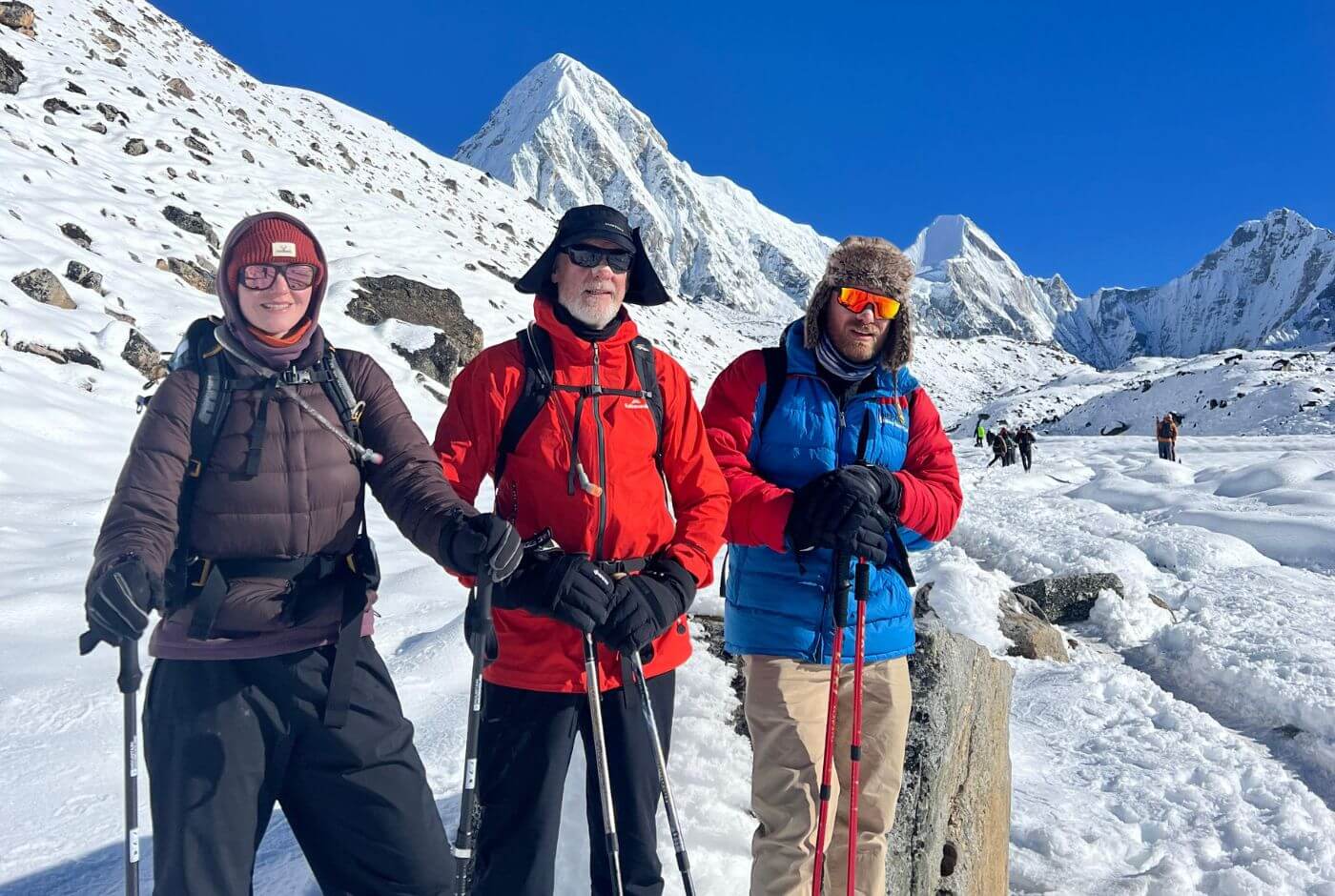
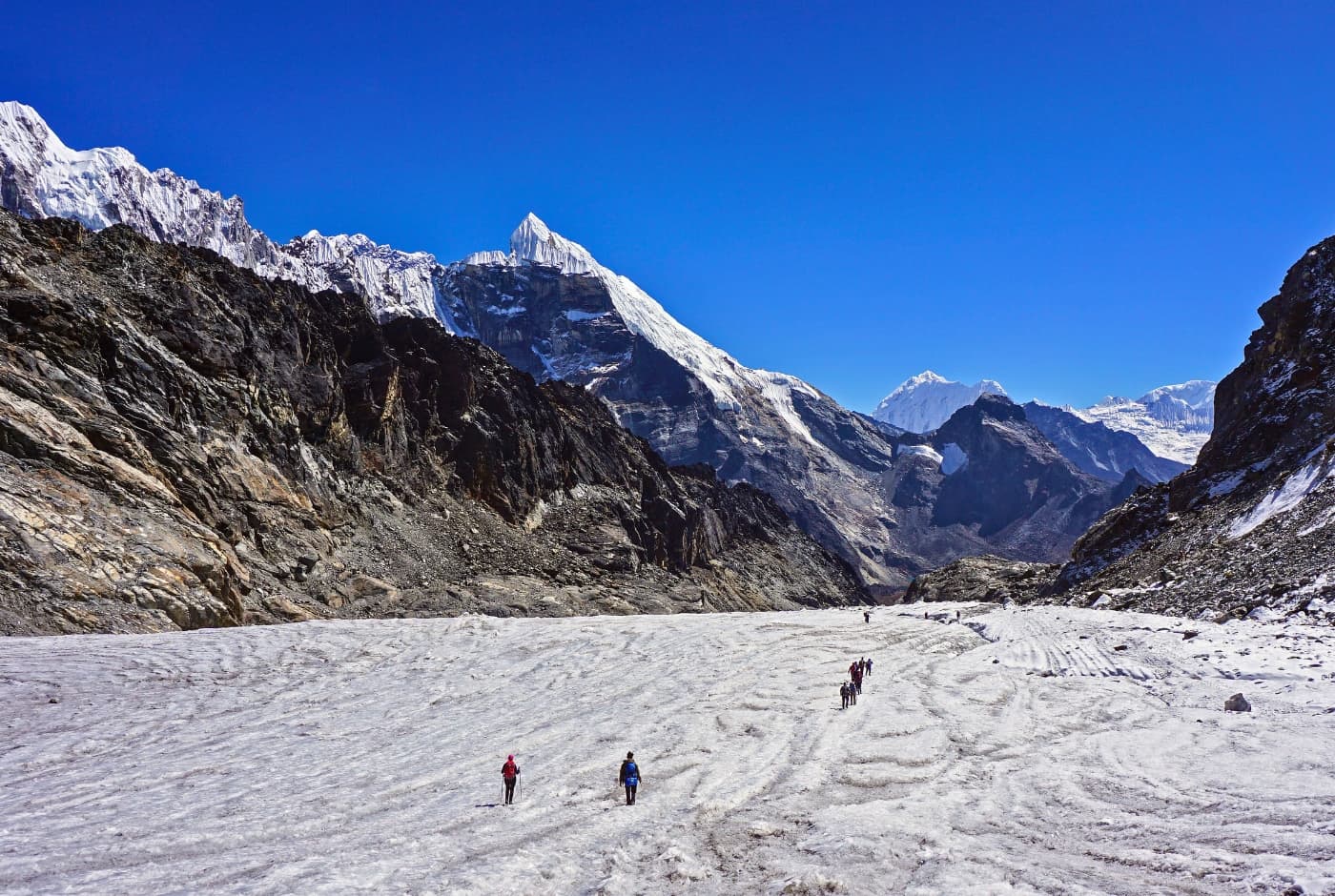
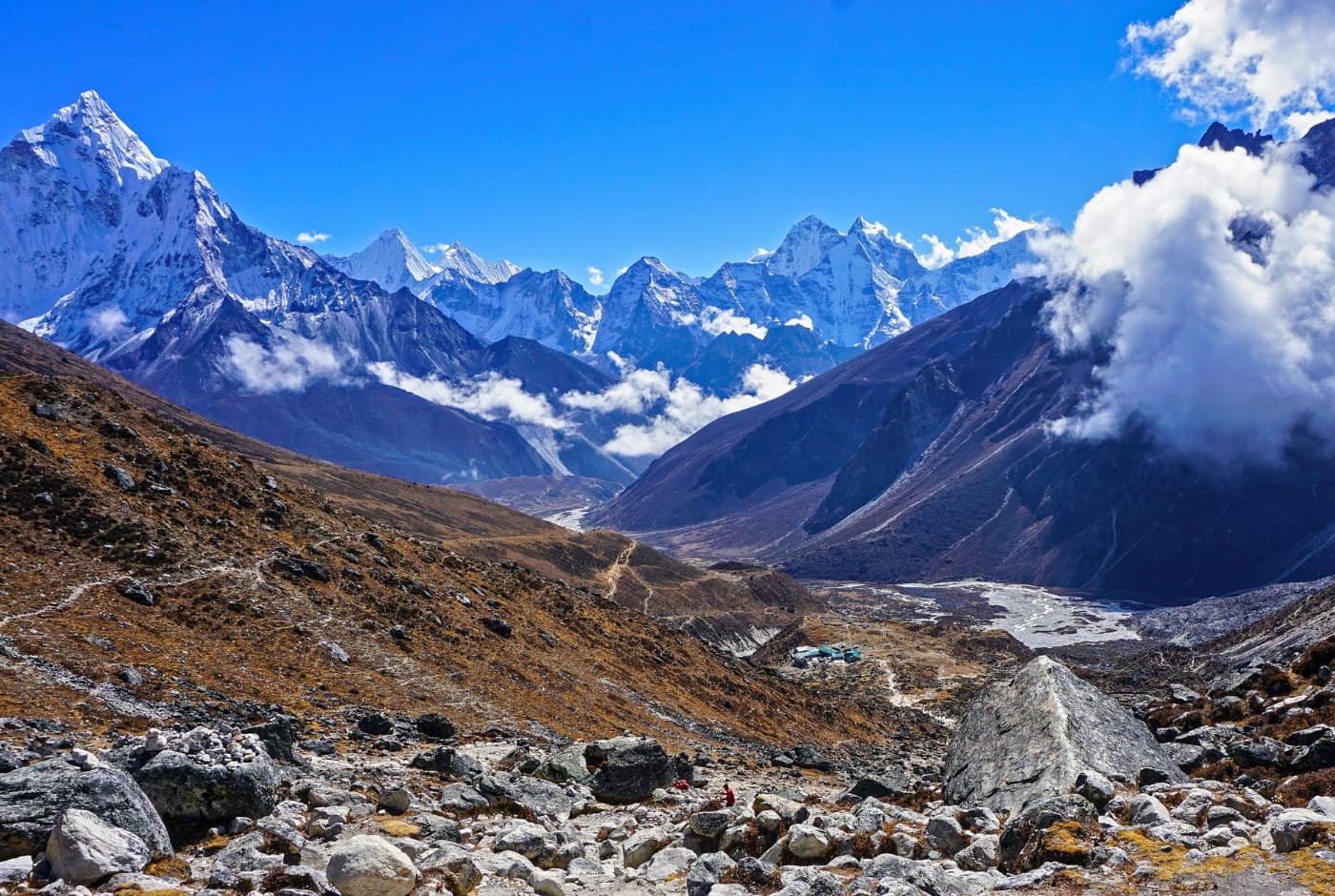
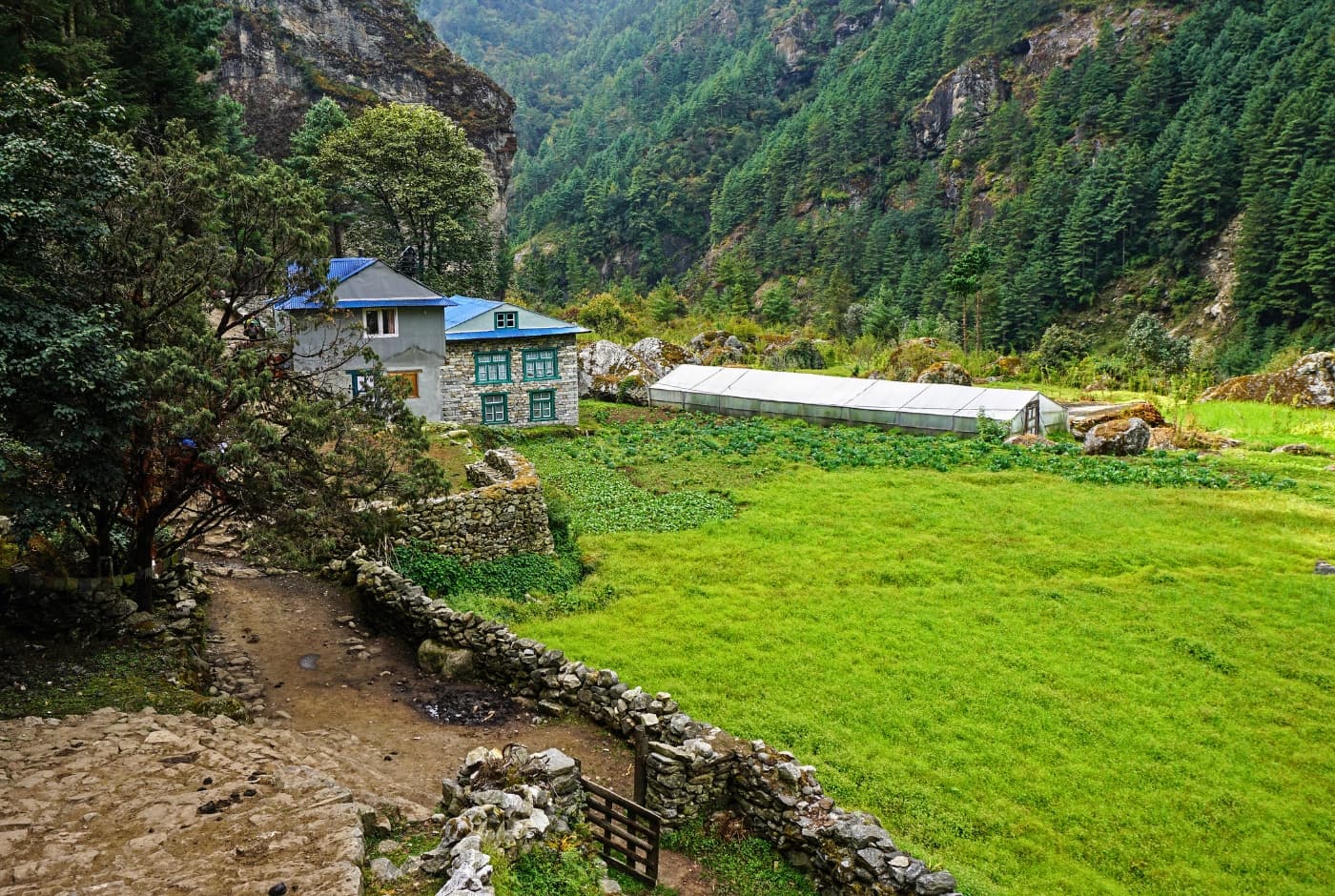
Imagine trekking through some of the most stunning natural landscapes, pushing your limits, and immersing yourself in the unique culture of the Sherpa people. That’s what the Everest Base Camp with Gokyo Heli Shuttle Trek offers – an adventure that will take your breath away.
Combining the most famous hike to the Everest Base Camp with the relatively unexplored wonders of the Gokyo Valley via the Cho La Pass, we bring the EBC with the Gokyo Lake Heli Shuttle trek.
Join us to visit the “land of the Sherpas” on this adventure to the heart of Khumbu. We assure you it’ll be the ultimate adventure of your life that will stay with you long after you return home!
You’ll be walking alongside our highly experienced guide. He’ll navigate you through the Himalayas and tell you interesting stories along the way.
In this overview, you’ll learn everything you need to know about the Everest Base Camp with Gokyo Heli shuttle Trek.
After arriving at the Tribhuvan International Airport, you’ll first be greeted by one of our staff. He will then take you to the hotel in Kathmandu, where you will spend two nights.
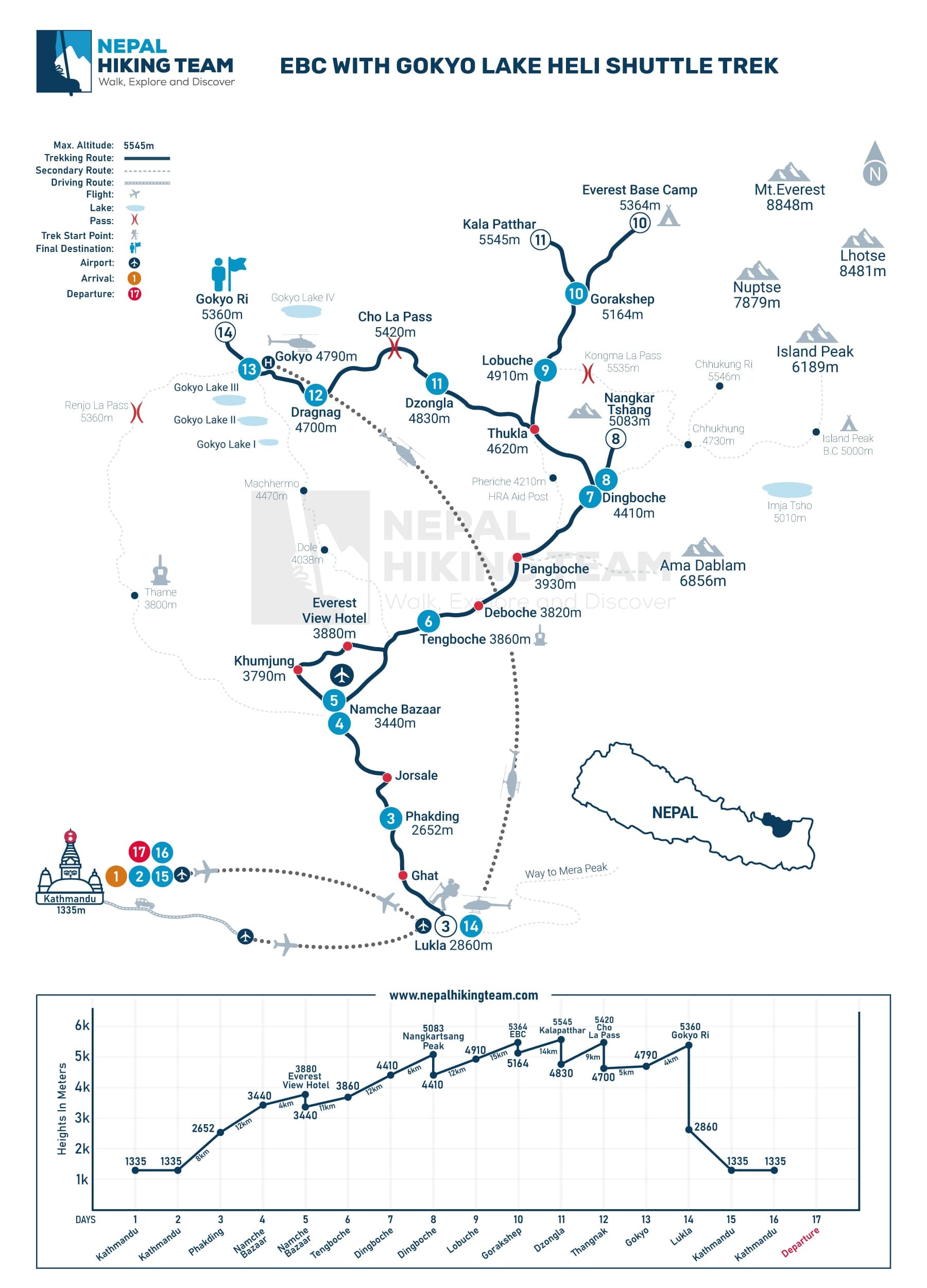
You’ll begin your journey by catching a flight to Lukla and continue walking for 3-4 hours to reach Phakding. Here you’ll stay for the night and continue marching towards Namche Bazar. You’ll stay in Namche Bazar for one more night to help your body adjust to the high altitude. On this day, you’ll hike up to Everest View hotel and enjoy the 360-degree view of the mountains from there.
Commencing the trek, you’ll pass through the Sherpa villages like Tengboche, Dingboche, and Lobuche before reaching Gorakshep, the last stop to reach the Everest Base Camp. In Dingboche, you’ll again stay for an extra night for acclimatization purposes.
After enjoying the accomplishment of reaching the Everest Base Camp, you’ll return to Gorakshep for an overnight stay. Thereafter, you’ll hike up to Kala Pathar and catch the breathtaking sunrise from there. Now, walking on a steeply ascending trail, you will reach Dzongla and cross the Chola Pass. Moving forward, you’ll walk towards the Gokyo Lakes and hike up to the Gokyo Ri.
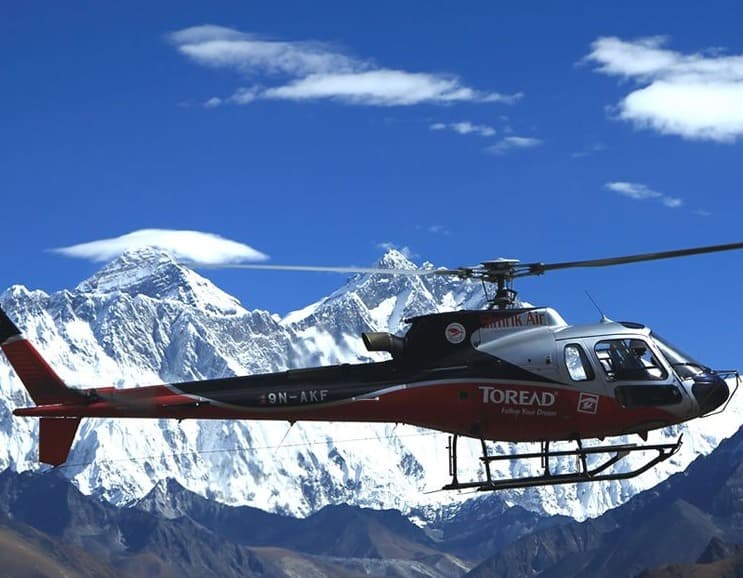
From Gokyo, you’ll fly over the Himalayas and return to Lukla via Helicopter. You’ll mark the end of your journey by catching a flight back to Kathmandu from Lukla.
Our journey to EBC with Gokyo Heli Shuttle Trek is indeed exhilarating and offers a unique experience. However, when should you embark on this journey to get the most out of it?
Spring and Autumn mark the most suitable time to embark on this journey. The arrival of spring brings back life in Nepal. With the full bloom of rhododendron forest and wildflowers, the trails will be more vibrant and colorful. The warmth of the spring will make your journey more enjoyable. In contrast, the autumn season offers a complete experience. Even though you’ll walk along the same trail, the breezy wind of the Autumn will let you enjoy the hike even better.
Due to the harsh weather conditions and safety concerns, trekking during monsoon and winter is not recommended. During the monsoon season, the trails will be slippery, making the hike more challenging, whereas, in winter, it’ll be difficult to cross the Chola Pass because of blocked routes with heavy snowfall.
Now that you know everything about the trek, let's clarify its difficulty level.
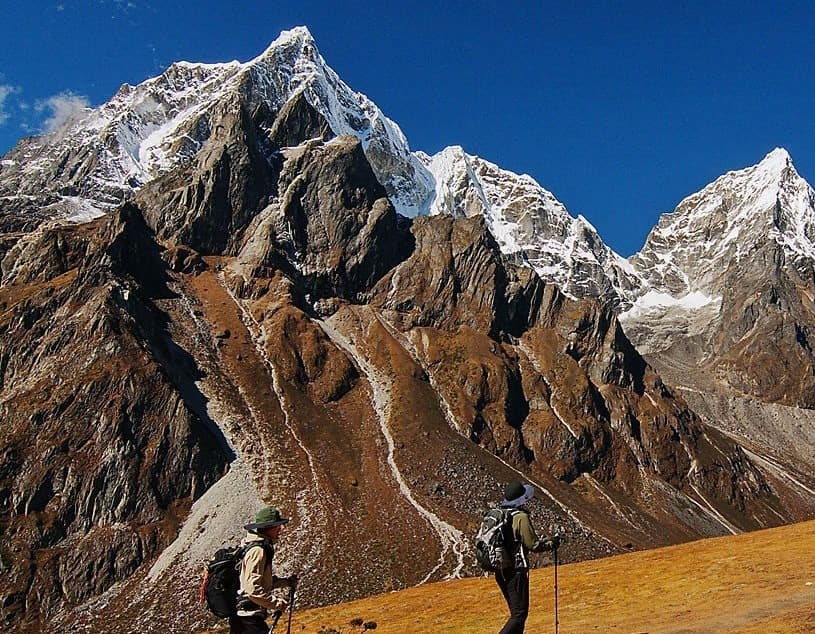
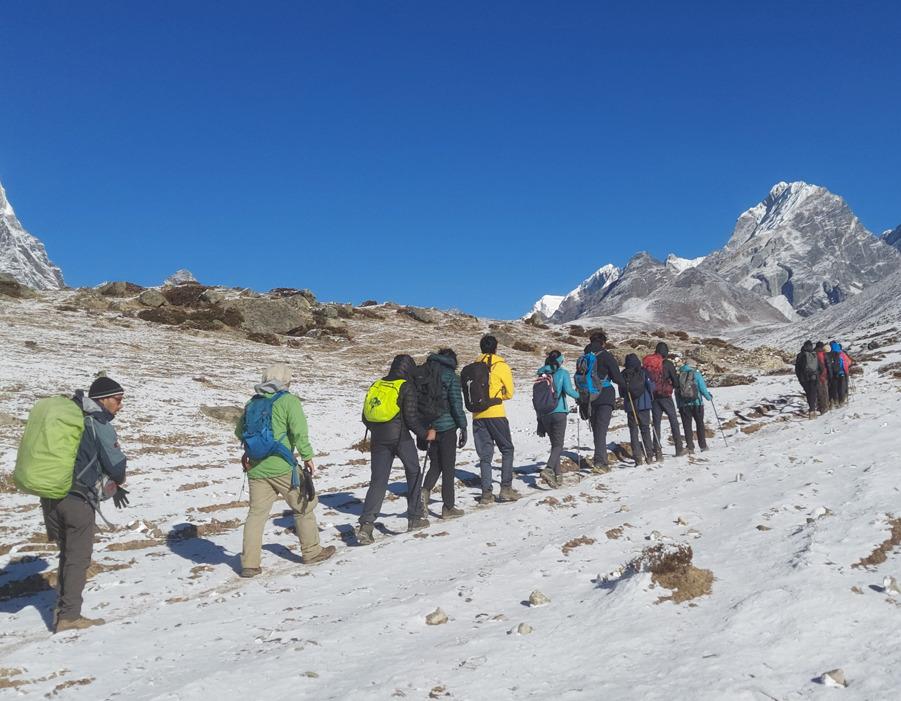
In terms of how demanding the trek is, it is a moderate-level journey. It takes you through some of the most incredible landscapes in Nepal, with towering peaks, winding valleys, and sparkling lakes that will take your breath away.
Of course, this isn't a walk in the park - you'll be trekking for several hours each day, up and down some steep inclines, and navigating some challenging terrain. But don't worry! There are plenty of rest stops to help you acclimate and catch your breath. Having said that, this journey does require you to stay physically fit.
Who doesn’t love more options to explore, right? Here are some of the alternative treks:
Skips Everest Base Camp and Cho La Pass, focusing on Gokyo Lakes with a scenic helicopter experience over the Himalayas.
Classic Everest Base Camp journey through the Khumbu region with Kala Patthar viewpoint and cultural Sherpa villages along the route.
Direct trek to Everest Base Camp with helicopter return from Gorakshep to Lukla, offering a fast and scenic Himalayan exit.
In any case, we assure you that we will provide the best service. Even if you want to customize your trip, no worries; we are here to help you in any way we can.
During the peak seasons for the trip-name (March to May and September to November), all the Lukla flights will be operated from the Manthali Airport due to congestion at Tribhuvan Airport.
Namaste! The Nepal Hiking Team welcomes you to Nepal!
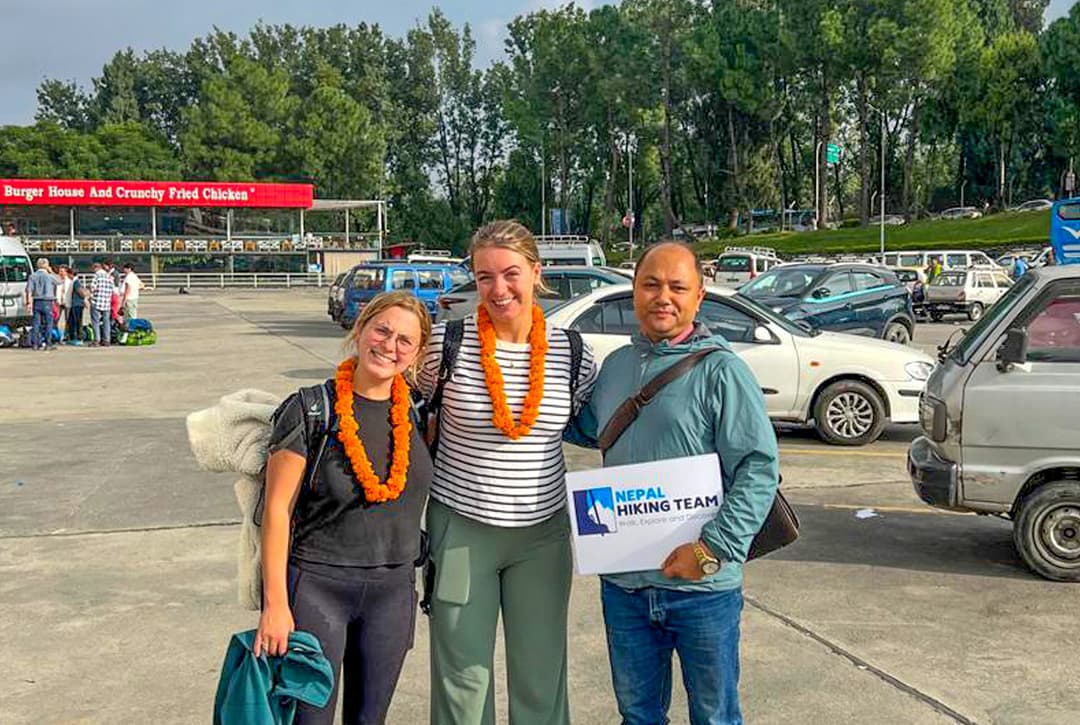
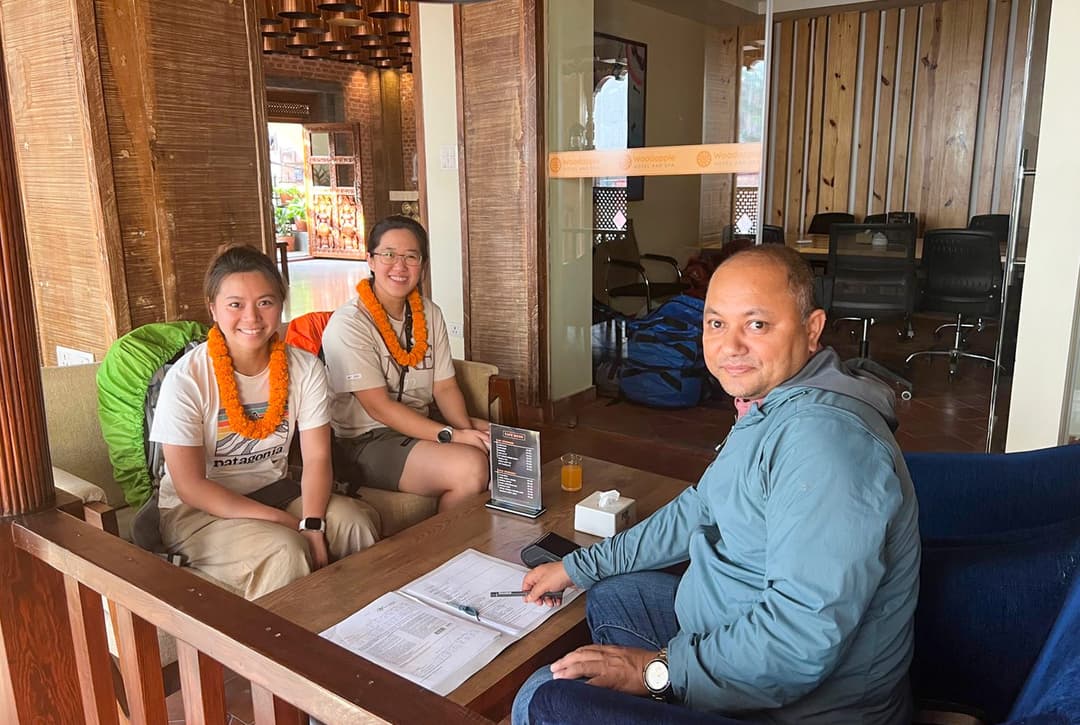
Arrive at the Tribhuvan International Airport, Kathmandu and our representative from Nepal Hiking Team will receive you straight from the Airport! We will also drive you to your hotel in our private vehicle where you will be spending the night. Meanwhile, you can further inquire about any information regarding the program.
Free day/Preparation day in Kathmandu allows you to acclimatize to the altitude, recover from potential jet lag, and get your bearings before the main trek begins. This day can be used to purchase any last-minute gear and attend a trek briefing.
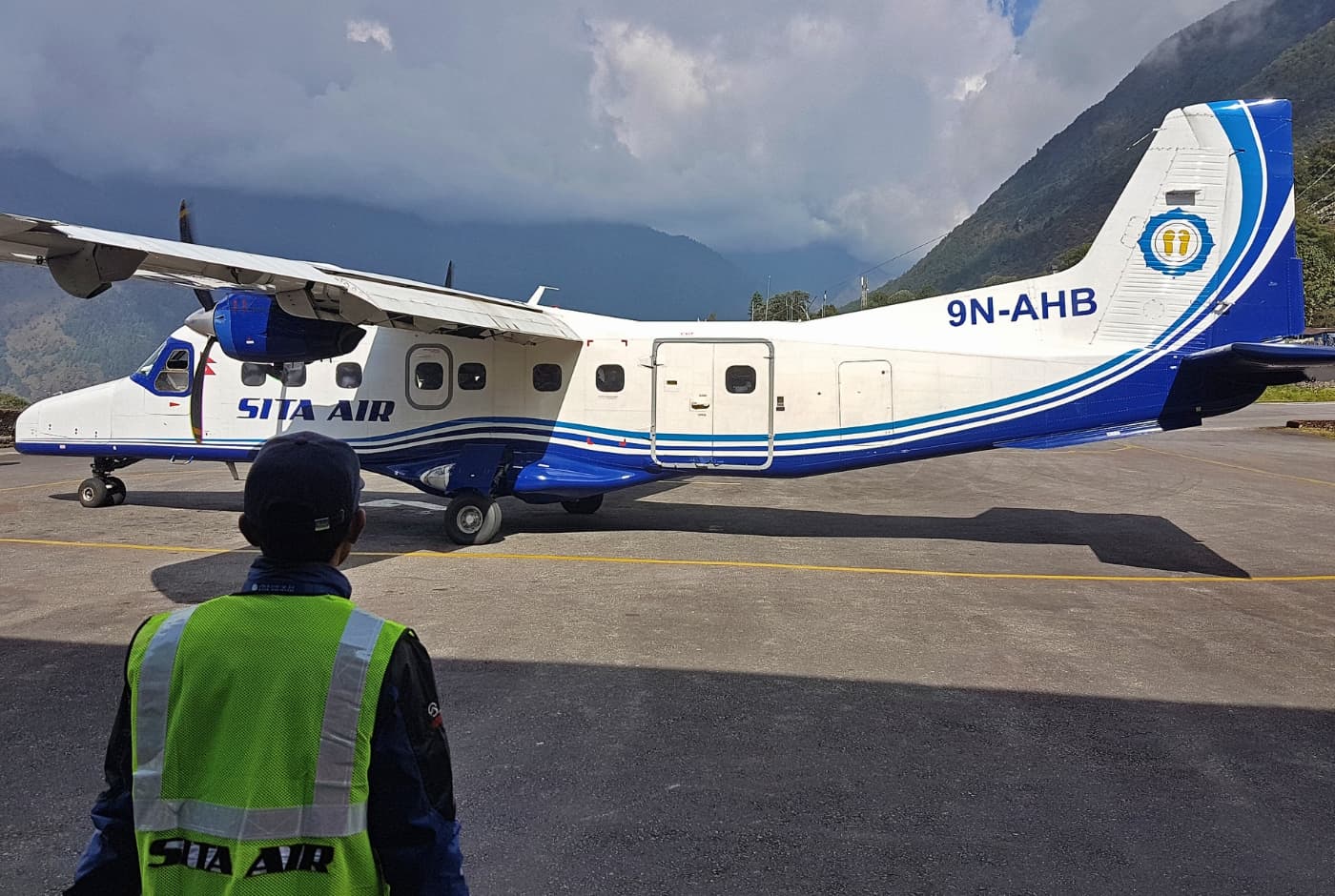
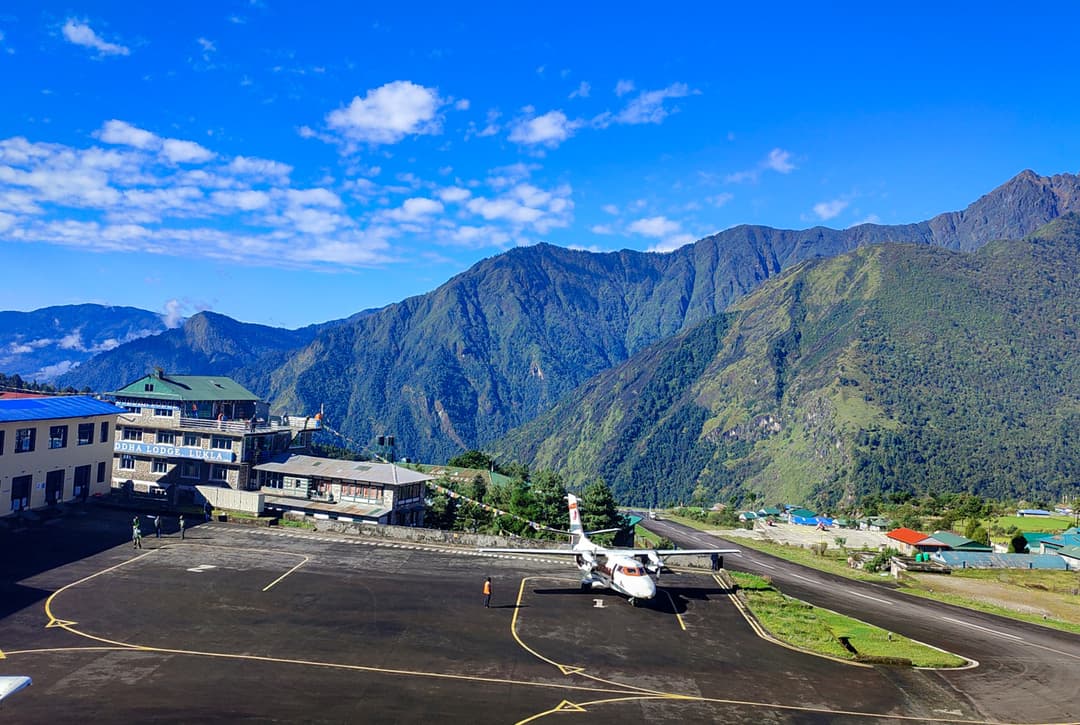
From Kathmandu, a 25-minute flight to Lukla commences the trek. The Lukla flight is one of the most dramatic short flights in the world. The Tenzing Hillary Airport itself is located at the edge of a hill and has a single runway that drops off to the deep gaping valley below. Surrounded by tall mountains and jaded hills, the airstrip at Lukla is fascinating and the flight is deemed a thrilling adventure itself.
This flight to Lukla takes us to the gateway of the Khumbu Region - the land of the Sherpas. The mountainous landscape becomes prominent as the air carries a crisp freshness to it that can only be felt in the Himalayan region. From Lukla, we begin trekking towards the Cheplung Village from where you have a clear view of Mount Khumbila
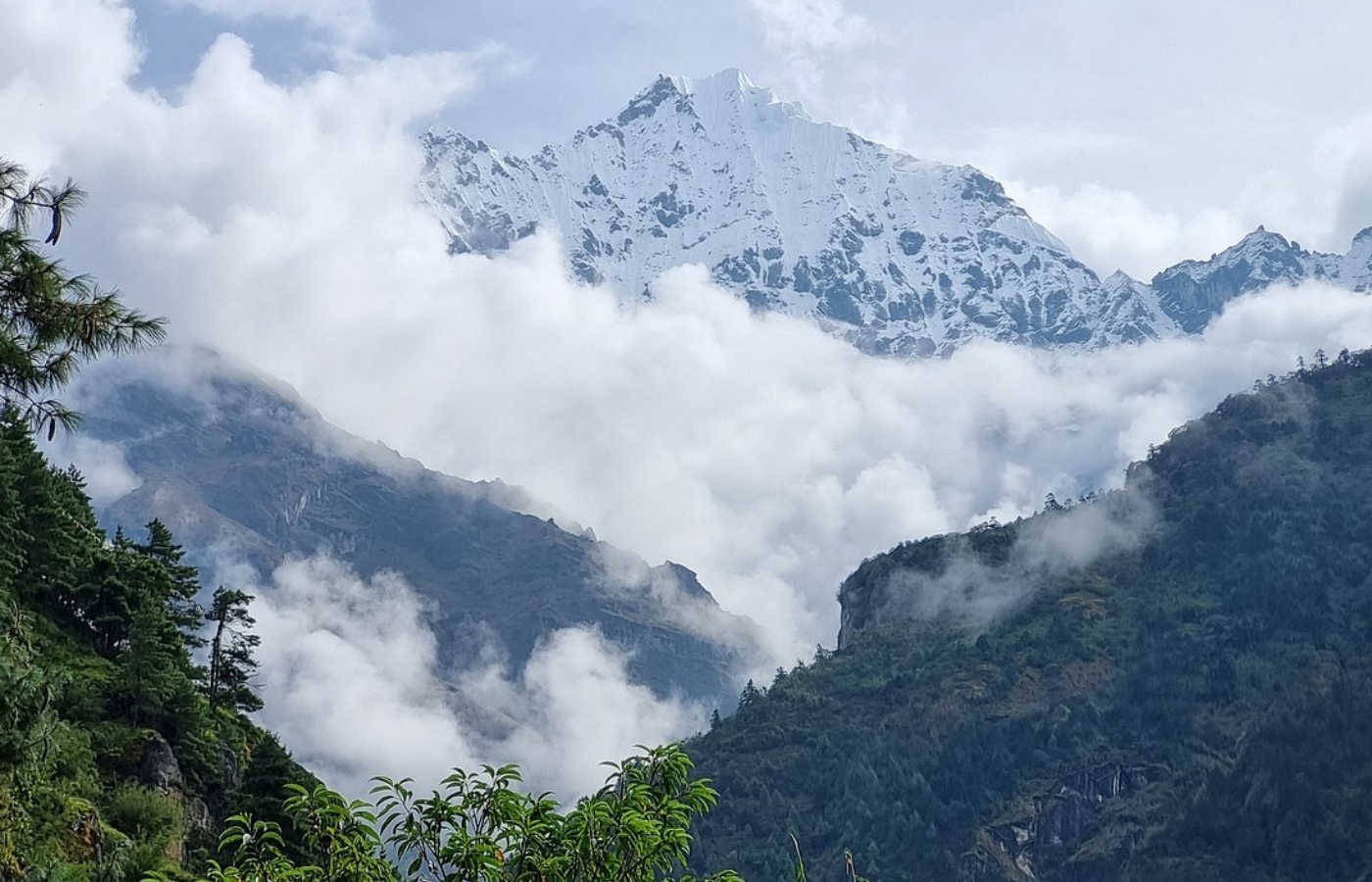
From Cheplung, a gradual walk downwards leads us to the village of Phakding. The view from here is amazing as tall hills surround the trail like giant mounds of emeralds. Kusum Kanguru Mountain can be clearly viewed from here.
The village of Phakding lies in the Dudh Koshi River Valley, north of Lukla and has many guesthouses and lodges that cater to trekkers. We will spend the night at Phakding.
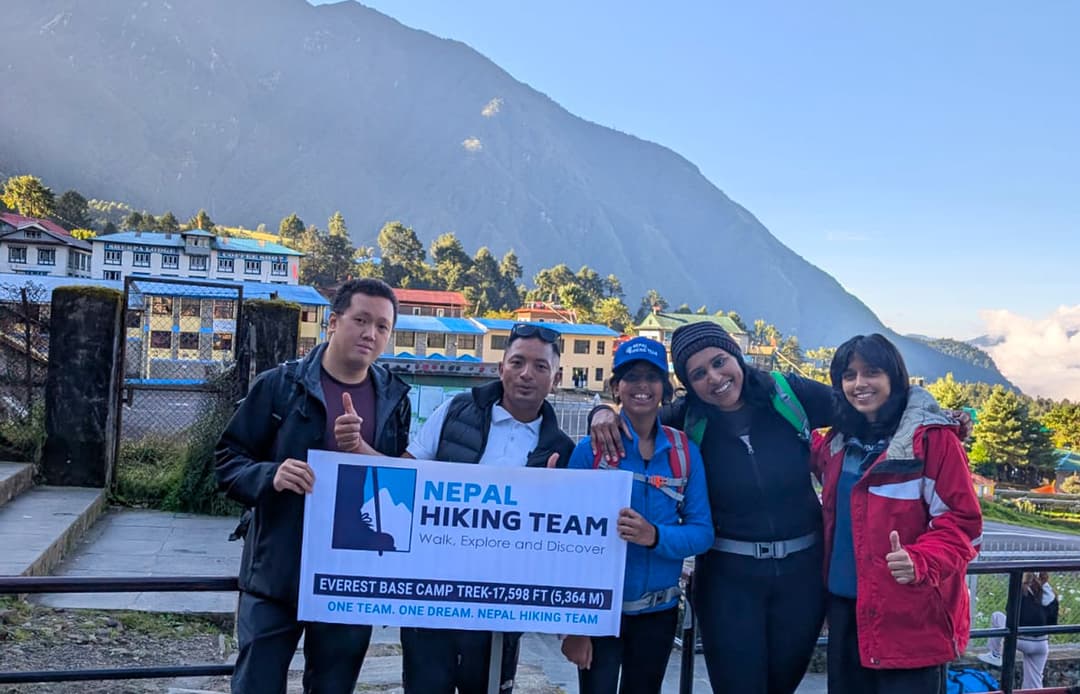
After breakfast at Phakding, the trail further opens out to reach the celebrated mountain town of Namche Bazaar. En route to Namche, we pass through several other smaller villages like Jorsale and Monjo. Monjo lies north of Phakding and is the entry point of the Sagarmatha National Park. The trail ventures through the national park and finally arrives at Namche.
The Sagarmatha National Park trail is alongside dense alpine woods, the gorgeous Dudh Kosi river, small brooks, and evergreen-deciduous forests. Thick acreages of Pine and Cedar cover the lands and provide a pleasant atmosphere to trek through.
Also containing upper catchments of the Dudh Koshi River and the Bhote Koshi River basin, the Sagarmatha National park is riddled with Blue Pine, Birch and Juniper Berries that are home to many endangered species of animals like Himalayan Tahrs, Langur Monkeys, the Musk deer, and Himalayan Black Bears.
Namche Bazaar, because of its strategic location, is the commercial hub of the Khumbu region. It is located on almost the edge of a mountainside and the view of the Thamserku Peak, Kongde Ri Himal from here is simply amazing.
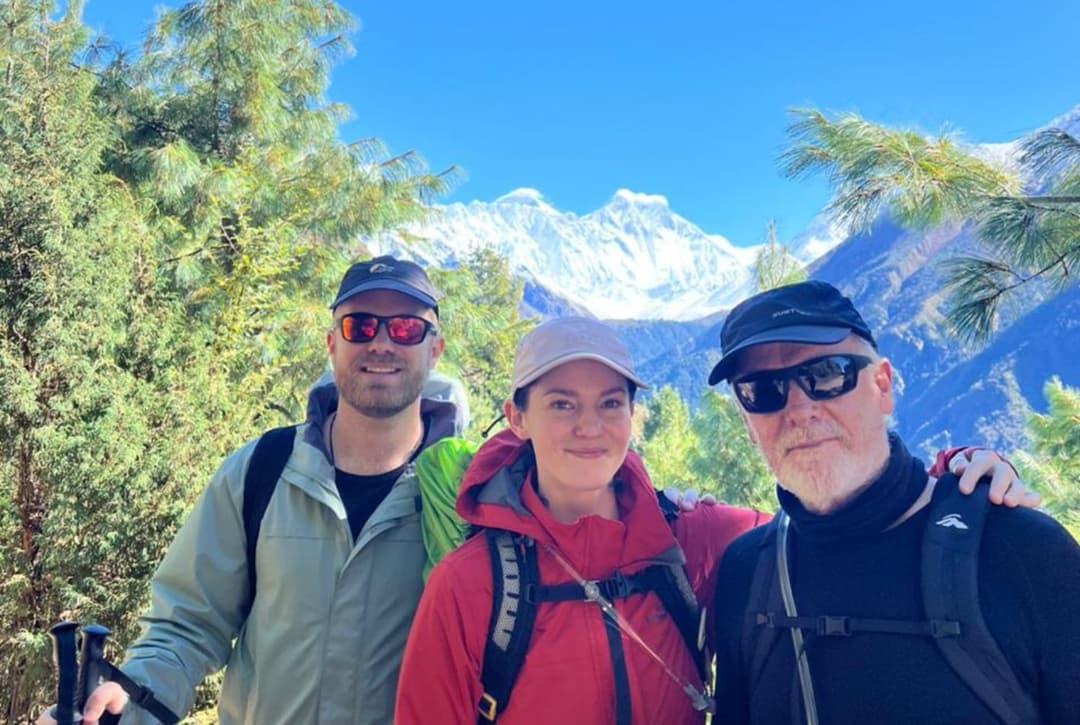
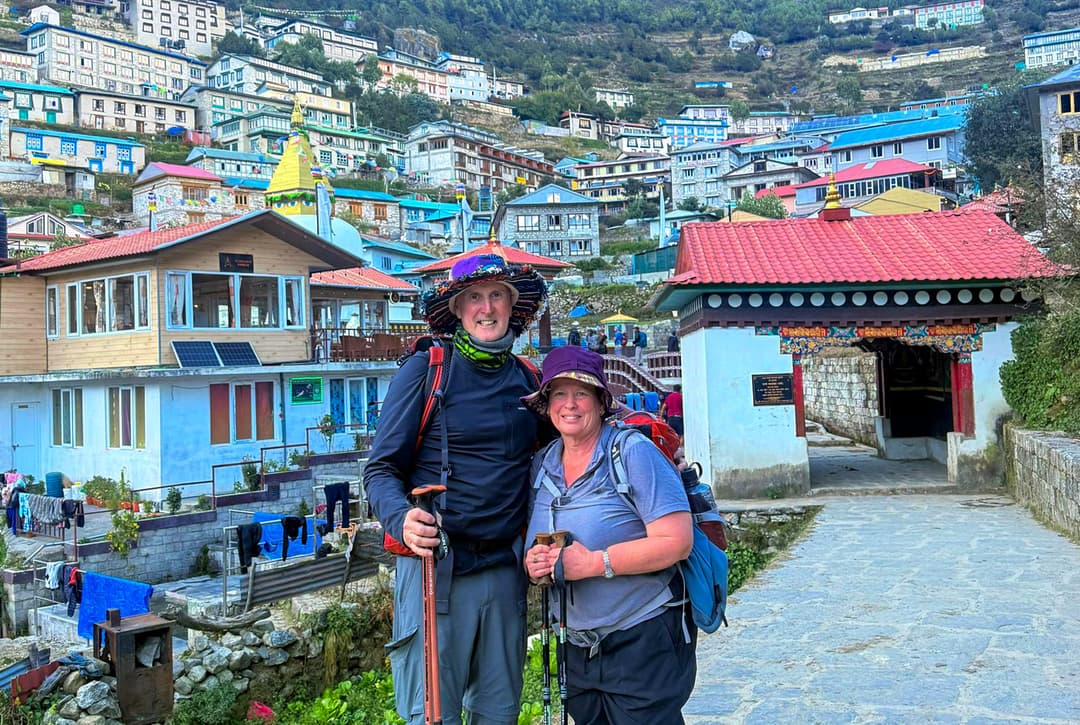
After breakfast at Namche, we will only pack a few necessary items and hike to Everest View Hotel at 3780 meters. The best way to acclimatize is to hike to a higher elevation and sleep on a lower one. We will hike up approximately 400 meters and come back down to Namche.
The view from Everest View Hotel, however, is known for its panoramic view of the Everest Himalayas. The hotel is the highest-located hotel in the world and we can have coffee while enjoying the spectacular parallel view of Everest and other Khumbu Mountains.
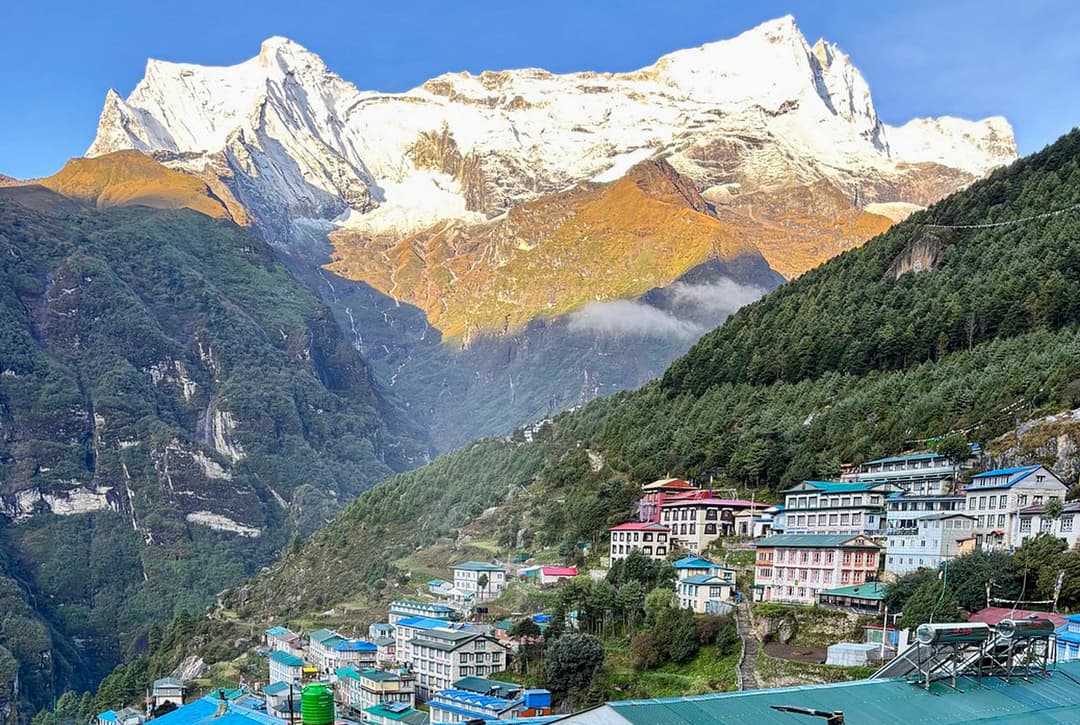
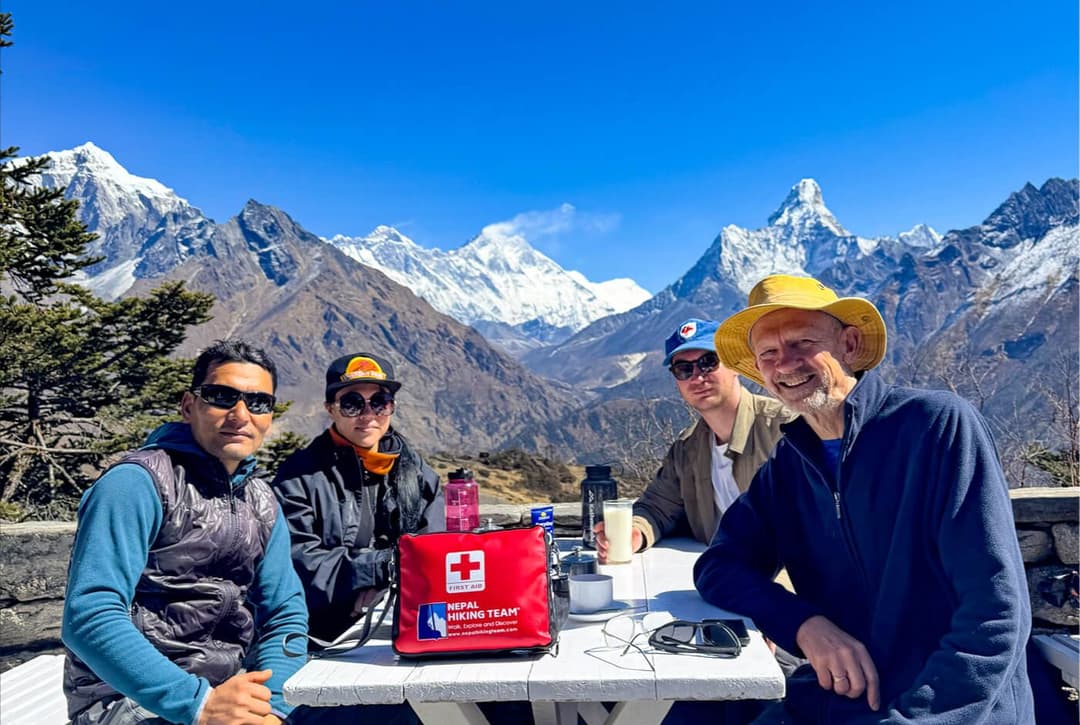
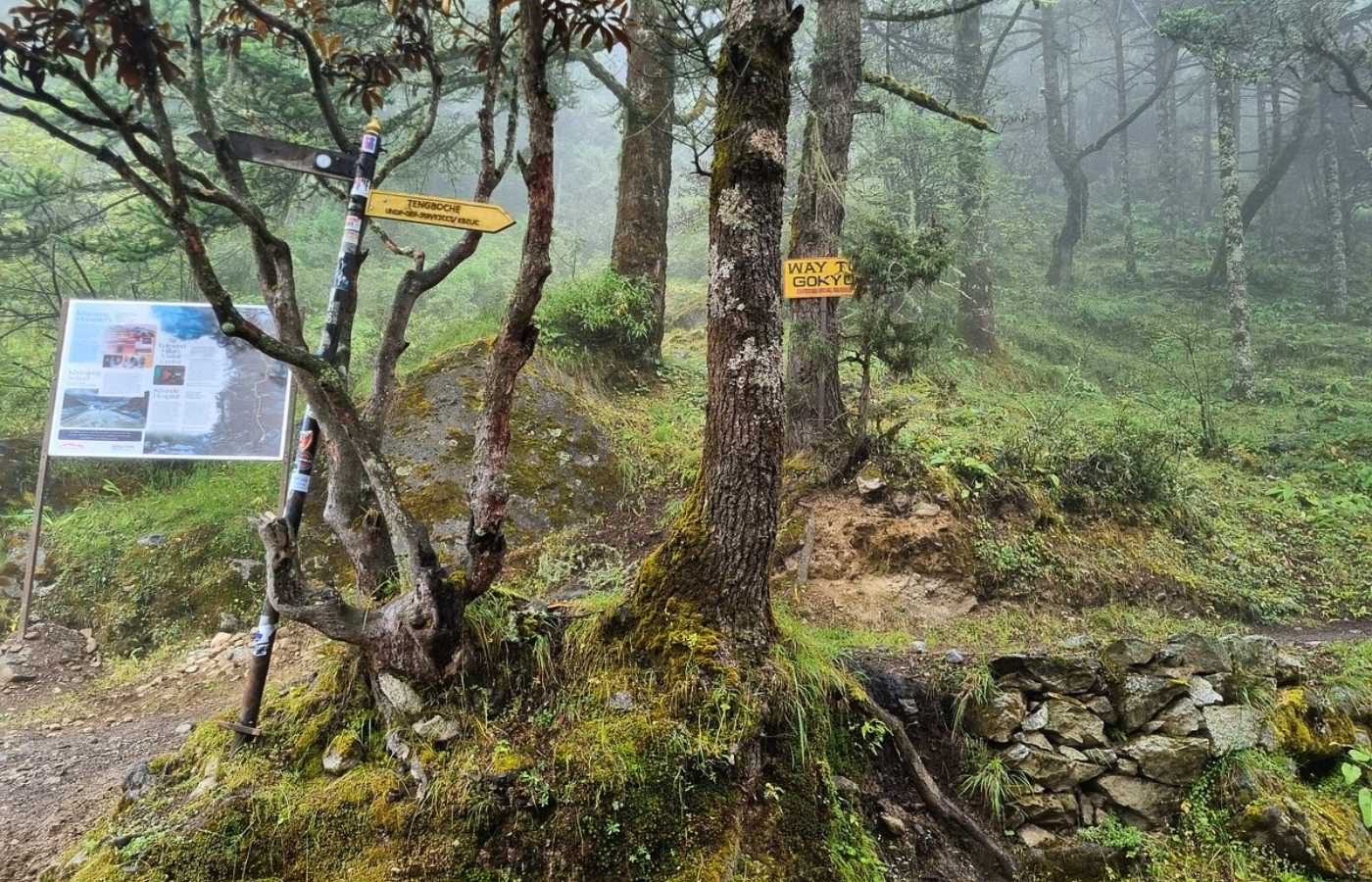
An easy trail from Namche opens out towards the Dudh Kosi Valley at the settlement of Phungki Thanka. From the settlement, the views of Mount Everest are magnificent. Following the trail that marches along the right side of the Dudh Koshi River, it is an upward trek to the village of Tengboche.
The journey from Namche to Tengboche is along gorgeous rivers, hills, and Himalayan peaks. Surrounded by tall hills covered in rhododendron trees, the village of Tengboche is located at the confluence of the Dudh Koshi and the Imja Khola rivers.
The village is also famous for Tengboche Monastery, the largest monastery of the Khumbu region. The Tengboche Monastery is regarded as the spiritual hub of the Khumbu region by Buddhists and is surrounded by forests that are inhabited by Impeyan Pheasants and eagles. The monastery is a hamlet from where Mount Ama Dablam, Mount Everest, and numerous other peaks can be seen clearly.
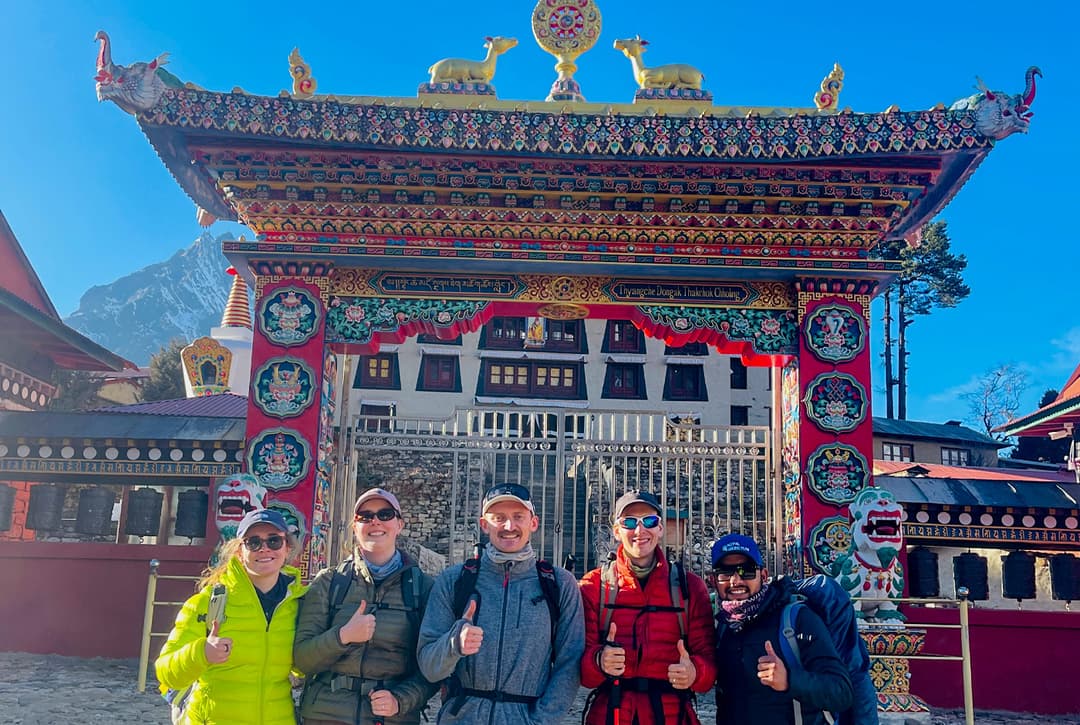
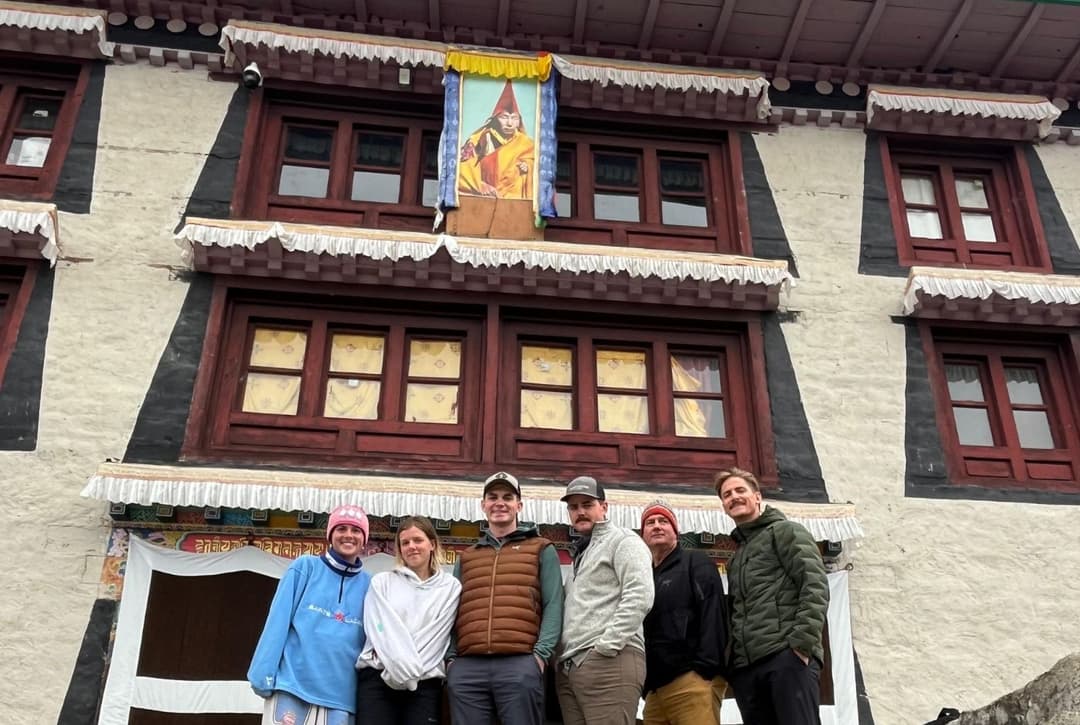
After breakfast, we begin the trek to the village of Dingboche on a trail that crosses the Imja River via a suspension bridge. We will cross the village of Pangboche on our way. We reach Dingboche after another few hours and will spend the night there.
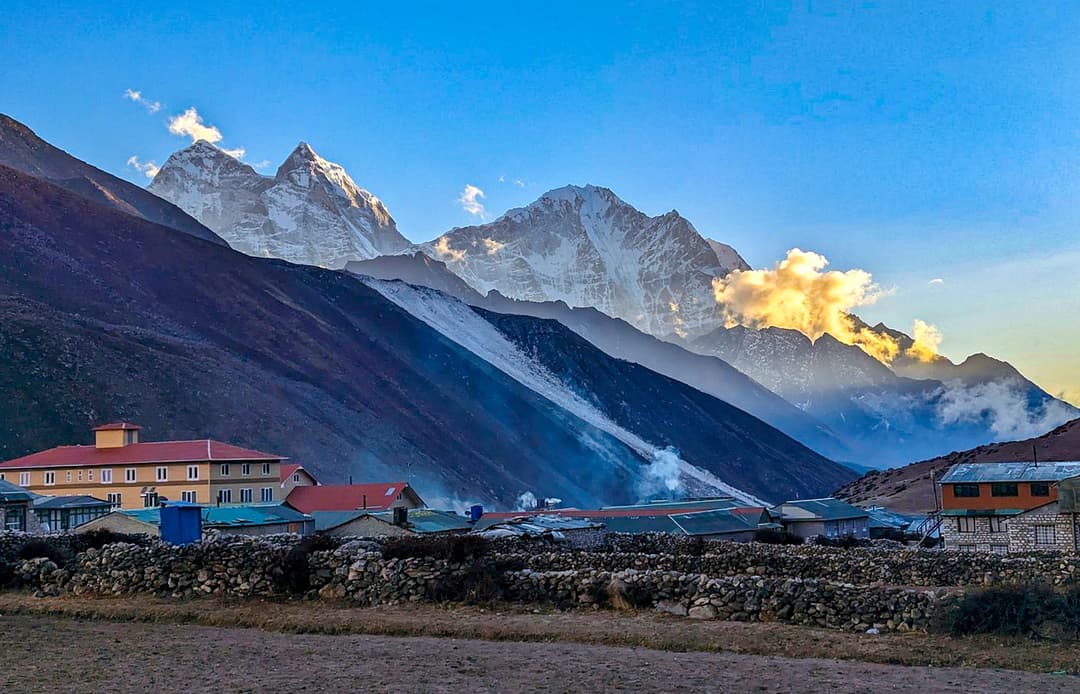
Dingboche is called the “Summer Valley” of the Khumbu and contains a kilometer long wall built to protect the village’s crops from the cold winds that descends down the Imja Valley. Graceful views of Lhotse, the Ama Dablam, and the Island Peak are visible from Dingboche.
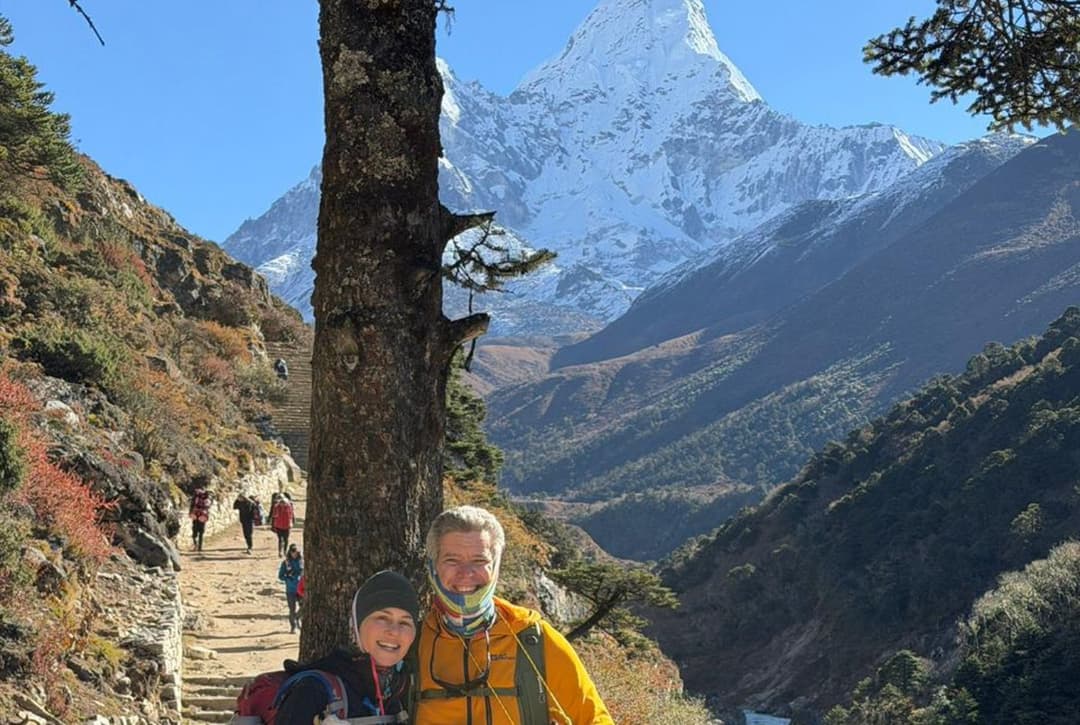
A hike to Nagarjuna Peak is a great way to acclimatize and spend time at Dingboche. Located at a height of 5100 meters, Nagarjuna Peak lies just above Dingboche on a hill at the edges of the Chhukung valley.
The hike is uphill, steep, windy, and requires strenuous energy. Walking for approximately 3-4 hours, we will reach Nagarjuna Peak from where we will be surrounded with mountains like Lobuche East (6119m), Lobuche West (6145m), Kangtega (6685m), Taboche Peak (6367m), Thamserku (6608m), and the Ama Dablam (6856m) on all sides.
If you are lucky, you can also spot stunning sights of Mount Makalu, the world’s fifth tallest peak on a clear day. The view of the Pheriche Valley from here is also splendid. The walk back to Dingboche is downhill and very easy.
After lunch, we can explore and relax in the village where we will spend another night again.
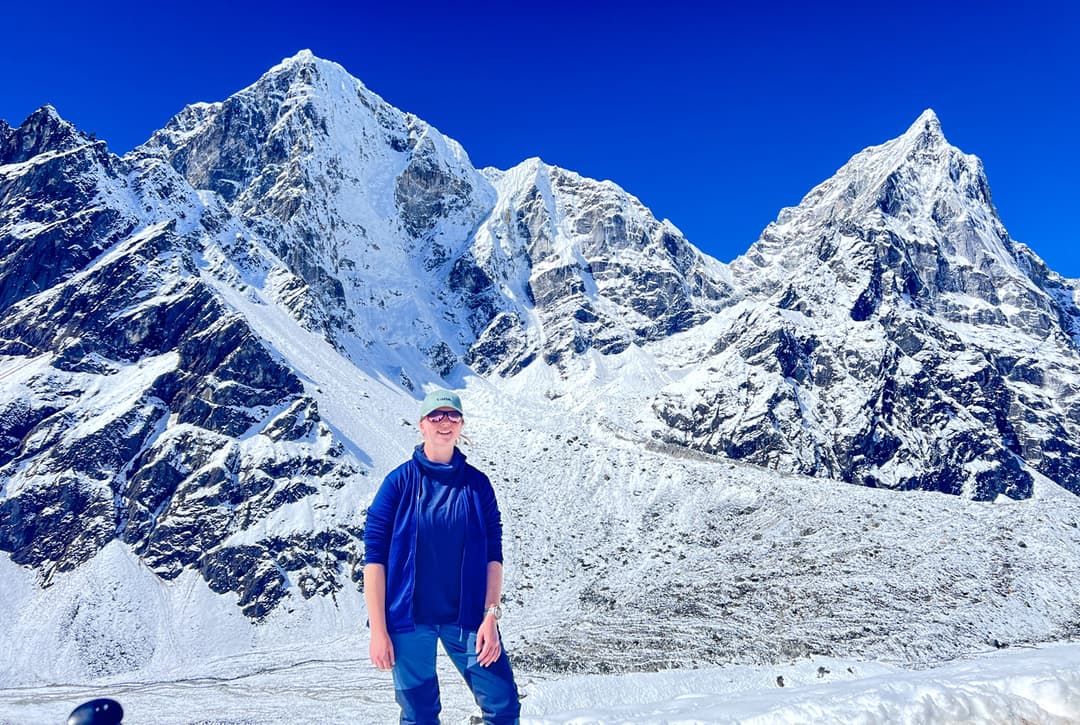
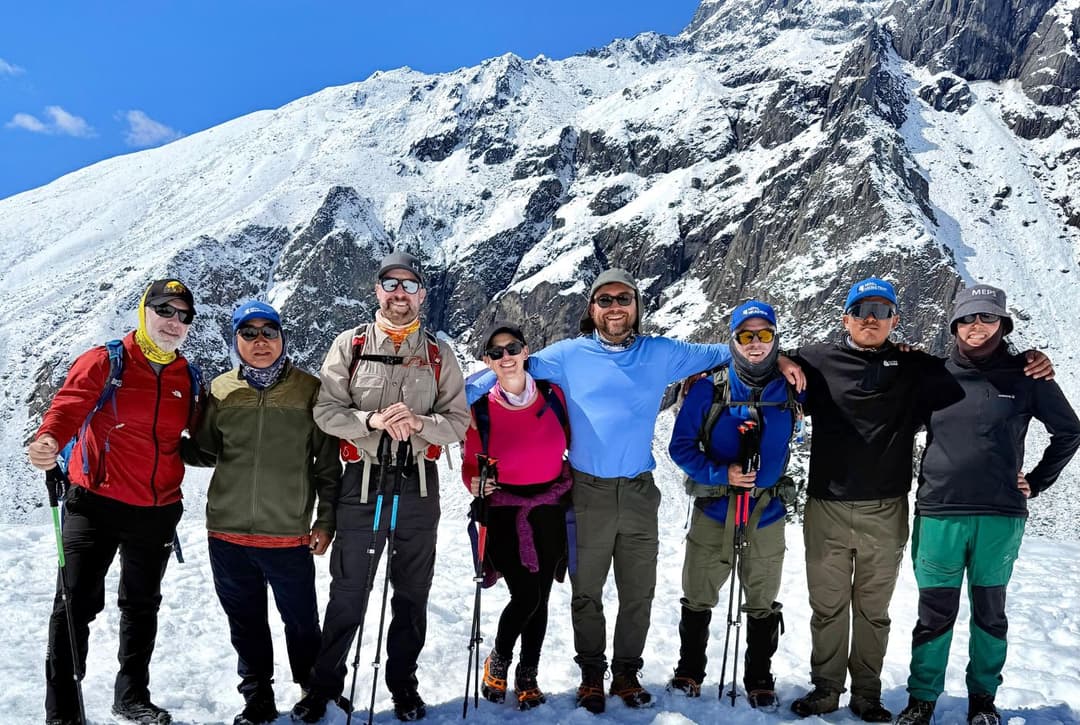
Making our way to Dhungla from Dingboche, we will come across the Trekkers Aid Post situated in Pheriche at 4210 meters. It is run by the Western Volunteer Doctors and assisted by The Himalayan Rescue Association. You can grab any necessary items that you may need or have run out of here.
From there, we leave for Chupki Lhara, a rock-strewn oblique from where we’ll have a 360-degree view of the Everest Himalaya. The path follows further down to the Khumbu Glacier moraine from there.
Mountain peaks like Khumbutse, the Mahalangur Himal, Lingtren and the Pumori are clearly visible from the moraine and Mount Nuptse also looms up ahead once we pass the glacier. We then will reach Lobuche where we will stay overnight at our guesthouse.
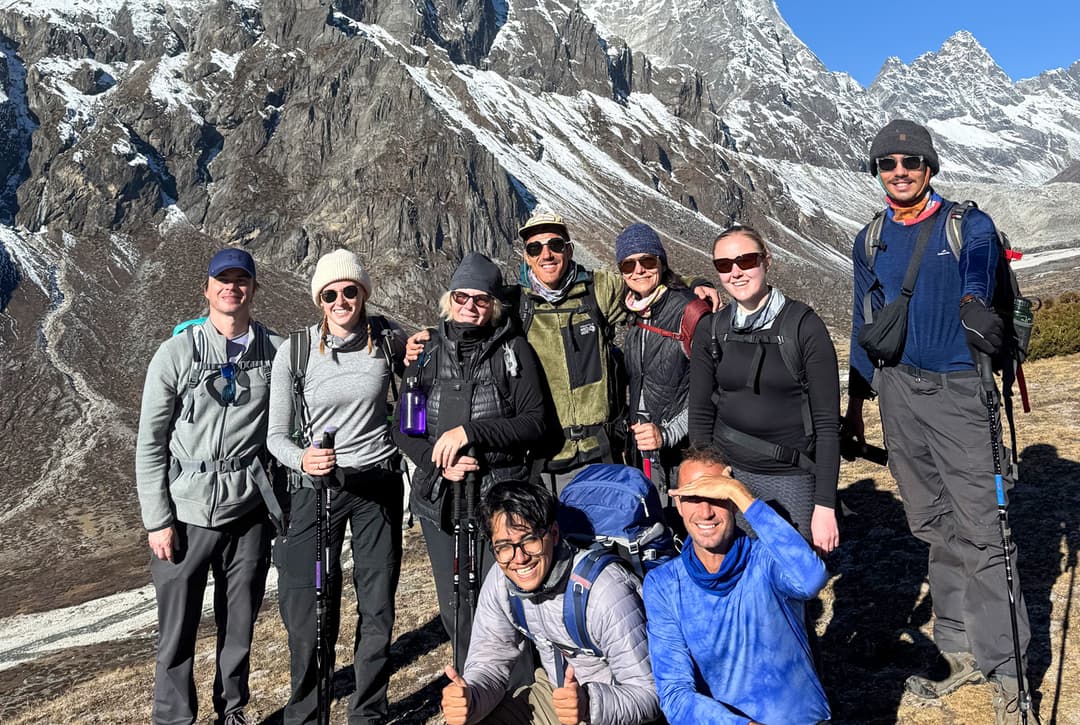
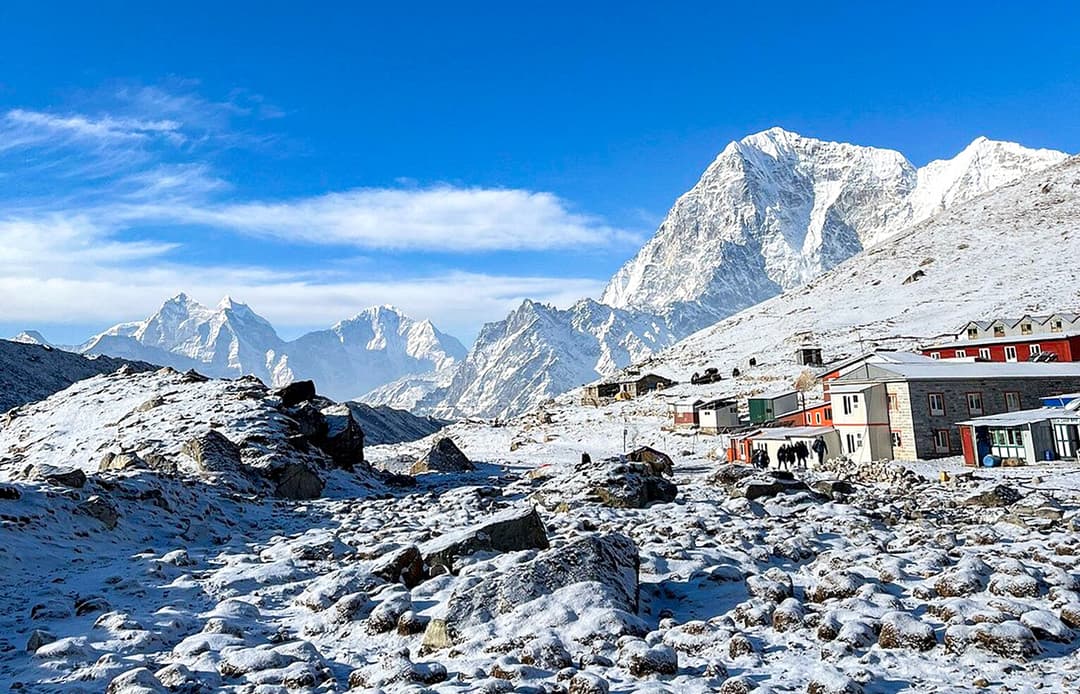
The most anticipated day of the trip will begin with a slow walk after breakfast. Further on from Lobuche, we keep our pace slow as we walk alongside Khumbu Glacier - the world’s highest glacier to avoid altitude sickness
Walking for about 2-3 hours from Lobuche, we will get to Gorak Shep at 5181 metres/16994 feet, a tranquil location dotted with some lodges. Gorak Shep is a frozen lakebed covered with sand and surrounded by the Everest Mountains.
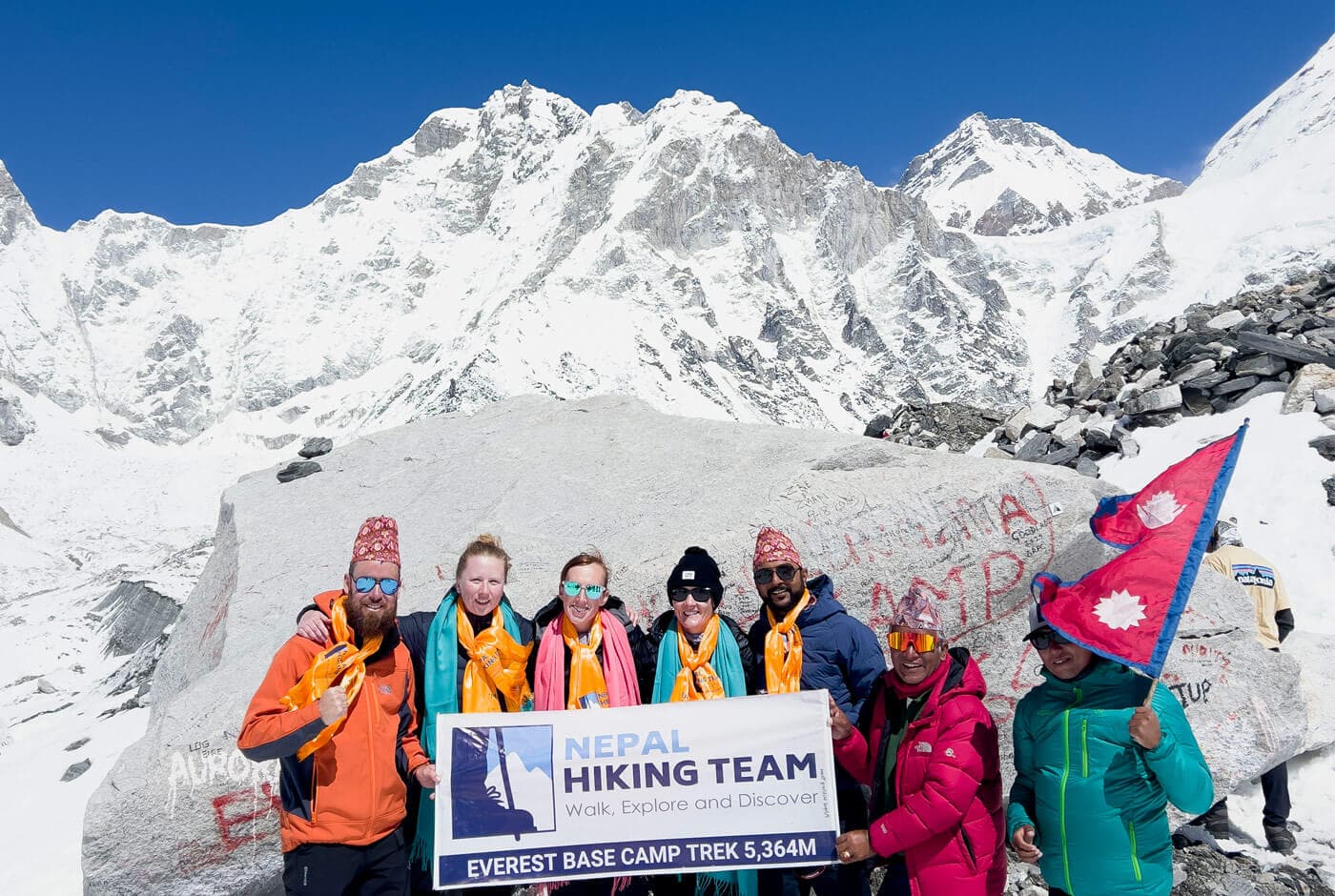
From here, the path moves uphill to the top of the edge, finally arriving at the Everest Base Camp. Congratulations! We made it to the foothills of the highest mountain in the world! From here we will clearly see the stunning Khumbu Icefall and the magnificent Khumbutse and Lingtren mountains.
After taking hundreds of photos and taking a moment to digest all that we’ve achieved, we’ll spend some time at the base camp before we head back to Gorak Shep where we’ll spend the night.
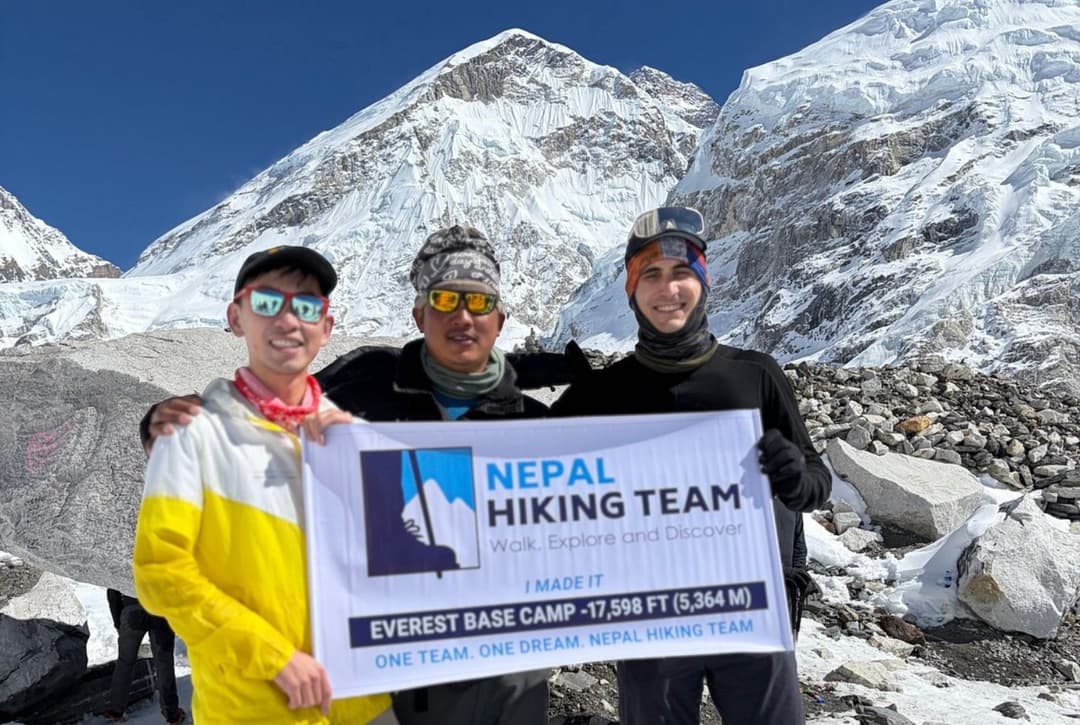
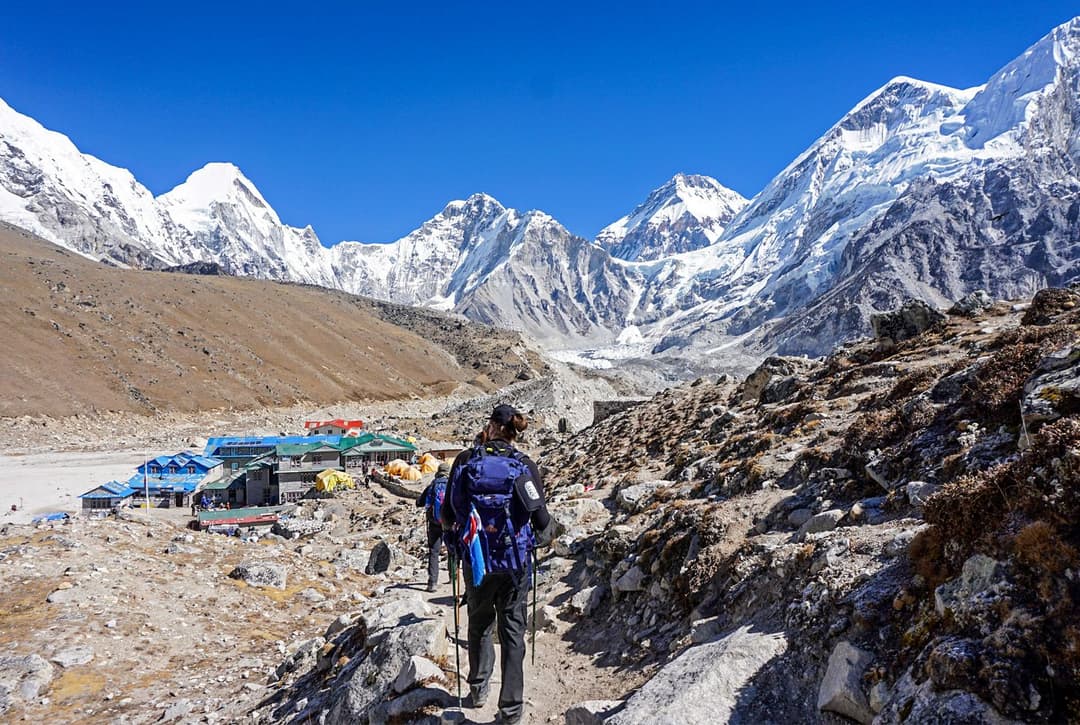
The day starts with a hike up to Kalapattar (5545m/18188ft), the best viewpoint to witness Mt. Everest and the spectacular Himalayan range. Then trek back to Gorekshep for hot breakfast and then descend to Dzongla 4830m/15840ft
An early morning hike to Kala Patthar - the highest point of our trek - from Gorak Shep is one of the major highlights of this trip. Kala Patthar is a famous vantage point popular for providing panoramic views of Mount Everest, Nuptse, Chagatse, Lhotse and the Pumori among many other peaks.
We will begin before dawn for our hike to Kala Patthar because the sight of the rising sun seen from this vantage point is absolutely amazing. As the sun rises from amidst the Mount Everest Mountains, it changes the color of the mountains from silver to gold.
After spending time at Kala Patthar, we will return to Gorak Shep and walk down to Dzongla where we will spend the night.
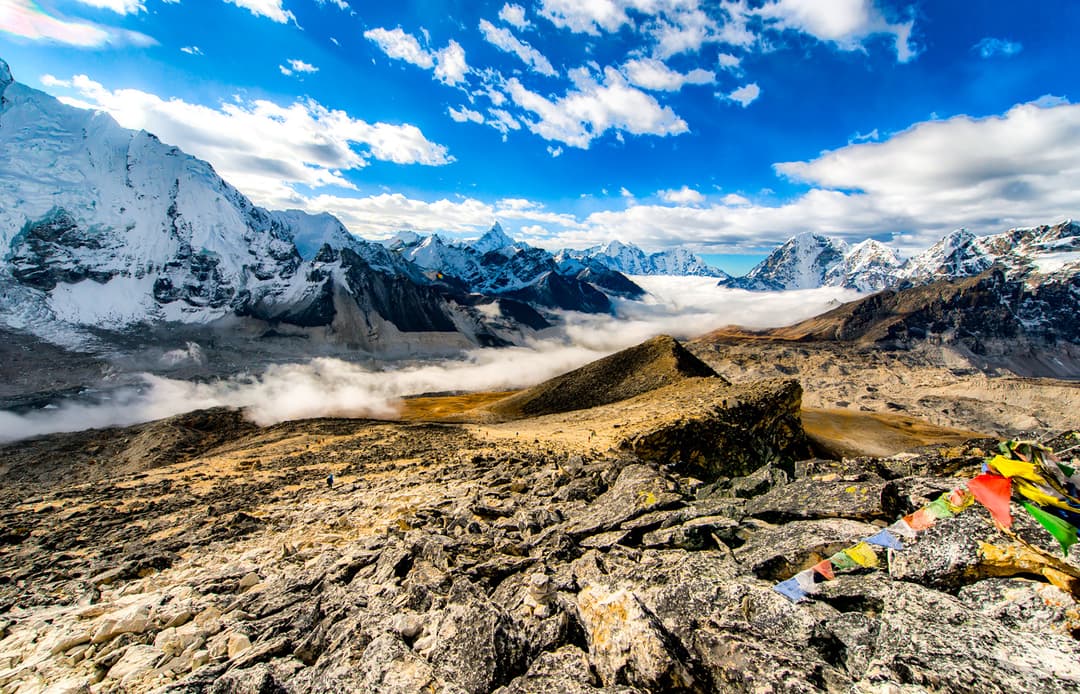
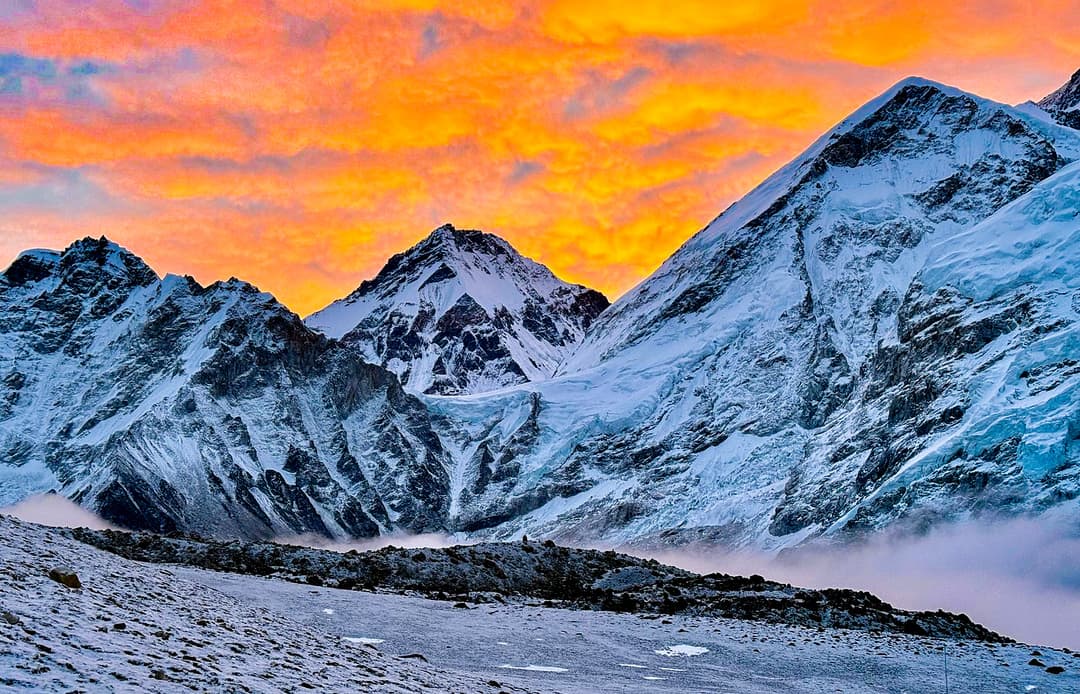
Today is possibly the most challenging day of our trip. We begin with a steep ascent from Dzongla to cross the Cho La pass at 5420 meters which can be quite challenging. But since we have been trekking at high altitudes for the last week, it is achievable.
With a continuous strenuous uphill trail, the views once you get to the Pass is mesmerizing and totally worth the climb. Once we cross the Cho La Pass, it is a gradual descend all the way down to Thanga where we will stay for the night.
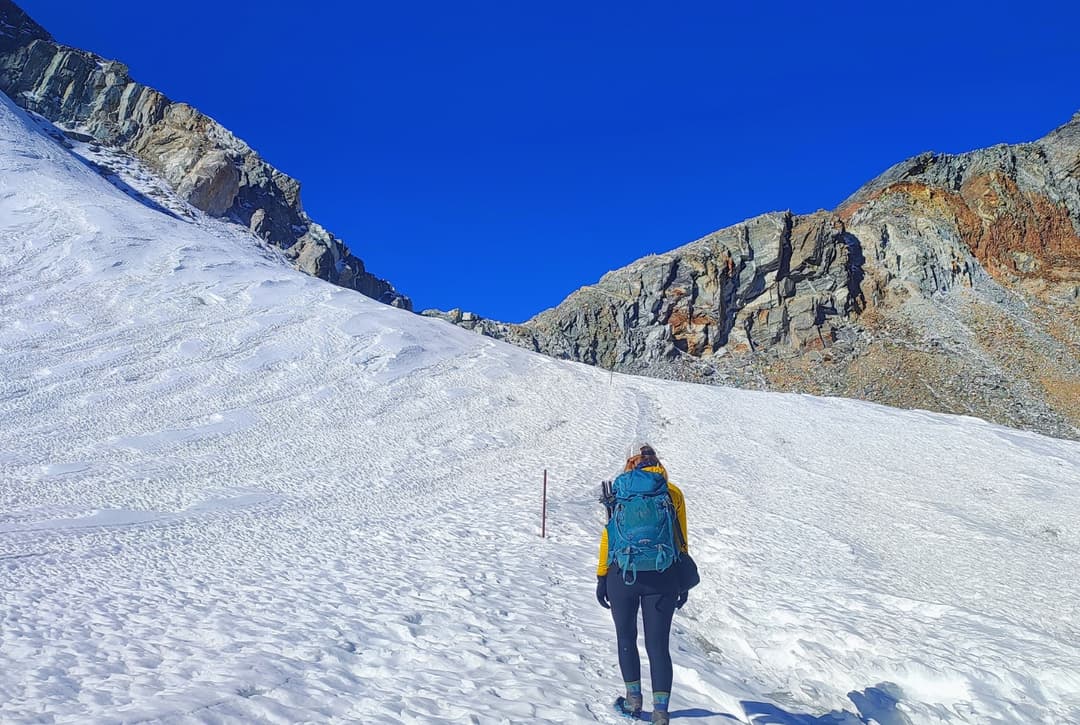
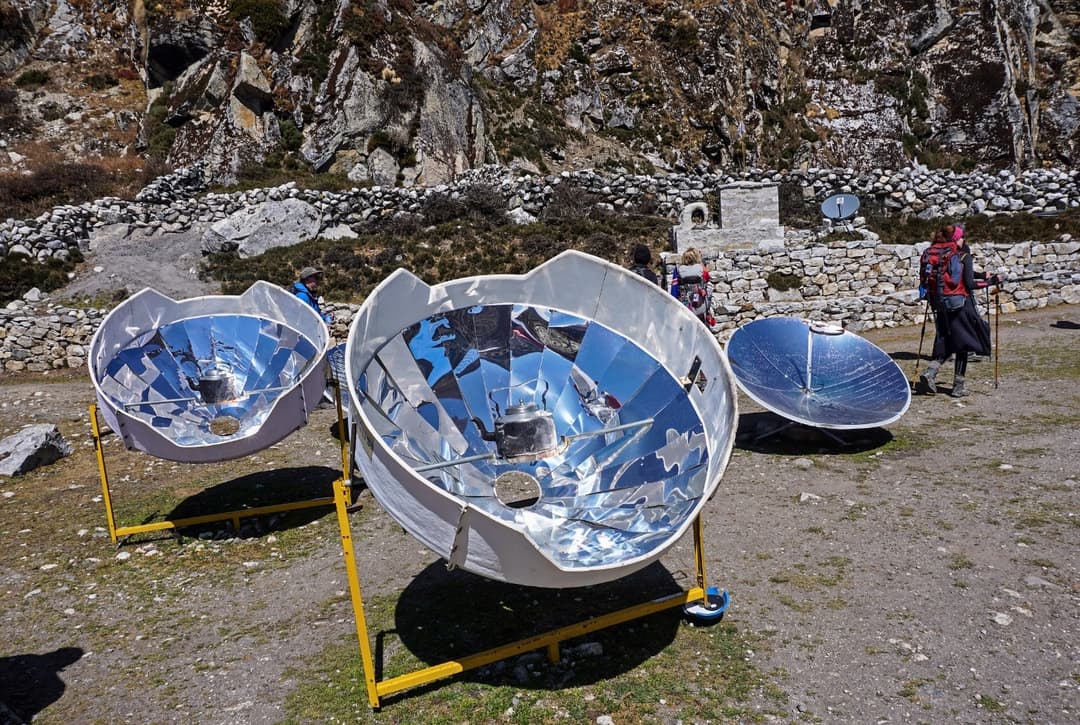
From Thagna, we climb again to gain all the altitude we dropped from the Chola Pass the day before towards the Gokyo Lakes. However, it is not as steep and challenging as the Pass trail from yesterday.
On our way, we cross the Ngozumpa Glacier - the largest glacier of the Himalayas that measures across 36 Kilometers in length. The glacier itself is magnificent. From the Glacier, we should make it on time for lunch at Gokyo.
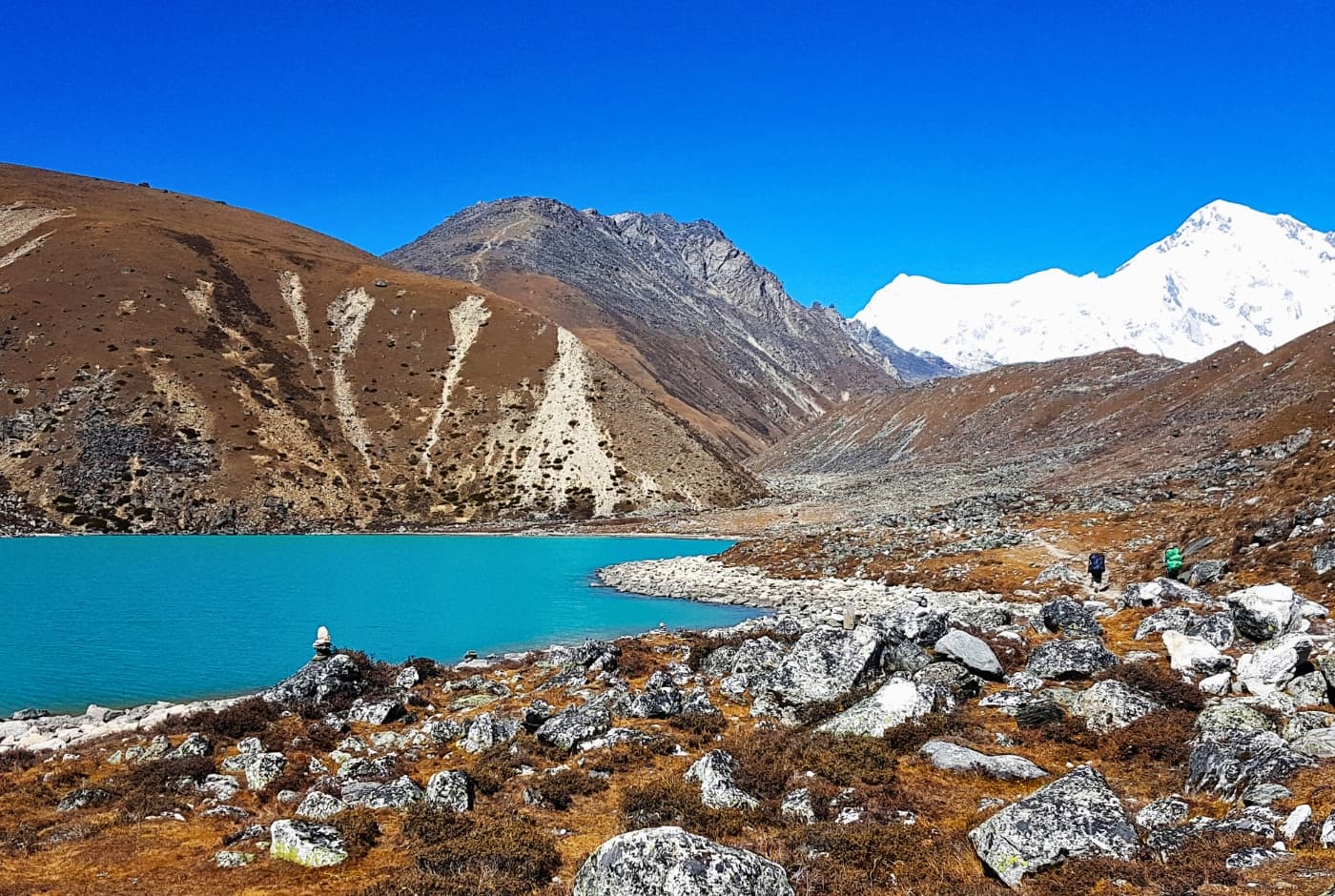
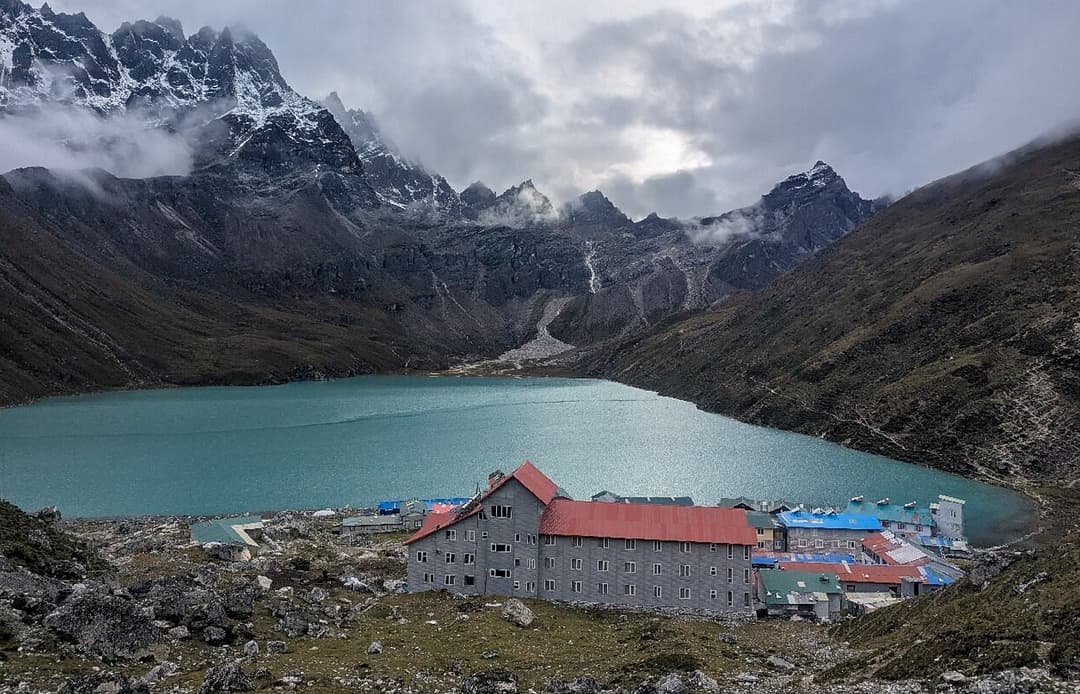
The Gokyo village stands by the third lake (out of the 6) and Mount Cho-Oyu - the 6th highest mountain in the world. The still lake reflects the Himalayas on its surface, which sets as one of the most dramatic backdrops of our entire trip. After lunch, we will explore the village and the Gokyo Lake, and the Dudh Pokhari Lake. We will return to our guesthouse for dinner and rest here for the night.
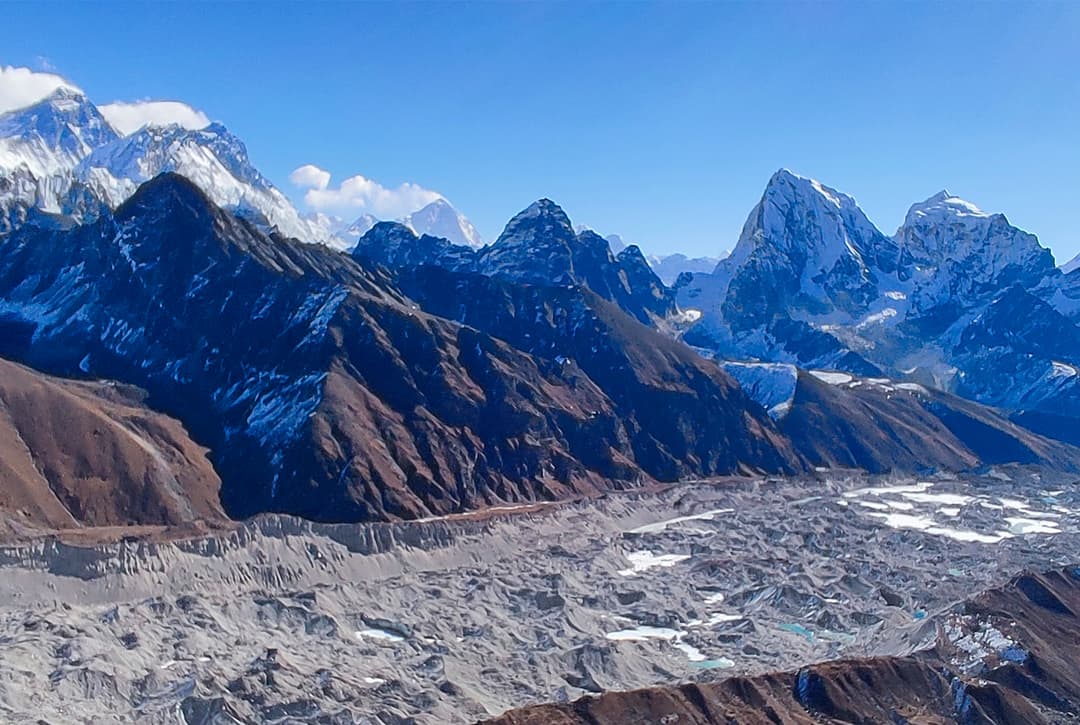
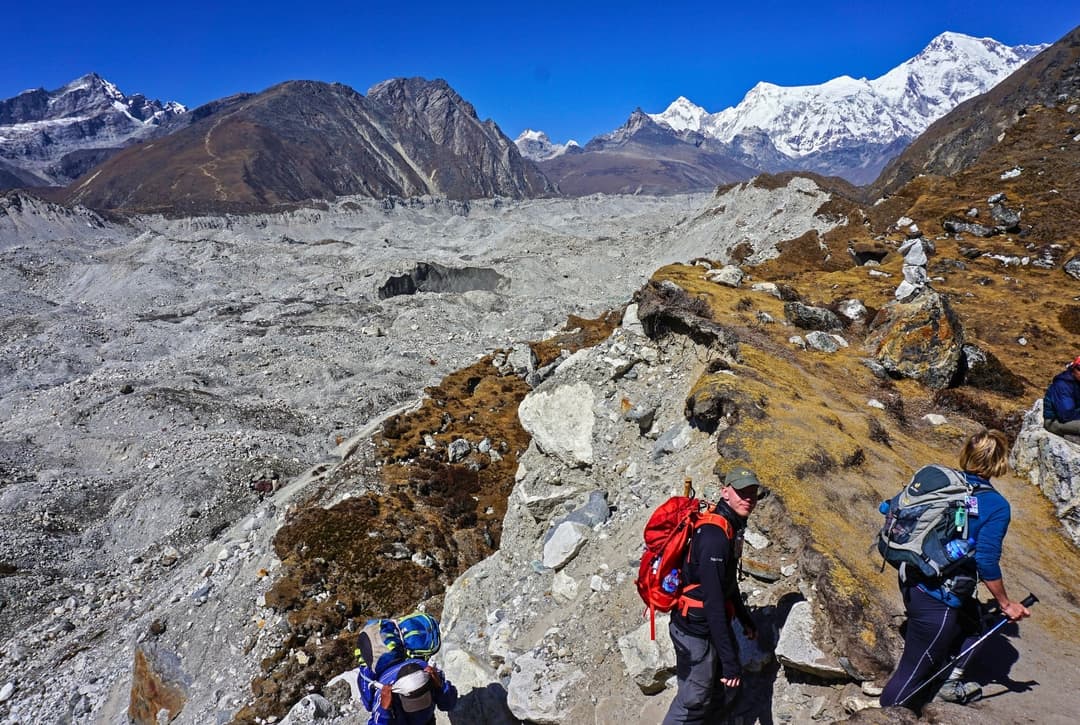
Gokyo RI is another MAJOR the highlight of this trip. After breakfast, we will take an early morning hike up to the summit of Gokyo RI at 5483 meters. Climbing to Gokyo RI is obviously arduous and takes about 3-4 hours on a rough trail that climbs steeply upwards.
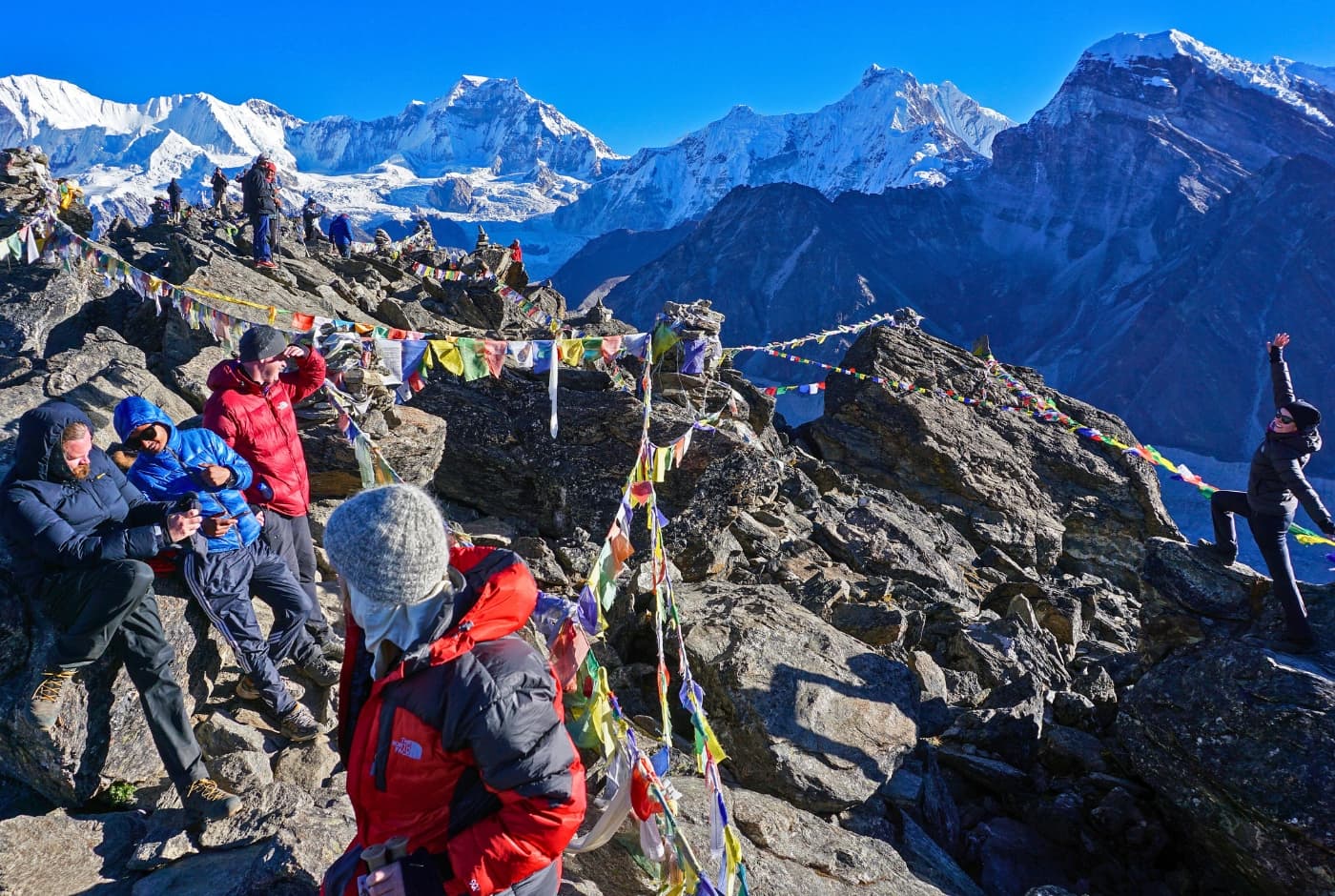
Once we get to the top, a trial scenery of the Gokyo village on the edge of the third lake overshadowed by Cho Oyu, Cholatse and the massive Ngozumpa Glacier will blow your mind. The views of the Himalayas are better than what we got at Kala Patthar from here.
Straight in front of you will be the 4 tallest mountains of the world, namely, Everest, Lhotse, Makalu, and Cho Oyu. Apart from these, we will be surrounded by other Mountains of the Himalayas like Kusum Kanguru, Thamserku, K-4, Kangtega, Taboche, Cholatse, Nuptse, Changtse, and Pumori on all the sides! The sight of the sunrays kissing the towering Everest that dominates all the other peaks is unlike anything we’ve seen.
P.s - If you notice, Nuptse seems taller than Everest from Kala Pattar. Standing on Gokyo Ri’s summit, you will get up close and personal with the Himalayas.
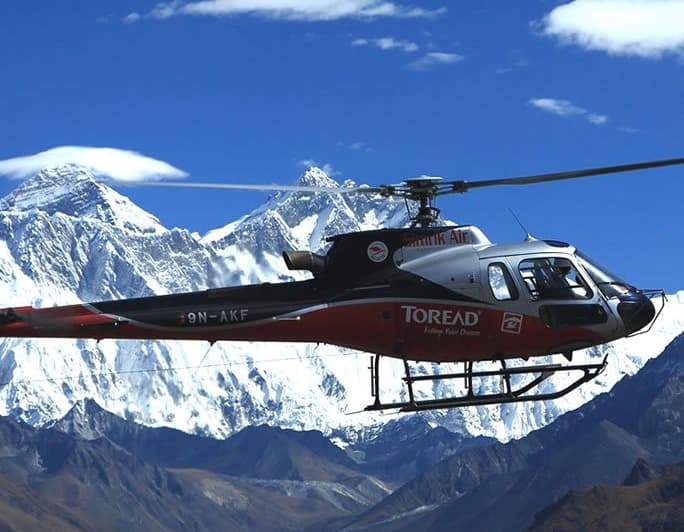
We will head back to our guesthouse at Gokyo for breakfast and wait on our chopper. Once that arrives, get ready for an exciting Helicopter ride all the way back to Lukla. Enjoy idyllic aerial views of the route you trekked on for the last 2 weeks while you take a last look at the stunning Himalaya range.
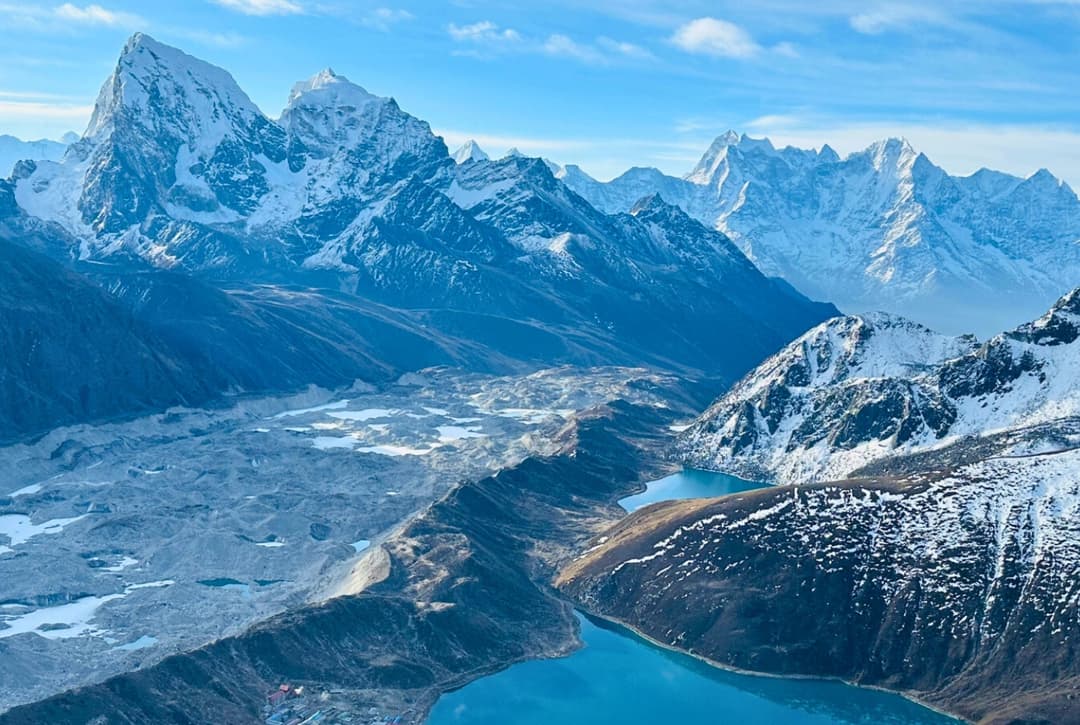
A 45-minute flight back to Kathmandu from Lukla marks the end of the trekking journey. Indulge in the changing sight of the landscapes one last time while on the flight.
After we land at the Kathmandu airport, we will go back to our hotel where we can sleep out our exhaustion. Or go out and get yourself a good massage!
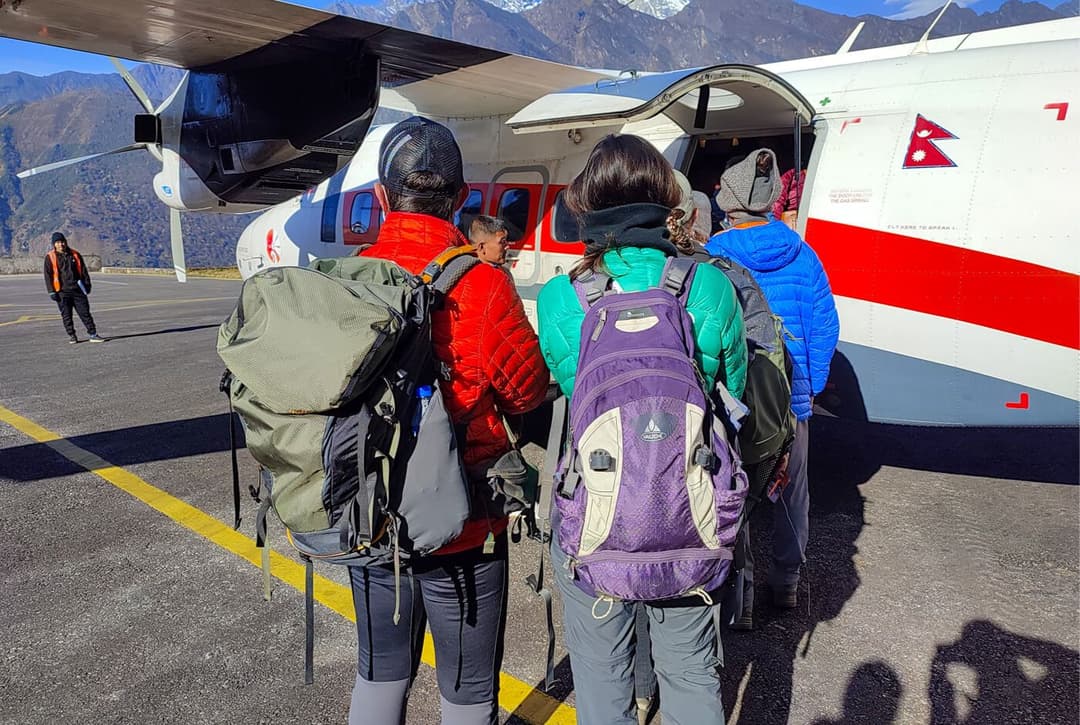
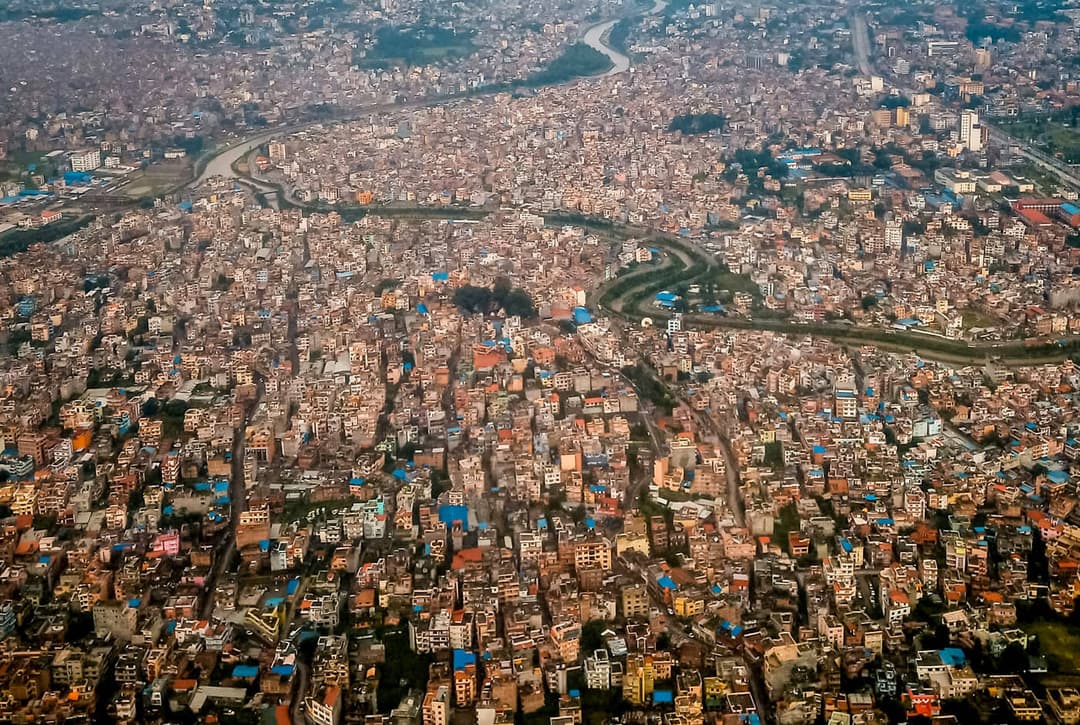
Flights to and from Lukla, which are often the entry and exit points for the trek, are weather-dependent. Bad weather can cause significant delays, potentially extending the trek duration or causing missed connecting flights. Having a buffer day allows for flexibility and prevents rushing or potentially missing international flights.
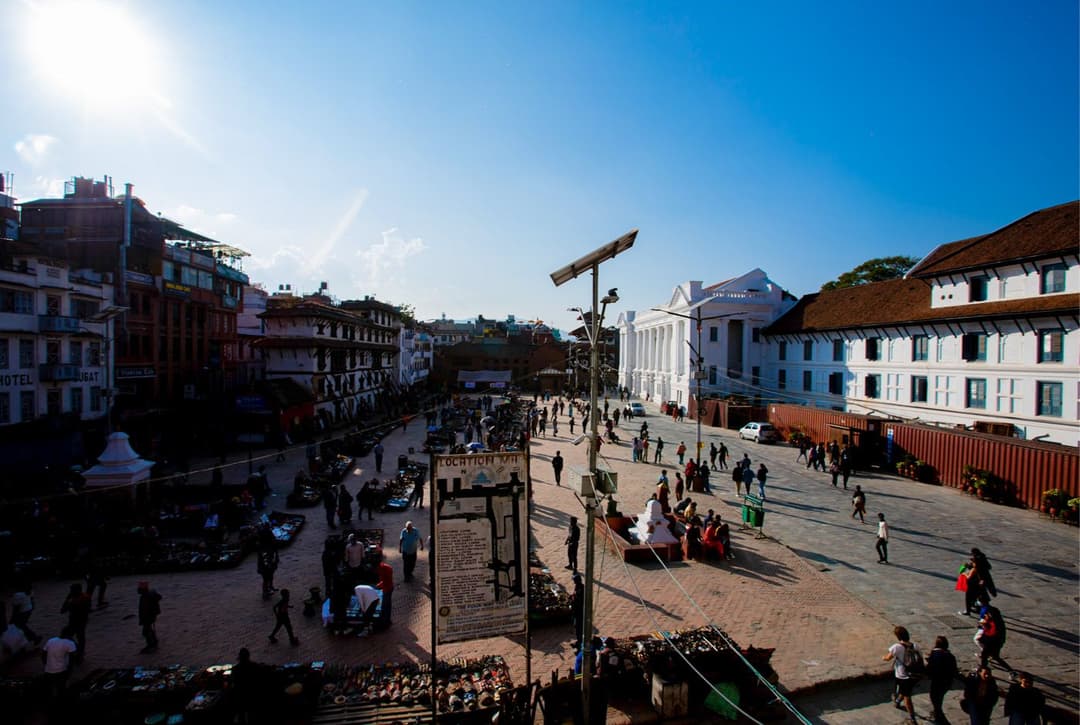
Day 17 marks the end of this wonderful journey. A representative from Nepal Hiking Team will drop you off at the airport approximately 3 hours before your scheduled flight.
Heavy-hearted, we bid you farewell so you can go home filled with memories and wonderful stories to tell. Your journey in Nepal ends here.
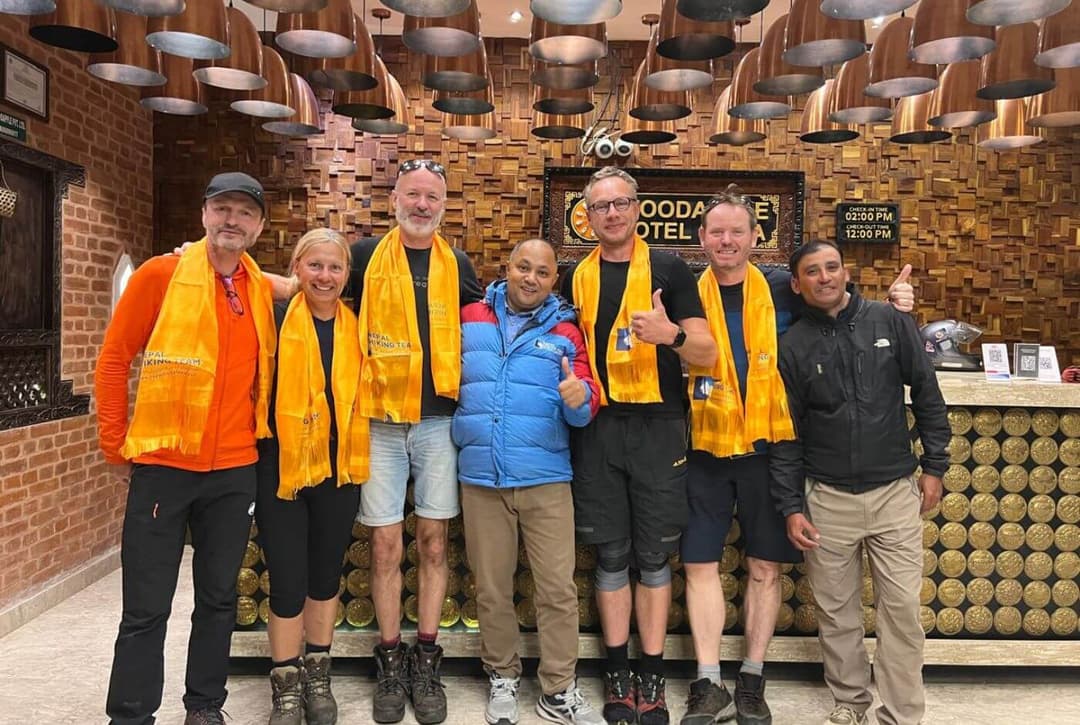
Read our genuine feedback from past travelers with Nepal Hiking Team sourced from TripAdvisor, Google, Facebook, and Trustpilot.
This was my second time in a row trek with the Nepal Hiking Team. My first experience was the EBC trek in April 2023.
This time was an incredible and demanding trek to Gokyo Ri and Renjo La pass. Fortunately, I enjoyed favorable weather conditions for most of the trip, and the views were absolutely stunning!
What an incredible experience! It’s not always about the destination but who you travel with. Rajesh, my guide, and Pradip, my porter, were truly exceptional. They were fantastic, ensuring my journey was both memorable and enjoyable. Their expertise, support, and cheerful nature made all the difference—they were incredibly friendly and took excellent care of me throughout the trek. We shared countless laughs, making the adventure even more delightful. I owe a big thank you to them!
Ganga, the CEO of the company, proved to be an excellent manager. My trip was seamlessly organized, thanks to him. The food, the tea houses, and my stay at the comfortable Hotel Everest View in Namche were all meticulously arranged. He also played a crucial role in securing the helicopter rides, which were possible only because of his intervention.
From landing in Kathmandu until leaving Nepal, I had the most fabulous trip of my lifetime!! Special thanks to Hari (trekking guide) for road assistance, as well as other remarkable staff members of the Nepal Hiking Team. Thank you very much to all of you for providing me the best services for the journey.
If you’re considering a Himalayan trek and want a trustworthy and highly recommended service, I wholeheartedly suggest the Nepal Hiking Team. They are reliable and truly the best in Nepal.
Overall, this trip has gifted me countless wonderful memories and a strong desire to return someday!
Thank you! Michelle Robanske
- Guided by Rajesh Gurung

I highly recommend Nepal Hiking Team for any trip in Nepal! The guides and porters were fantastic, and every detail was arranged flawlessly.
If you’re planning a trek in the Everest region, consider skipping the crowded and overrated EBC trek. Instead, try the Gokyo Ri and Ama Dablam base camp treks!
The Everest views from Gokyo Ri are on par as stunning as those from Kalapatthar!
 +
+
I had an amazing journey with guide Surya on the Gokyo Lakes and Renjo La Pass track.
The views were absolutely stunning, and the trail was wonderfully uncrowded. It was truly the best experience!
Surya, my guide, was incredibly knowledgeable and made the entire trip feel effortless. I can’t thank him enough.
I highly recommend this trek—100%!
 +
+ +
+
The EBC trek was my first multi-day trek, far longer than any of my previous Himalayan adventures, which had never exceeded five days. It would have been a 12-day journey, but I ended up taking a helicopter back from Gorakshep after experiencing eye irritation and losing my appetite at Thukla. Despite these challenges, the trek was incredibly thrilling—I had always dreamed of seeing Mount Everest in person, and finally witnessing it from Kala Patthar near Gorakshep was unforgettable. Trekking with Nepal Hiking Team (NHT) made the whole experience even better!
One of the best parts of the trek was staying in hotels at the end of each day—no tent stays required. Plus, the hotels offered a variety of food options, which was a welcome comfort after long trekking days.
From Dingboche onwards, however, the hotels only provided shared toilets. This was true for the places where I stayed, so it’s a good idea to pack plenty of essentials like hand sanitizer and toilet paper to stay healthy.
We chose September for our trek, expecting dry weather without rain or snow. But to our surprise, we encountered rain starting from Namche, and by Tengboche, snow had arrived! On the bright side, the snow-capped mountains were breathtaking, and we didn’t have to deal with sweat. However, the rain managed to soak our shoes and socks, even with rain gear—waterproof shoes, jackets, and pants. Proper gear helps, but drying wet shoes and socks around the restaurant heaters only worked to a limited extent.
While some trekkers fell ill on the way to Gorakshep, I was lucky not to experience any major symptoms, apart from my loss of appetite and the minor eye irritation. I believe staying well-hydrated with warm water in the mornings and evenings, along with the stretching and pranayama exercises I did before and after trekking each day, helped me stay healthy.
From the moment I was picked up at the Kathmandu airport to the time I was dropped off at the end of the trek, NHT’s service was outstanding. My trekking guide, Mr. Ram Krishna Pauwa, another guide, Mr. Arun, and my sales contact, Mr. Ganga Raj Thapa, went above and beyond to make my journey comfortable and enjoyable.

I just finished my Everest Base Camp trek with Nepal Hiking Team, and it was truly the trek of a lifetime. Our main guide, Ram, was an exceptional leader, demonstrating unwavering patience and expertise every step of the way.
Accompanying him were assistant guides Vikas and Sabin, who were equally remarkable in their care and support throughout the journey. The porters provided were super helpful and kind, too.
The accommodations and meals provided exceeded our expectations, making for a comfortable and enjoyable trekking experience.
Without a doubt, Nepal Hiking Team has set the standard for trekking in Nepal. I highly recommend them to anyone seeking an unforgettable adventure in the Himalayas.
If you're considering a trek, book with Nepal Hiking Team for an extraordinary and well-organized experience.

Nepal Hiking Team is a government-registered company (Tourism License No. 1033) affiliated with the Nepal Tourism Board, TAAN, the Nepal Mountaineering Association, and KEEP. The EBC with Gokyo Lake Heli Shuttle Trek is one of the most comprehensive Everest region itineraries available, combining Everest Base Camp, Kala Pathar (5,545m), the Cho La Pass (5,420m), the Gokyo Lakes, and Gokyo Ri (5,357m) into a single 17-day private trek, with a helicopter ride from Gokyo back to Lukla eliminating the long return trail. Every logistical element, including the Sagarmatha National Park permit, TIMS fee, round-trip Lukla flights, helicopter shuttle, full board meals, guide, and porter, is included in the package price.
All guides assigned to this trek are government-licensed, English-speaking professionals with extensive experience on both the Everest Base Camp and Gokyo routes. Past trekkers have praised guides by name in their reviews. Michelle Robanske specifically highlighted guide Rajesh Gurung as exceptional, noting his expertise and cheerful nature made all the difference throughout the trek. Mr. Vidyasagar Mundroy praised guide Ram Krishna Pauwa and assistant guide Arun for going above and beyond to make the journey comfortable. Mr. Rajat described guide Ram as demonstrating unwavering patience and expertise every step of the way, with assistant guides Vikas and Sabin equally remarkable in their care and support.
The EBC with Gokyo Lake Heli Shuttle Trek is the only Nepal Hiking Team package that covers both Everest Base Camp and the Gokyo Valley in a single itinerary, crossing the Cho La Pass (5,420m) to connect the two routes. You reach three of the finest viewpoints in the Khumbu region on a single trip: Kala Pathar (5,545m) for the iconic Everest sunrise, Nagarjuna Peak (5,100m) during the Dingboche acclimatisation day, and Gokyo Ri (5,357m) for panoramic views of Everest, Lhotse, Makalu, and Cho Oyu together. The helicopter shuttle from Gokyo to Lukla then gives you an aerial perspective of the entire route you walked over the previous two weeks.
Yes. Nepal Hiking Team holds a 5.0 out of 5 rating from 713 verified reviews, with a substantial number of those reviews coming from Everest region trekkers. The company's CEO, Ganga Raj Thapa, is personally praised by multiple past trekkers for his hands-on involvement in organising itineraries and resolving unexpected situations, including securing helicopter arrangements during the trek. Michelle Robanske described the entire trip as seamlessly organised and noted that Ganga played a crucial role in securing helicopter rides. The team is also a partner with international platforms TourRadar and Bookmundi.
Nepal Hiking Team provides round-the-clock emergency support throughout all 17 days. The Kathmandu head office is reachable by phone at +977 14989212 and by WhatsApp at +977 9851058678 (Ganga) and +977 9851058667 (Balaram) at any time. Your guide is your primary contact on the trail and is trained in altitude awareness and first aid. A comprehensive first aid medical kit is carried throughout the trek. The preparation day in Kathmandu on Day 2 includes a full briefing covering the itinerary, weather conditions, safety protocols, altitude management, and the gear you will need before the trek begins.
A Nepal Hiking Team representative will meet you at Tribhuvan International Airport on Day 1 and transfer you to your 3-star category hotel in Kathmandu by private vehicle. No activities are planned for arrival day, giving you time to rest and recover from your international flight. Day 2 is a free and preparation day in Kathmandu, which allows you to acclimatise to the city's altitude of 1,345 metres, recover from jet lag, purchase any last-minute gear in Thamel, and attend the trek briefing. Breakfast is included at the hotel from Day 2 onward.
Yes, a Nepal entry visa is required and is listed under Cost Excludes. Tourist visas are available on arrival at Tribhuvan International Airport. A 30-day multiple-entry tourist visa costs USD 40, and a 90-day multiple-entry visa costs USD 100. You will need your passport and passport-sized photographs at the visa counter. Bring 2 copies of passport-sized photos specifically for the trek permits, which are the TIMS card and the Sagarmatha National Park permit. Both permits are handled and paid for by Nepal Hiking Team and are included in the package cost.
Arriving at least one day before the official Day 1 start date is strongly recommended to account for any international flight delays and to give yourself time to adjust to Kathmandu before the Day 2 preparation and briefing. If you need to purchase or rent any trekking gear in Kathmandu, arriving two days early gives you the morning of Day 1 as additional shopping time before the trek briefing on Day 2. Thamel, where most trekking equipment shops are located, is within walking distance of most central Kathmandu hotels.
The best seasons are spring, from March to May, and autumn, from September to November. Spring brings blooming rhododendron forests along the lower trail and stable weather conditions at altitude. Autumn offers crisp, clear skies and the most reliable summit views from Kala Pathar, Gokyo Ri, and Nagarjuna Peak. Monsoon from June to August makes trails slippery and the Cho La Pass potentially hazardous, while winter from December to February brings extreme cold and the risk of the Cho La Pass being blocked by heavy snowfall. An important note for peak season travel: during March to May and September to November, all Lukla flights operate from Manthali Airport (Ramechhap) rather than Tribhuvan International Airport due to congestion, requiring an additional 4- to 5-hour drive from Kathmandu to the departure airport.
You can book through the Nepal Hiking Team website, by phone at +977 14989212, or by WhatsApp at +977 9851058678. Email inquiries can be sent to sales@nepalhikingteam.com. The team is available 24 hours a day for direct contact. A "How to Book a Trip with NHT" guide is available on the website. Given that this is a 17-day Strenuous-graded trek requiring Lukla flights and a helicopter shuttle during peak seasons, early booking is strongly advised, particularly for spring and autumn departures when both Lukla flight slots and helicopter availability are limited.
The EBC with Gokyo Lake Heli Shuttle Trek is priced on a per-person basis that decreases as group size increases. A solo traveller pays USD 3,100 per person. Groups of 2 to 4 pay USD 2,500 per person. Groups of 5 to 6 pay USD 2,250 per person, and groups of 7 to 10 pay USD 2,100 per person. The minimum group size is 2 people for the standard private rate. This is a private trip, meaning your group has exclusive use of the guide, porter, and all logistics for all 17 days, with no other trekkers combined into your group.
Nepal Hiking Team operates under a Risk-Free Booking Policy, the full details of which are available at nepalhikingteam.com/risk-free-booking-policy. For a 17-day high-altitude trek reaching 5,545 metres with internal flights and a helicopter component, reading this policy carefully before confirming your booking is essential. Comprehensive travel insurance covering high-altitude emergency evacuation by helicopter, trip cancellations, medical hospitalisation, and personal accidents is strongly recommended. Nepal Hiking Team's website includes a dedicated travel insurance guide with specific guidance for high-altitude trekking in Nepal.
Nepal Hiking Team accepts payment by Visa, Mastercard, American Express, Discover, Diners Club, JCB, and UnionPay. A "How to Make a Payment" guide is available on the website. Items listed under Cost Excludes requiring your own budget include travel insurance, international airfare, Nepal entry visa, cold drinks, personal snacks, WiFi internet during the trek, hot showers on the trail except at Phakding, Namche, and Lukla, personal trekking equipment, and tips for the guide, porter, and driver. Tips are not mandatory but are warmly appreciated by all trekking staff and are an important part of their income.
Yes, round-trip flights between Kathmandu and Lukla, including all departure taxes, are fully included in the trek cost. The outbound flight from Kathmandu to Lukla on Day 3 takes approximately 25 minutes and is considered one of the most dramatic short flights in the world. Tenzing Hillary Airport in Lukla sits at the edge of a hill with a runway that drops off into the valley below, making the landing itself a memorable experience. The return Lukla to Kathmandu flight is used on Day 15 after the helicopter shuttle brings you from Gokyo to Lukla on Day 14.
During peak seasons from March to May and September to November, all Lukla flights are operated from Manthali Airport in Ramechhap rather than from Tribhuvan International Airport in Kathmandu. This is due to airspace congestion at Tribhuvan during peak trekking periods. Manthali Airport requires a drive of approximately 4 to 5 hours from Kathmandu, meaning you will need to depart your hotel very early in the morning on Day 3 to reach Manthali in time for the Lukla flight. Nepal Hiking Team coordinates all of this transport as part of the private vehicle arrangements included in the package.
The helicopter shuttle from Gokyo (4,790m) to Lukla is one of the defining features of this package and is fully included in the cost. After the early morning hike to Gokyo Ri (5,357m) on Day 14, you descend back to Gokyo village, have breakfast at the guesthouse, and wait for the helicopter. The helicopter then flies you directly from Gokyo to Lukla, providing an extraordinary aerial perspective of the Ngozumpa Glacier, the Gokyo Lakes, and the Khumbu peaks from above. This flight eliminates the multi-day return trek that the standard EBC with Gokyo itinerary requires and allows you to take in the entire landscape from the air before your Lukla overnight stay.
Lukla is one of the world's most weather-sensitive airports, and flight delays or cancellations due to cloud, wind, or poor visibility are a genuine reality of trekking in the Khumbu region. The helicopter shuttle from Gokyo is similarly subject to weather conditions. The buffer day built into the itinerary on Day 16 in Kathmandu specifically exists to absorb any delays on the Lukla return flight, protecting your international connections. Nepal Hiking Team's Kathmandu office coordinates flight rebooking as quickly as possible when delays occur, and CEO Ganga Raj Thapa is personally praised by past trekkers for his effectiveness in handling exactly these situations.
The trek is graded Strenuous, making it one of the more demanding treks in Nepal Hiking Team's portfolio. It reaches a maximum elevation of 5,545 metres at Kala Pathar, crosses the Cho La Pass at 5,420 metres, and involves daily walking distances of 8 to 15 kilometres over 6 to 8 hours on most trekking days. The most challenging day is Day 12, crossing the Cho La Pass from Dzongla to Dragnag, described in the itinerary as possibly the most challenging day of the trip, involving a steep ascent followed by a glaciated crossing and descent. Day 10, reaching Everest Base Camp via Gorak Shep, is 14 to 15 kilometres and 8 hours of walking alongside the Khumbu Glacier.
Prior multi-day trekking experience is strongly recommended for this Strenuous-graded 17-day itinerary. Reaching altitudes of 5,545 metres and crossing the glaciated Cho La Pass at 5,420 metres requires both physical fitness and some familiarity with high-altitude walking and its demands. Trekkers who have completed a moderately graded multi-day trek such as the Annapurna Base Camp Trek or a similar route are well-placed to attempt this. Mr. Vidyasagar Mundroy, who described this as his first multi-day trek, noted it as incredibly thrilling but also acknowledged the physical challenges, particularly from Dingboche onward.
It is possible for fit and determined first-time high-altitude trekkers to complete this route, but the Strenuous grading means it should not be underestimated. Two acclimatisation days are built into the itinerary, one at Namche Bazaar (3,440m) on Day 5 with a hike to Everest View Hotel at 3,780 metres, and one at Dingboche (4,410m) on Day 8 with a hike to Nagarjuna Peak at 5,100 metres. These rest and acclimatisation days significantly improve your body's adjustment to altitude and are critical for a safe and successful crossing of the Cho La Pass and the summit of Kala Pathar. Your guide monitors your condition throughout and adjusts the pace accordingly.
The trek offers an exceptional range of highlights spread across 17 days. After flying into Lukla and trekking through Phakding to Namche Bazaar (3,440m), you visit the Sherpa Culture Museum and hike to the world's highest located hotel, Everest View Hotel (3,780m). You then pass through Tengboche Monastery, the largest monastery in the Khumbu, before reaching Dingboche and the acclimatisation hike to Nagarjuna Peak (5,100m). The trek continues to Lobuche, Gorak Shep, and Everest Base Camp (5,364m) on Day 10, followed by the pre-dawn Kala Pathar hike (5,545m) on Day 11. The Cho La Pass crossing on Day 12 leads into the Gokyo Valley, where the Ngozumpa Glacier, the Gokyo Lakes, and the Gokyo Ri summit (5,357m) await before the helicopter return to Lukla.
Altitude sickness management is built into the structure of the itinerary through two dedicated acclimatisation days and a gradual elevation profile. The first acclimatisation stop is at Namche Bazaar (3,440m) on Day 5, where trekkers hike up to Everest View Hotel at 3,780 metres and return to sleep lower, following the standard acclimatise high, sleep low principle. The second stop is at Dingboche (4,410m) on Day 8, with a hike to Nagarjuna Peak (5,100m). Your guide monitors for symptoms of Acute Mountain Sickness throughout the trek. A Trekkers Aid Post operated by Western Volunteer Doctors and The Himalayan Rescue Association is located at Pheriche (4,210m) on Day 9 and can provide medical assistance if needed.
Travel insurance is listed under Cost Excludes and is not included in the package price, but it is essential for a Strenuous-graded trek reaching 5,545 metres with internal flights and a helicopter shuttle. Your policy must cover high-altitude emergency helicopter evacuation, medical hospitalisation, trip cancellation, and personal accidents. Many standard travel insurance policies cap altitude coverage at 4,000 or 5,000 metres, so verify explicitly that your policy covers emergency evacuation from above 5,500 metres. Nepal Hiking Team's website includes a detailed travel insurance guide to help you select appropriate coverage for this type of high-altitude trek in Nepal.
The Cho La Pass at 5,420 metres is one of the most technically demanding sections of this route and is specifically noted in the itinerary as possibly the most challenging day of the trip. The ascent from Dzongla involves a steep, rocky trail that becomes particularly hazardous if it has recently snowed, as the glaciated sections of the pass can be icy and slippery. Your guide will assess the conditions on the day and carry the appropriate equipment for the crossing. Trekking poles, gaiters, and sturdy waterproof boots with good grip are strongly recommended for this section. The pass is generally not recommended during winter from December to February when heavy snowfall can block the route entirely.
Your guide is trained to assess altitude-related symptoms and will make descent decisions if any trekker shows serious warning signs of AMS, HAPE, or HACE. Descent is always the safest and most effective treatment for altitude illness, and your guide will not hesitate to initiate this if required. Because the standard Everest Base Camp trail is one of the best-serviced trekking routes in Nepal, helicopter evacuation from multiple points along the route is available in medical emergencies. Nepal Hiking Team's 24-hour emergency line ensures that the Kathmandu office can coordinate emergency assistance rapidly. Mr. Vidyasagar Mundroy noted in his review that he arranged an early helicopter return from Gorakshep due to health issues, and Nepal Hiking Team handled this smoothly.
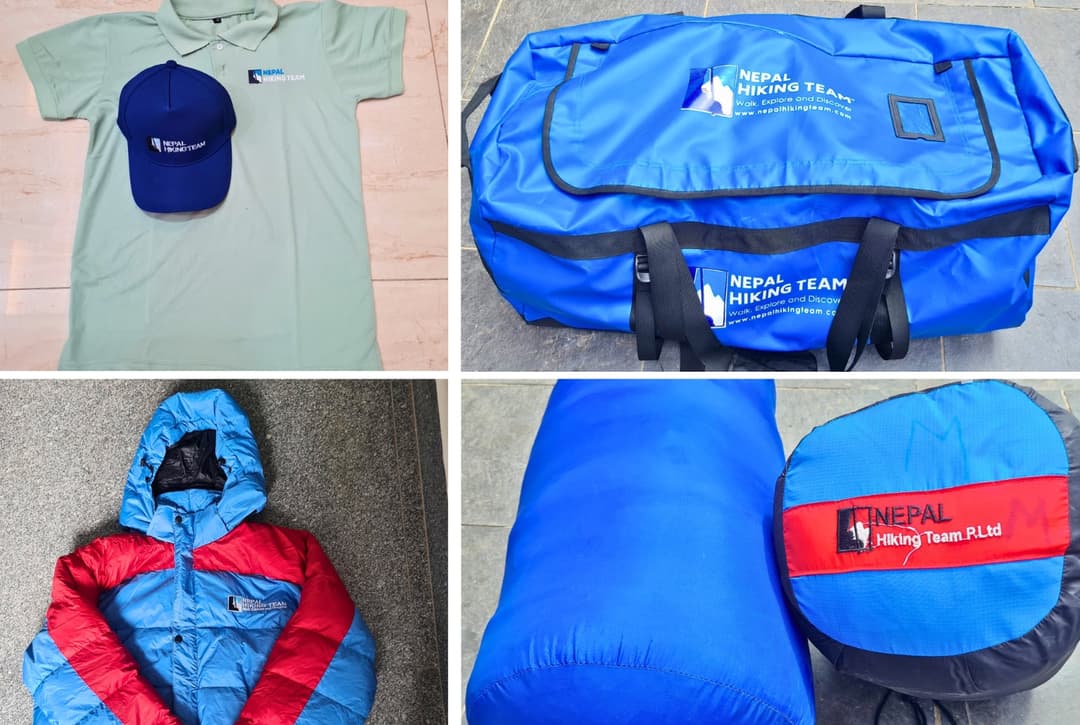
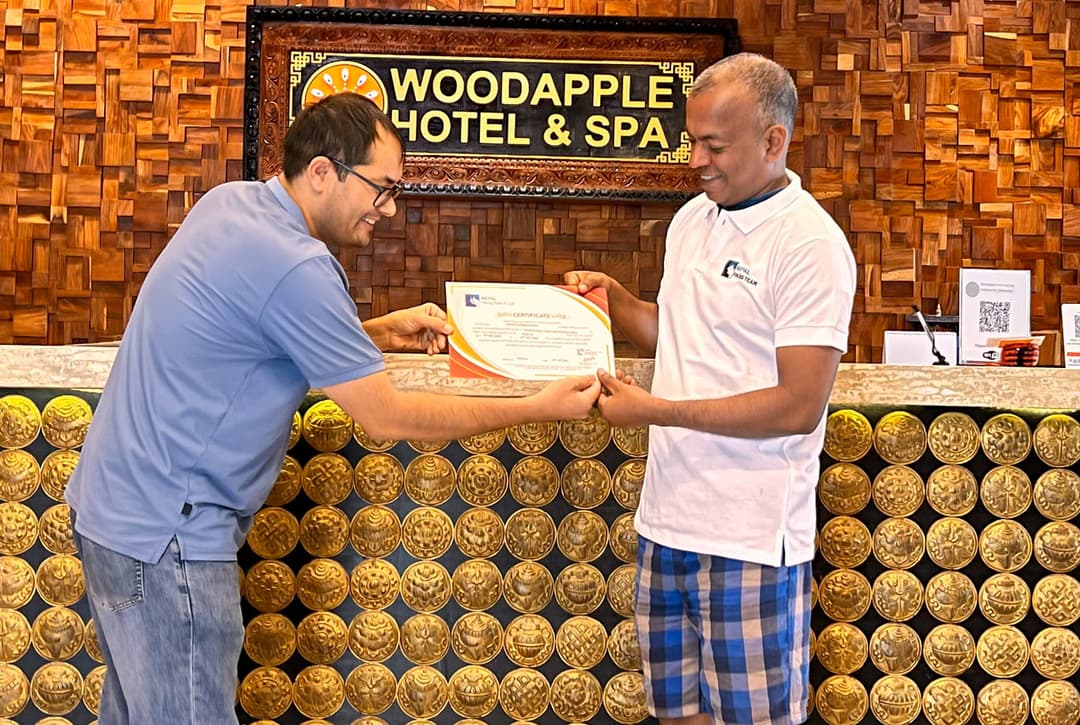
Nepal Hiking Team provides a duffle bag for carrying your gear during the trek, a down jacket and sleeping bag if required, a Nepal Hiking Team T-shirt, a trekking map, and a trip achievement certificate upon completion. A first aid medical kit is carried throughout the trek. Porters are provided at a ratio of one porter for every two trekkers, covering the carrying of your main duffle bag so you only need to carry a daypack on the trail. Personal trekking and climbing equipment is listed under Cost Excludes and must be brought from home or rented or purchased in Kathmandu before the trek begins.
Given the Strenuous grading, the 5,545 metre maximum altitude, and the Cho La Pass crossing, a well-prepared personal gear list is essential. This should include sturdy, waterproof trekking boots with good ankle support, moisture-wicking base layers, insulating fleece or down mid-layers, a waterproof and windproof outer shell jacket and trousers, warm gloves and liner gloves, a fleece hat or balaclava, a sun hat, UV-protective sunglasses, gaiters for the Cho La Pass section, trekking poles, and a daypack of approximately 20 to 30 litres. Given the temperatures at Kala Pathar and Gokyo Ri, which can drop significantly below freezing at night and before dawn, heavy-duty thermal layering is not optional at this altitude.
For a Strenuous 17-day trek reaching 5,545 metres, physical preparation should begin at least 3 to 4 months before your departure date. A solid preparation programme includes regular cardiovascular training such as running, cycling, or swimming to build aerobic endurance, combined with weekly hikes carrying a loaded pack to build leg strength and simulate the demands of multi-day trekking. Incorporating some uphill hiking with a 10 to 15 kilogram daypack will specifically prepare your legs and cardiovascular system for the sustained climbs to Nagarjuna Peak, Kala Pathar, the Cho La Pass, and Gokyo Ri. Consulting a doctor before undertaking a trek of this altitude and duration is also advisable.
This trek requires two permits: the Sagarmatha National Park permit and the TIMS card (Trekkers' Information Management System). Both are fully included in the package cost and are handled and arranged by Nepal Hiking Team on your behalf. You are required to bring 2 passport-sized photographs from home specifically for the permit processing. No additional permits need to be arranged independently by participants. The Sagarmatha National Park encompasses the entire Khumbu region through which this trek passes, including Namche Bazaar, Tengboche, Dingboche, Lobuche, Gorak Shep, and Everest Base Camp.
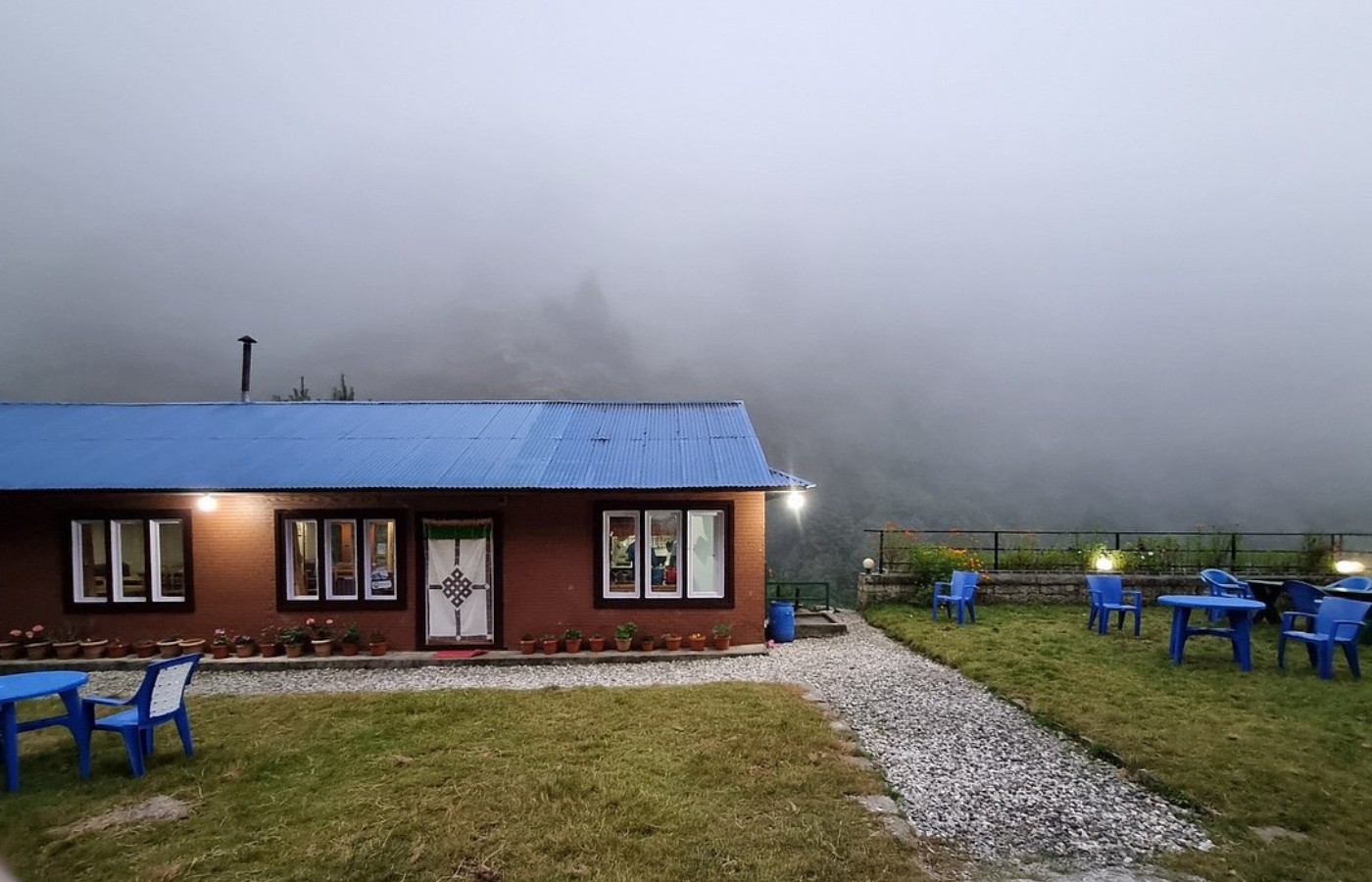
In Kathmandu, four nights of twin-sharing accommodation at a 3-star category hotel are included, covering Days 1, 2, 15, and 16. During the trek from Lukla through to Gokyo, accommodation is at the best available twin-sharing teahouse guesthouses along the route. A notable upgrade is provided at three specific locations: Lukla, Phakding, and Namche Bazaar, where rooms with attached bathrooms and hot showers are provided. At all other teahouse stops from Tengboche onward and above, shared bathroom facilities are standard, and hot showers are not available except at the three listed locations. This aligns with the real experience noted by Mr. Vidyasagar Mundroy, who observed that from Dingboche onward, hotels provided shared toilets only.
Teahouse quality on the Everest region trail is generally among the best on any trekking route in Nepal, given the high volume of international trekkers who use this route. At lower elevations like Phakding and Namche, rooms are warmer, better insulated, and come with attached bathrooms. As you gain altitude through Tengboche, Dingboche, Lobuche, and Gorak Shep, rooms become simpler with thinner walls, shared bathrooms, and no heating beyond the central dining hall stove. The sleeping bag provided by Nepal Hiking Team is essential from Dingboche upward, where temperatures drop well below freezing overnight. At Gokyo, the teahouses are basic but clean, with the village sitting beside the third of the Gokyo Lakes at 4,790 metres.
WiFi internet during the trek is listed under Cost Excludes and is not included in the package cost. WiFi is available at some guesthouses and tea shops in larger villages like Namche Bazaar and Lukla for a fee, paid directly to the lodge or via Everest Link cards. Connectivity becomes progressively weaker and more expensive as you gain altitude, and is essentially unavailable or extremely slow above Dingboche. A local SIM card from NTC or Ncell purchased in Kathmandu before departure provides mobile data coverage in lower-altitude villages like Phakding, Namche, and Tengboche, though signal weakens significantly from Dingboche upward. For the Gokyo section, reliable data connectivity should not be expected.
Charging facilities are available at most teahouse dining halls along the Everest trail, though a small fee is typically charged per device at higher-altitude teahouses where solar or generator power is more limited. Rooms generally do not have individual power sockets. A portable power bank rated at 20,000mAh or more is strongly recommended as a reliable backup for keeping your phone, camera, and other devices charged throughout the 17 days, particularly for the photography-heavy days at Kala Pathar and Gokyo Ri where battery usage is high. In cold temperatures at high altitude, lithium batteries drain faster than usual, so keeping your power bank in an inner pocket close to your body helps maintain charge.
Breakfast is included at the Kathmandu hotel from Day 2 onward and on Days 15 and 16. Full board meals covering breakfast, lunch, and dinner with tea and coffee are included throughout the entire trekking section from Day 3 through to Day 14. On Day 15 after the Lukla return flight, breakfast is included at the hotel in Kathmandu. Breakfast is also included at the hotel on Day 16 (buffer day) and Day 17 (departure day). All meals not specified in the itinerary inclusions, including lunches and dinners in Kathmandu outside the trek section, are at your own expense.
Teahouse menus on the Everest Base Camp route are among the most varied on any trekking route in Nepal, particularly in the lower and mid-altitude sections. Dal bhat (lentil soup, rice, and vegetable curry) is the staple and is nutritious and filling after long trekking days. Most lodges also serve noodle soup, fried rice, pasta, momos, eggs, porridge, pancakes, and various hot drinks. Namche Bazaar has bakeries and cafes serving fresh bread, pizza, apple pie, and real coffee, which feels like a genuine treat at this stage of the route. Food options become simpler and more expensive as you gain altitude toward Lobuche, Gorak Shep, and Gokyo, where supply logistics become more challenging.
Cold drinks including bottled water, coke, Fanta, and other beverages are listed under Cost Excludes and must be purchased independently at teahouses along the route. Water prices increase significantly with altitude, and buying single-use plastic bottles at every stop becomes both expensive and environmentally wasteful. Carrying a reusable water bottle with water purification tablets or a UV steriliser pen is the most practical and responsible solution for staying hydrated throughout the 17 days. Boiled water is available at most teahouses for a small fee. Staying well hydrated is particularly critical at altitude, as dehydration significantly increases the risk of AMS and affects physical performance on demanding days like the Cho La Pass and Kala Pathar hike.
Above Dingboche, food prices increase noticeably at each successive stop because all supplies must be carried in by porter or yak. A meal that costs USD 5 to 6 at Namche may cost USD 10 to 12 at Gorak Shep. Appetite also typically diminishes above 4,500 metres as the body responds to altitude, making it important to eat enough even if you do not feel hungry. Your guide will encourage regular eating and drinking throughout each day. At Gorak Shep on the approach to Everest Base Camp, water should be treated regardless of source. Carrying high-energy personal snacks from Kathmandu, such as nuts, energy bars, and dried fruit, to supplement your meals above Lobuche is strongly advisable and is at your own expense.
The EBC with Gokyo Lake Heli Shuttle Trek is a fully private trip. Your group has exclusive use of the guide, porter, and all logistics for all 17 days. You are never combined with trekkers from other bookings. The minimum group size is 2 people for the standard private rate of USD 2,500 per person. Solo travellers can join at USD 3,100 per person. The private format gives your group complete control over daily pace, rest stop frequency, and how long you spend at each major viewpoint, from Everest View Hotel to Kala Pathar and Gokyo Ri.
Yes. Nepal Hiking Team explicitly offers individualised travel plans if the standard 17-day itinerary does not fully suit your needs. Common customisations include adding an extra acclimatisation day at Dingboche or Lobuche for trekkers who want more time to adjust before the higher sections, extending the Gokyo section to include additional lakes or a rest day at the village, or incorporating a visit to Ama Dablam Base Camp as a side trip from Tengboche. Contact the Nepal Hiking Team directly by phone, WhatsApp, or email to discuss any adjustments before confirming your booking date.
Nepal Hiking Team offers several related packages in the Everest region for different time and budget requirements. The Gokyo Lake Heli Shuttle Trek (11 days) skips the EBC section and the Cho La Pass, focusing entirely on the Gokyo Valley with a helicopter return, starting from a lower price point. The Everest Base Camp Heli Shuttle Trek (12 days) covers EBC and Kala Pathar with a helicopter return directly from Gorakshep to Lukla, without the Gokyo extension. The standard Everest Base Camp Trek (16 days, from USD 1,525) covers the classic EBC route without a helicopter and at a considerably lower cost. For those wanting a luxury upgrade, the Luxury Everest Base Camp Heli Trek (11 days, from USD 3,585) offers premium lodge accommodation throughout.
The Cost Excludes section covers several items requiring your own budget. These include international airfare, Nepal entry visa (USD 40 for 30 days or USD 100 for 90 days), comprehensive travel insurance, personal trekking equipment, cold drinks and snacks throughout the 17 days, WiFi internet, hot showers at stops other than Phakding, Namche, and Lukla, optional activities in Kathmandu during free time, and tips for your guide, porter, and driver. A personal spending budget of approximately USD 200 to 350 above the trek cost is a reasonable estimate for most trekkers, covering drinks, snacks, occasional wifi access, Kathmandu meals, and tips, though this varies based on individual habits.