17 Days
Check Our Risk-Free Booking Policy View Details

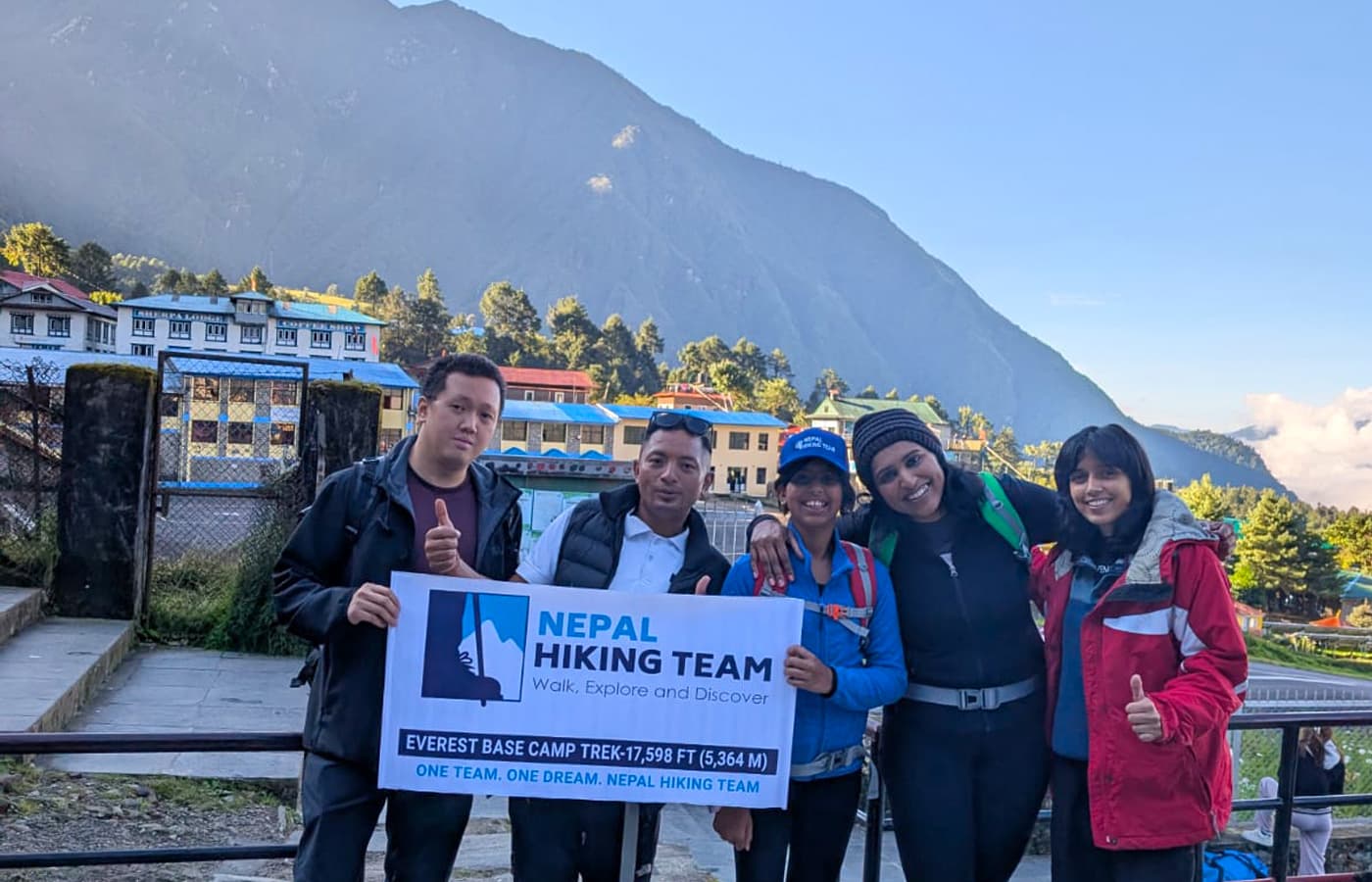
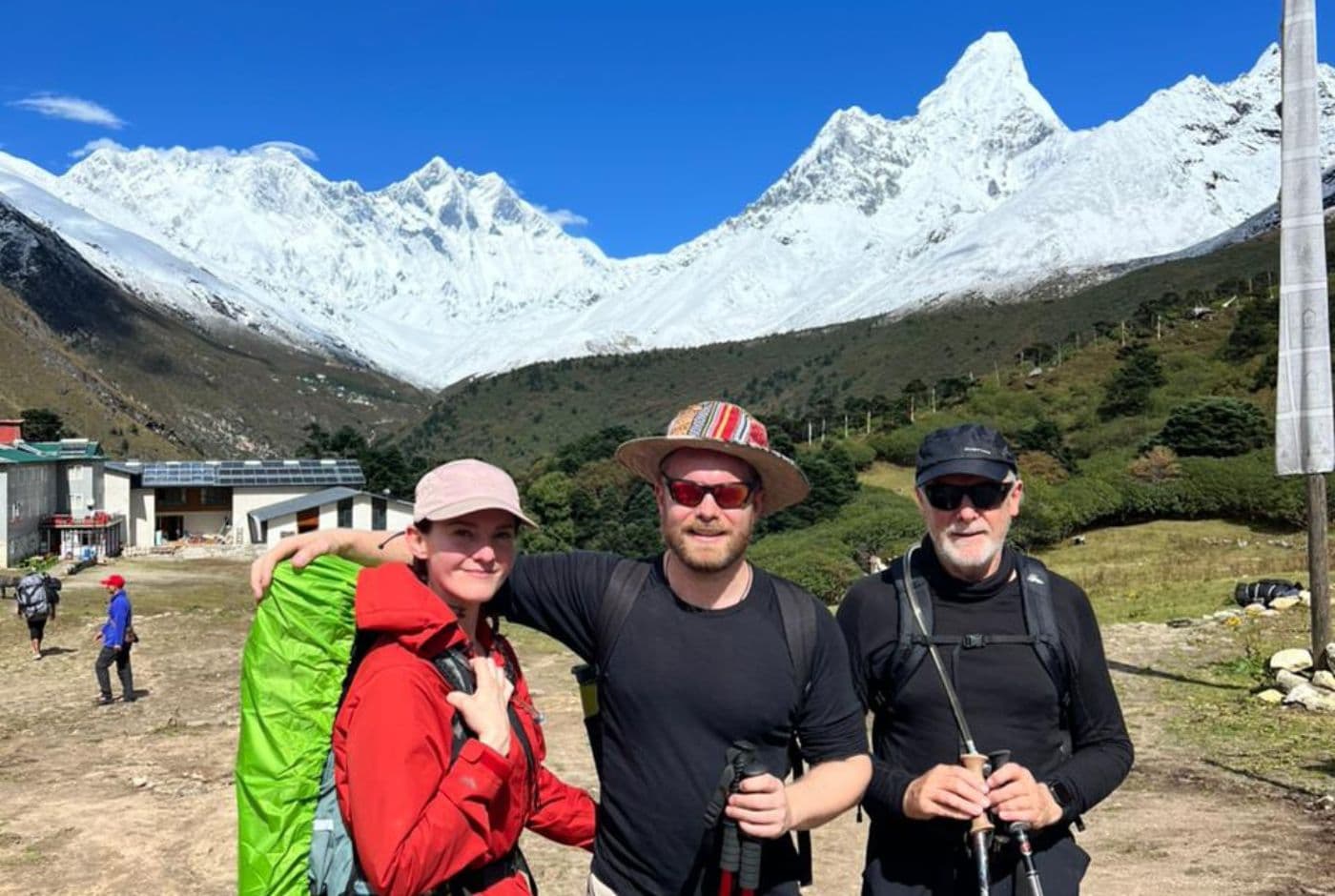
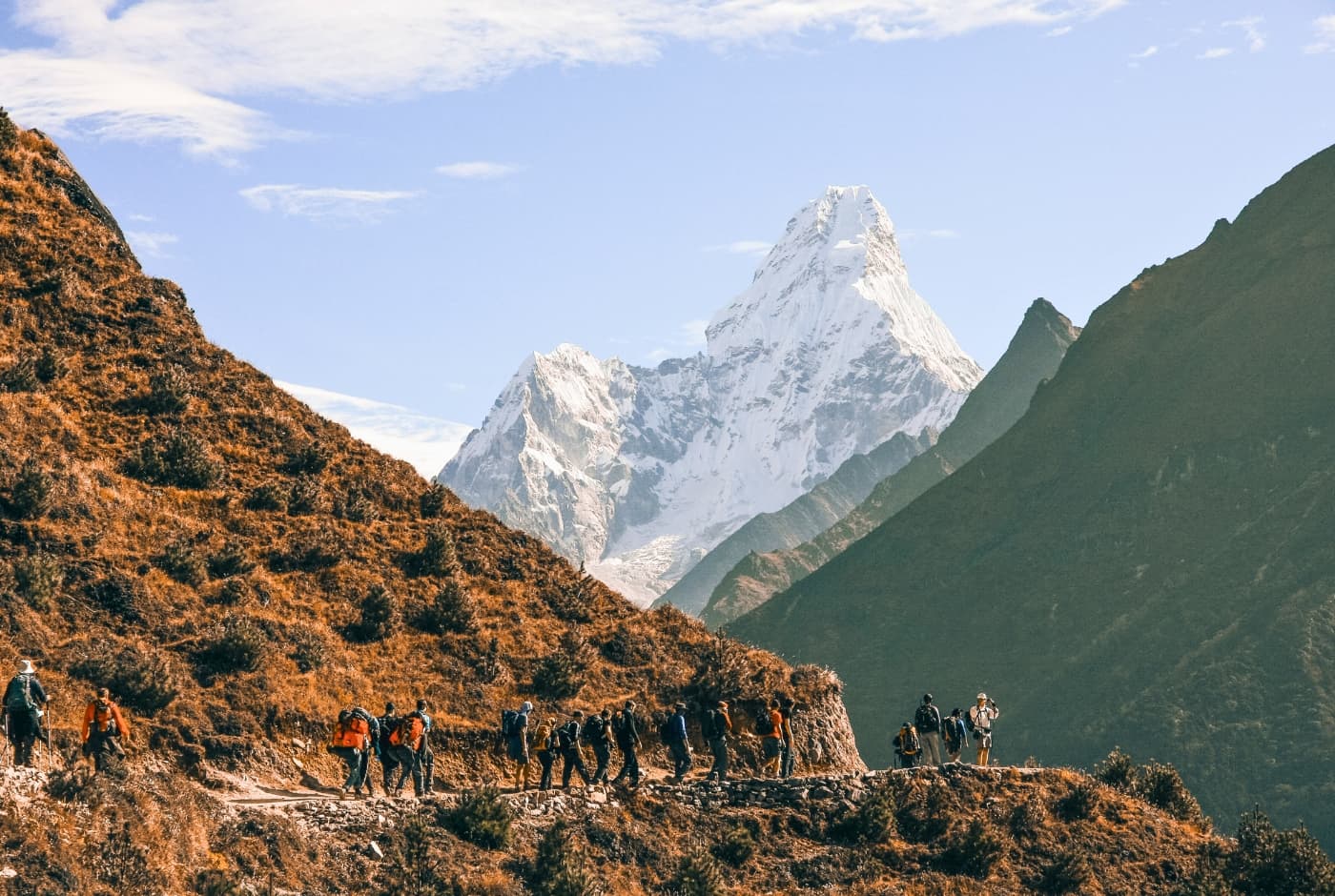
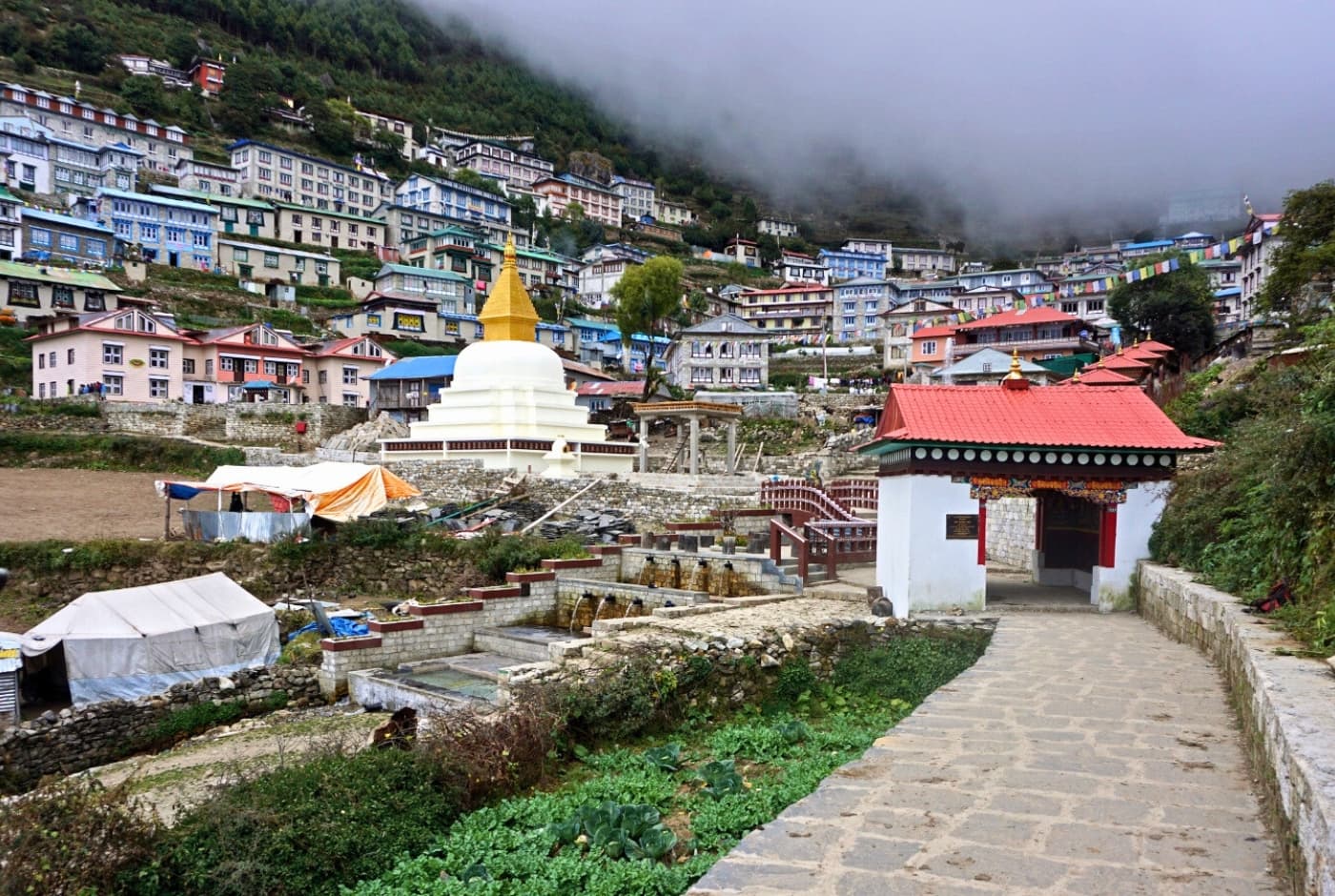
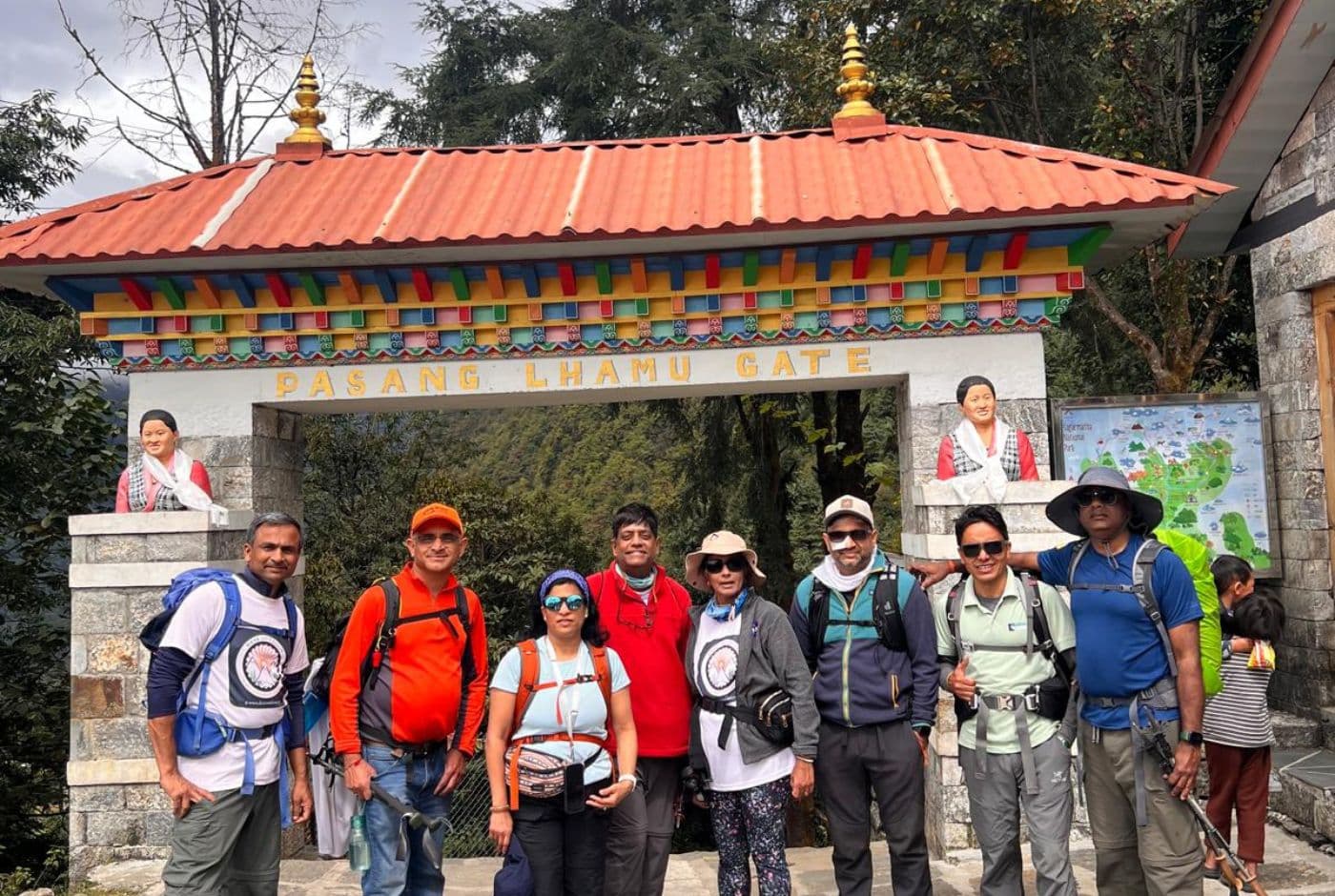
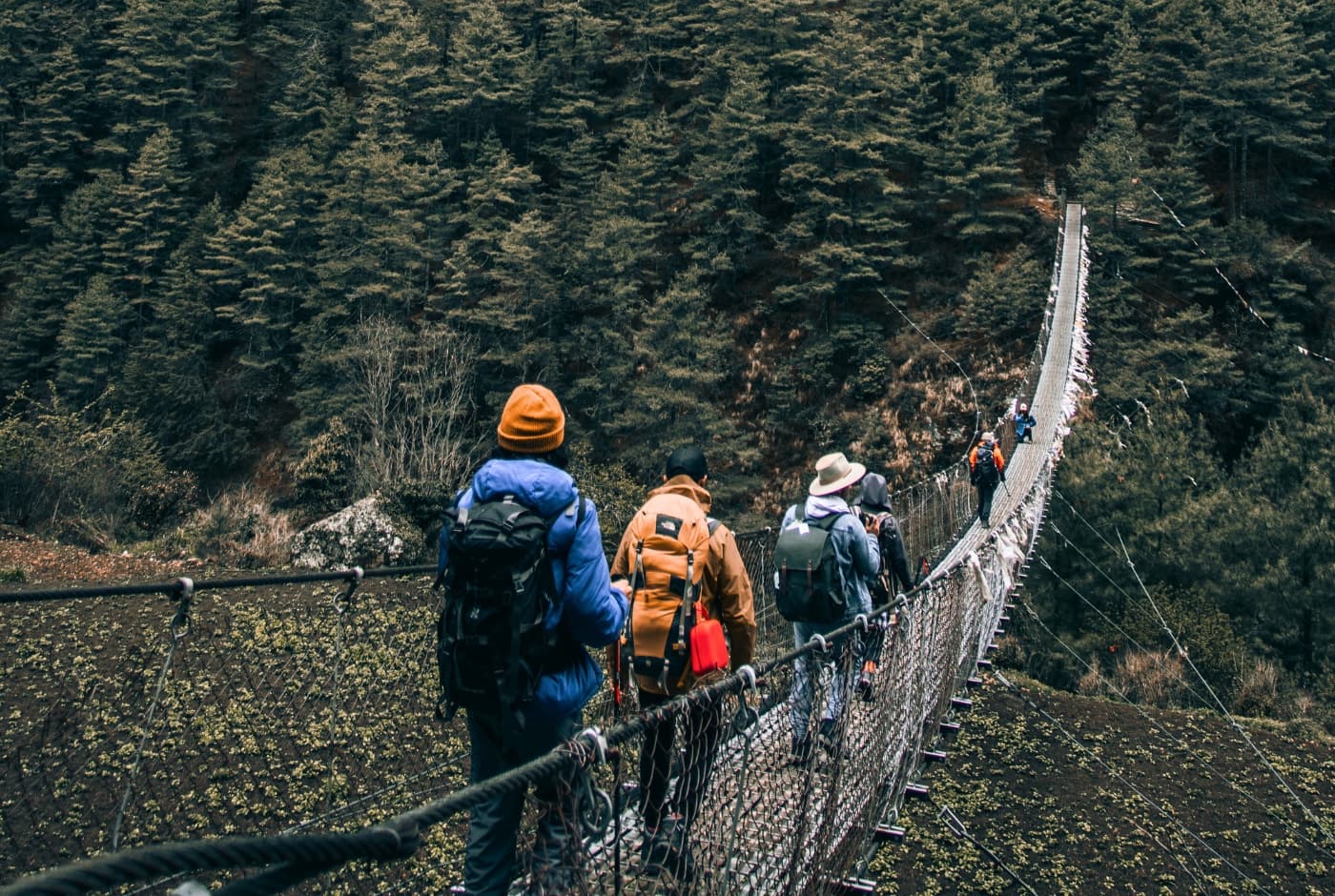
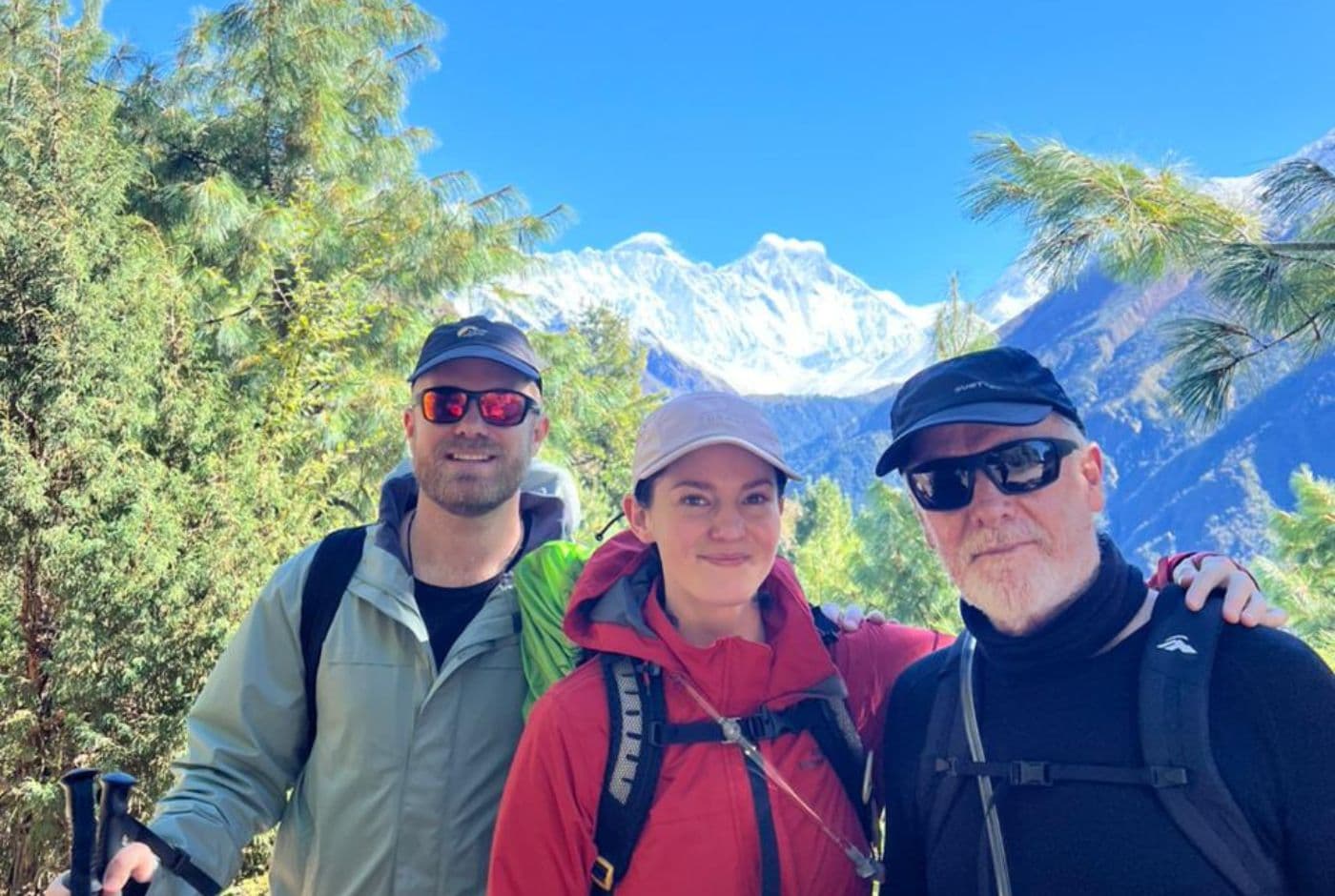
This 17-day Everest Base Camp Trek by road trip doesn’t require you to take a flight to Lukla. Hence, trekkers do not have to worry about the bad weather and flight cancellations. Furthermore, strolling on this path will let trekkers interact with the locals in the lower villages of Solukhumbu District.
One can witness the unique lifestyle of the ethnic Sherpas in the lower region rather than the upper Khumbu areas. Therefore, despite featuring a cultural experience of the same ethnic groups, the trip offers a chance to witness a different way of lifestyle.
You can appreciate the beautiful village of the Sherpa communities and the mesmerizing grand monasteries while viewing the majestic peaks. Appreciating the fine villages of Sherpa communities and grand monasteries while viewing majestic peaks, this tranquil trip grants some breathtaking and unforgettable experiences.
The EBC Trek by road follows the region's narrow canyons and gushing white rivers. Witnessing the serene beauty of the pastures and the terraced farms in the shadows of mountain peaks, this trek lets you enjoy the gorgeous setting beneath giant snow-capped mountain peaks.
Altogether, it's a lovely trek that lets you see parts of Everest that would otherwise go unnoticed. The vistas of the mountain peaks will wow you at every bend of the walking path.
The Everest Base Camp by Road takes place only in the dry season. Except for the monsoon season, lasting from June to mid-September, the journey takes place in spring, autumn, and winter.
We do not recommend traveling during the monsoon as the roads are not black-topped and might be extremely muddy. Heavy monsoon is likely to diminish the roadways and make this journey difficult. We don't recommend it during monsoon as the roads are still not wholly pitched. Thus, heavy monsoon rain is highly likely to diminish the road conditions and make the journey difficult.
Among the three seasons, the best times for the Everest Base Camp trek by road are spring and autumn.
The spring season lasts from March to May and offers both chilly and warm weather. It is a good weather season for trekking and offers snow-covered hills and clear mountain scenery.
Meanwhile, from September to November, autumn is another ideal time for this trek. The lovely weather, spellbinding views, and dry conditions make it another beautiful time for trekking.
At the same time, doing this trek is also possible during the winter season; however, it gets challenging due to the freezing temperature. Nevertheless, the Himalayan vistas are grand around this time, making your journey worthwhile.
Your journey to the base of Mount Everest via road begins with an early morning drive from Kathmandu to Phaplu. It takes 8/9 hours to reach Salleri, and you will be driving 267 kilometers on this day. The distance is long, has varied geography along the way, and poor road conditions. After Phaplu, you’ll continue your drive to Surke Village and rest your body before your exhilarating trek to the base of Mount Everest.
From Paiyun Village, you start your trek toward Phakding. After spending a night in Phakding, the journey continues towards Namche Bazaar, where you stay for two nights to acclimatize by strolling to the Hotel Everest View, the highest-placed hotel, and admiring ancient stupas, Sherpa museums, and Memorial Stones.
Then, continuing your walk-through of the trails to a monastery at Tengboche Village, you can take your time to adore the mesmerizing view of Everest, Nuptse, Lhotse, and Thamserku. After arriving at Dingboche, you will be awed by the spectacular Ama Dablam and walk towards Nangkartshang Peak.
Keep following the EBC route; you'll reach Gorakshep after twists and turns through the Khumbu Glacier, and then. Finally, you will reach the Base of Mount Everest. You can witness how the Khumbu Icefalls mesmerize you as it unwind the timeless beauty of this region. After a few moments of admiration, you will descend to Gorakshep for an overnight stay.
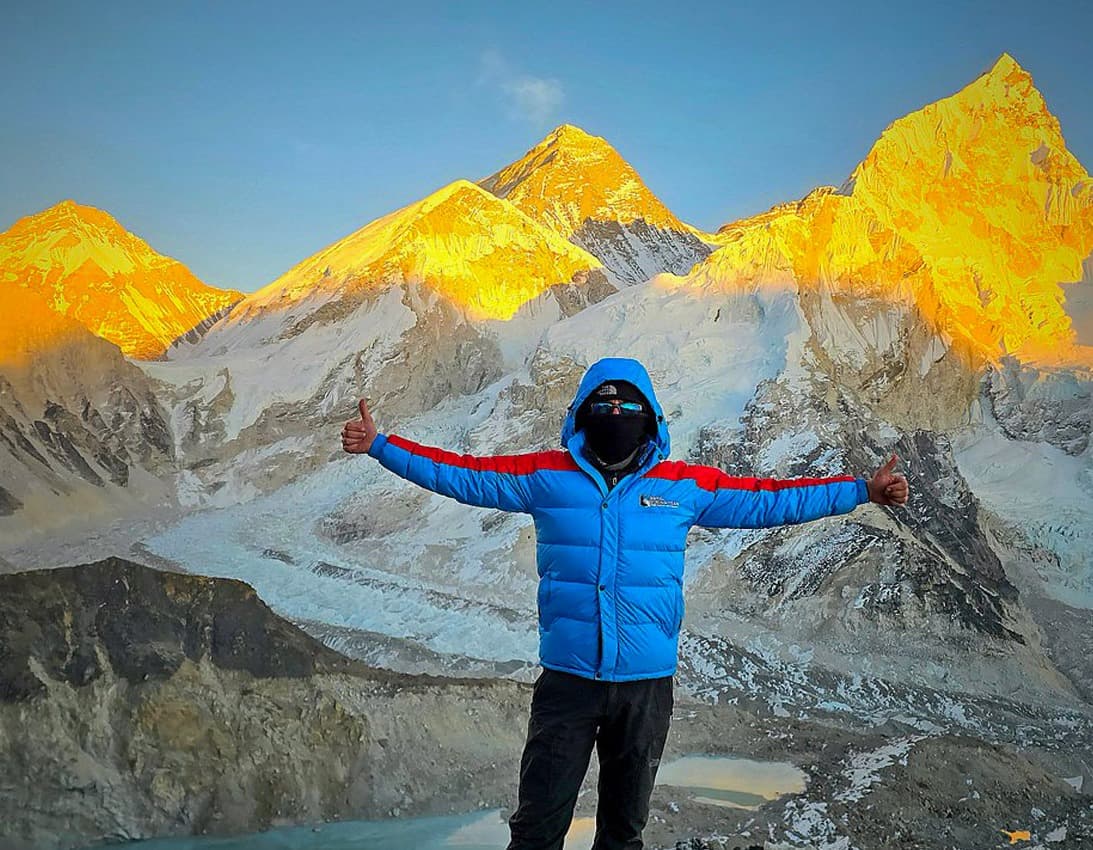
The next day, you hike to Kala Patthar, known as one of the best viewpoints, to watch the sunrise rising from Everest. After that, you will descend to Pheriche. After reaching Pheriche, you’ll again trace your steps back towards Namche and then to Surke Village and Phalpu. From there, you’ll take a Jeep and drive back to Kathmandu. The next day, you’ll be transported back to the Airport for your departing flight back home.
If you also want to go on this unique trek, you can contact the Nepal Hiking Team. We can also customize any treks as per your preference and have experienced guides to assist you in your journey.
Everest Base Camp trek with flight to Lukla, avoiding road/drive access entirely and following the standard Khumbu route.
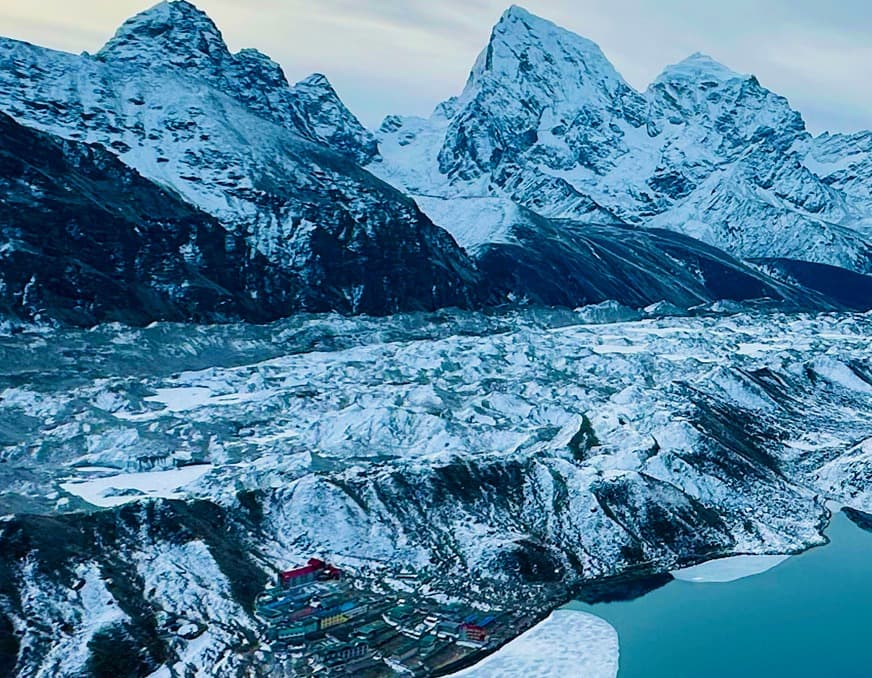
Everest Base Camp trek extended with Gokyo Lakes and Cho La Pass (5,420m), not part of any road-access or drive-based itinerary.
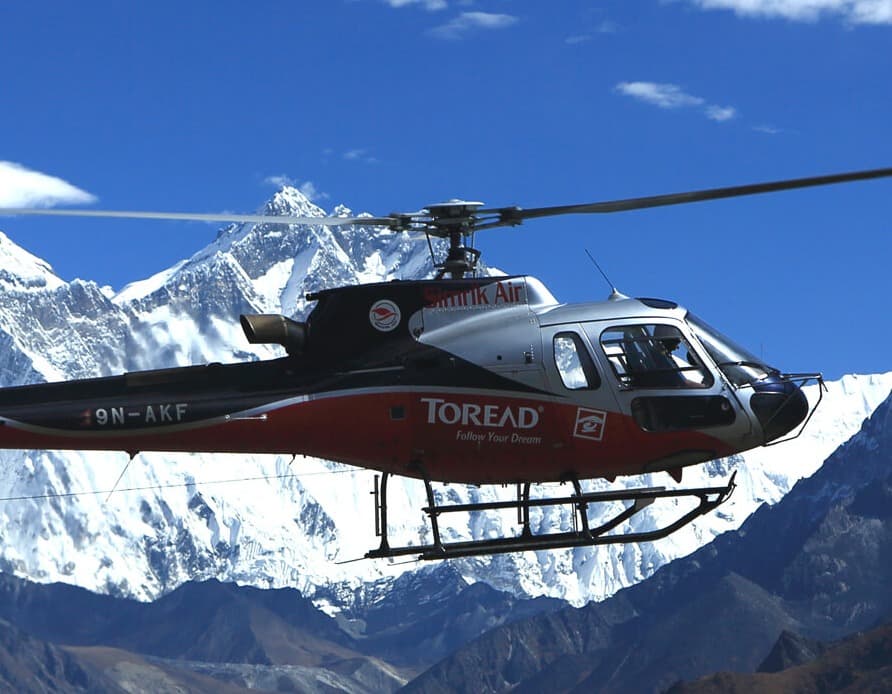
Everest Base Camp trek with helicopter return from Gorakshep, removing the return trek and avoiding road/drive descent options.
Note: The above prices are based on two or more trekkers. Customization of Everest Base Camp Trek by drive is available with us, depending on group size, service level, and itinerary adjustments.
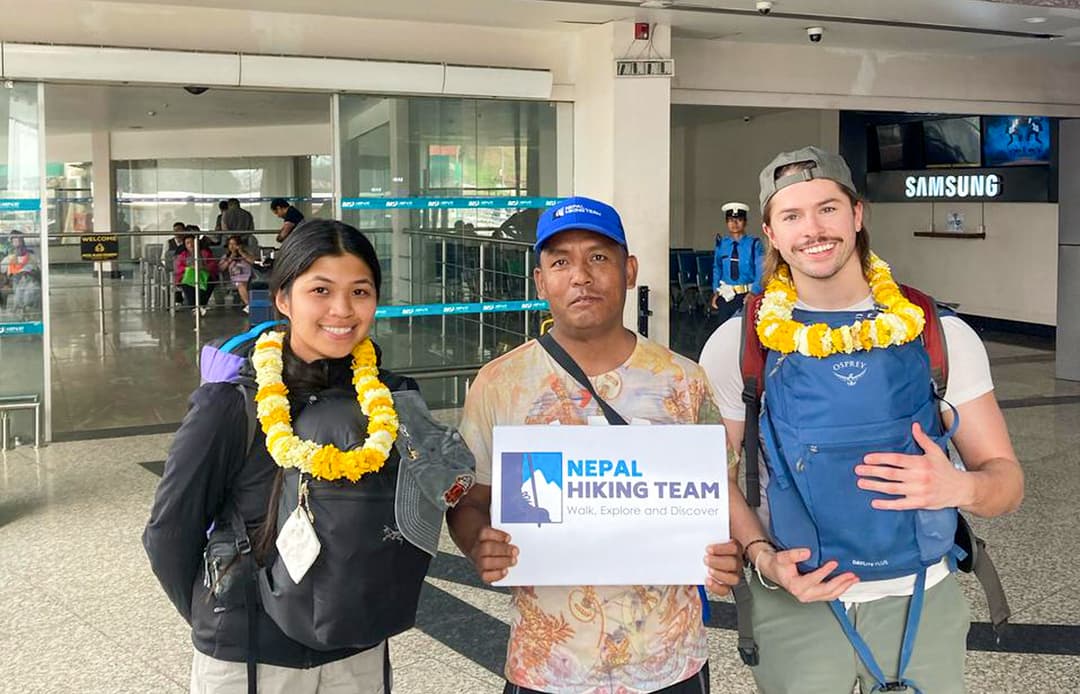
Upon arrival at the Kathmandu airport, a representative from Nepal Hiking Team will greet you.
He will assist you to your trip Hotel, where we will hold a small meeting to go over the details of your journey. After that, there are no schedules so you can enjoy the rest of your time.
Today, you will embark on a long scenic drive from Kathmandu to Phaplu, the administrative center of the Solu region. The drive is an adventurous journey through winding mountain roads, offering picturesque views of terraced fields, small villages, and lush forests. The journey provides an introduction to the diverse landscapes of Nepal and offers a glimpse into the daily life of the local people.
After breakfast, you will begin a scenic drive from Phaplu toward Surke. The route follows rugged mountain roads through terraced hillsides, dense forests, and charming Sherpa settlements. Along the way, you’ll enjoy sweeping views of the Solu Khumbu region and the distant Himalayan peaks.
You’ll arrive in Surke by late afternoon and check into a local guesthouse. The rest of the day is free to relax and acclimatize before continuing the journey toward Paiyun and Namche in the following days.
Today, we are heading toward Phakding. It is the first destination we reach that is included in the regular trekking route.
The trekking track is flatter, meandering along the valley’s contours through lush, fragrant mossy woodlands. You’ll be trekking along a trail cut deep into the valley’s rocky side, where you might see mule caravans following you.
Standing on top of the slope of the impenetrable valley, the walking trail rejoins the Dudh Koshi River Valley, where you can witness beautiful vistas of the ebbing river below.
We leave the settlements of Phakding and follow a trail toward Jorsale that brings us to Monjo, another beautiful Sherpa hamlet.
Our leading destination today is Namche Bazaar. We reach the bustling town by going through Sagarmatha National Park at Monjo.
Endangered animals such as Snow Leopard and the Himalayan Thar call the park’s forests home. We will be treated to a breathtaking vista of the Himalayas set against beautiful pine and cedar forests throughout the trek.
We will arrive in Namche Bazaar after a strenuous climb up the elevation.
Today is a rest day. You can utilize this day exploring attractions around Namche Bazaar or simply sitting in a cafe enjoying warm coffee while engaging with a book or journal.
However, if you do not want to sit still, you may visit the Syangboche Airport.
It is 3700 meters above sea level and is one of the world’s highest airports. From the airstrip, the views of the Himalayan hamlet and the Peaks are breathtaking.
Then, hike to Everest View Hotel for a delightful warm tea or coffee while enjoying the area's superb scenery.
After a beautiful hike, visit the excellent Sherpa Culture Museum to learn more about the region's significant inhabitants.
Following the trail leading to Dudh Koshi valley at Pungki Thanka, we leave Namche Behind and start our journey to Tengboche village.
The village houses the grand Tengboche monastery with the incredible sights of Mt. Everest, Ama Dablam, and many other peaks. The largest monastery in the Khumbu region is also known as the spiritual heart of the area.
The Tengboche Monastery is the Khumbu’s spiritual core, while Namche is the region’s commercial center. It is also known as the Dawa Choling Gompa, and the monastery’s hillsides are gorgeously adorned with rhododendrons in the spring.
We proceed towards Dingboche village, or Summer Valley, crossing the suspension bridge over the Imja Khola.
We climb the small ridges that tower over the small villages of Sherpa and reach Dingboche. Throughout the trek, the impressive sights of Lhotse, Ama Dablam shall accompany you.
This is the second acclimatization day on the trek. Trekkers are free to use the day however they like. It is arranged to help trekkers adjust to the increasing altitude; staying engaged with light activities such as short hikes is best.
Partake on a walk to Nagerjun, located just above Dingboche on the edges of Chhukung valley. It is absolutely beautiful and offers heart-pounding sights of Lobuche East (6119m), Lobuche West (6145m), Kangtega (6685m), Taboche Peak (6367m), Thamserku (6608m), and Ama Dablam (6856m). Along with mountain scenes, you can also see Pheriche valley. Savoring awe-inspiring views from Nagerjun valley, we descend back to Dingboche.
Overnight at the Guesthouse, breakfast, lunch, and dinner included.
This day begins with a gradual ascend towards Thukla; here, the scenery changes and becomes much barer and more desolate, with only alpine scrubs surrounding the trail.
After some time, the trail becomes somewhat strenuous, with a steep uphill over the moraine of Khumbu Glacier. Upon climbing the steep ridge, you will arrive at the summit of Thukla Pass. There is an area where you will see many stone shrines dedicated to fallen climbers.
Following this pass, you will walk through grassy valleys and rocky terrain to arrive at Lobuche. This village consists only of teahouses, with no permanent settlements here. It lies in a narrow meadow sandwiched between Lobuche Peak and Khumbu Glacier. You can enjoy the incredible sight of Taboche and Nuptse soaring above the teahouse.
In the evening, you may take a short hike to the narrow gap between the moraine and the mountain wall to see the Khumbu Glacier.
It takes a few hours on this challenging trail before you will arrive in Gorak Shep. You will have a little time to rest and leave your backpack before walking towards Everest Base Camp. Along the way, you will see several small streams and glacial moraines and will be walking alongside the Khumbu Glacier.
The Khumbu Glacier resembles a lunar landscape with gray boulders, ice formations, and small craters. It will take about two hours before you will be standing at the foothills of the world’s highest mountain — Mount Everest.
Upon reaching Everest Base Camp, you can celebrate your achievement with your trekking guide and team members.
From Everest Base Camp, you will have a marvelous sight of Khumbu Icefall, Khumbu Glacier, Nuptse, Pumori, Khumbutse, and a little bit of Everest.
After celebrating and enjoying the well-deserved view, you will head back to the barren terrain of Gorak Shep for an overnight stay.
Located at 5,545 meters, Kala Patthar is the highest elevation of this trek. From the summit, you can enjoy the sunrise over the Himalayas, with a 360-degree view of the highest peaks in the world, including Mt. Everest, Nuptse, Lhotse, Ama Dablam, Thamserku, Pumori, and more.
After taking in the sunrise, you will return to Gorak Shep for breakfast before descending towards Pheriche. You will walk along the rugged trail through Lobuche and Thukla Pass.
Once you descend the ridge of Thukla Pass, you will cross a short bridge over a glacial stream to arrive at Pheriche.
Pheriche is a small settlement surrounded by hotels, teahouses, and yak pastures. It is also home to the Himalayan Rescue Association Clinic. This voluntary non-profit clinic serves as a rescue station for trekkers and mountaineers in the Himalayas.
Most of the day will be spent walking under dense rhododendron and juniper forests. You may also glimpse rare wildlife, including Himalayan griffons, wild goats, musk deer, and pheasants.
Along the way, you will pass through several villages, including Tengboche and Phunki Tenga. Once you reach Phunki Tenga, the trail turns into a steep uphill. The ascent takes about an hour before you return to the Dudh Koshi River. Here, you will cross a small suspension bridge to reach Kyangjuma village.
This small community is where three popular trails of the Everest region meet — Namche Bazaar, Gokyo Valley, and Khumjung Village. Here, you’ll follow the trail to the Namche Bazaar, where you will stay overnight.
The trek from Namche Bazaar to Surke is a downhill journey, traversing through Sherpa villages and forests. It is part of a longer trek that bypasses the Lukla flight, and the route involves following the Dudh Koshi River towards the end.
We trek down to Surke Village, passing Jorsale, Monjo village, Phakding etc.
Trek back to Phalpu, and our trek is over.
If you want to avoid a long drive to Kathmandu, you can take a flight, but you should be aware that flights to Lukla (which is a common starting point for treks) may depart from Ramechhap instead of Kathmandu, especially during peak seasons. During these periods, a drive to Ramechhap (about a 5-hour journey) is required to catch the flight, which is a shorter flight than a direct one from Kathmandu.
We get on the waiting vehicle that will take us back to Kathmandu.
A representative from Nepal Hiking Team will bring you to the airport approximately three hours before your flight back home. We wish you a safe return journey!
Your 17-day Everest Base Camp Trek via Road with Nepal Hiking Team means travelling with one of Nepal's leading, highest-rated Everest Base Camp trekking companies. With thousands of genuine reviews, transparent pricing with no hidden costs, and trusted safety practices, every detail is handled with care. From expert guides to personalised service, we bring everything together in one all-in-one experience focused entirely on your journey of a lifetime.
This package is specifically designed for trekkers who are afraid of flying or want to completely sidestep the uncertainty of domestic flight cancellations to Lukla. The Lukla flight is notoriously weather-dependent, and delays of one to several days are common, especially during peak seasons. By replacing that flight with a road and jeep journey, this package removes that anxiety from the equation entirely, giving trekkers a more predictable and grounded start to their Everest journey.
The adventure begins well before the first trekking step. On day two, trekkers embark on a long 267 km drive from Kathmandu to Phaplu, which takes approximately 7 to 8 hours. The roads are unblacktop mountain roads with winding bends, varied geography, and rough conditions throughout. The following day involves a further drive of around 70 km from Phaplu to Surke, taking another 6 to 7 hours. These two back-to-back travel days are part of the adventure itself, passing through terraced hillsides, dense forests, and charming Sherpa settlements with sweeping views of the Solu Khumbu region and distant Himalayan peaks. Trekkers should arrive well rested and mentally prepared for these road days before the trail begins.
Unlike the standard 16-day EBC trek which can be done in the monsoon by experienced trekkers, the road-based version is strictly a dry-season-only package. The roads connecting Kathmandu to Phaplu and onward to Surke are not fully paved, and heavy monsoon rainfall from June to mid-September is highly likely to deteriorate road conditions significantly, making the journey unsafe or entirely impassable. Nepal Hiking Team does not operate this package during monsoon for this reason, and trekkers should plan their trip only in the spring, autumn, or winter windows.
Spring from March to May and autumn from September to November are the two ideal windows for this trek. Spring brings chilly but warming temperatures, snow-covered hills, blooming rhododendrons, and clear mountain scenery that makes every section of the trail visually stunning. Autumn offers dry conditions, sharp visibility, and spellbinding views across the entire Khumbu region, making it equally popular. Winter trekking between December and February is technically possible, but the freezing temperatures at higher elevations add a significant physical challenge and require more serious cold-weather preparation. That said, the Himalayan vistas in winter are exceptionally grand and reward those who are well prepared.
One of the most distinctive elements of this route is the chance to pass through the lower villages of the Solukhumbu District, communities that standard EBC trekkers flying directly to Lukla completely bypass. These lower Sherpa settlements offer a quieter, more traditional side of life in the Everest region, where the pace is slower and the influence of trekking tourism is far less visible. Trekkers on this route can witness the unique lifestyle and cultural traditions of Sherpa communities in their more everyday environment, with fewer crowds and a more authentic connection to the landscape and its people.
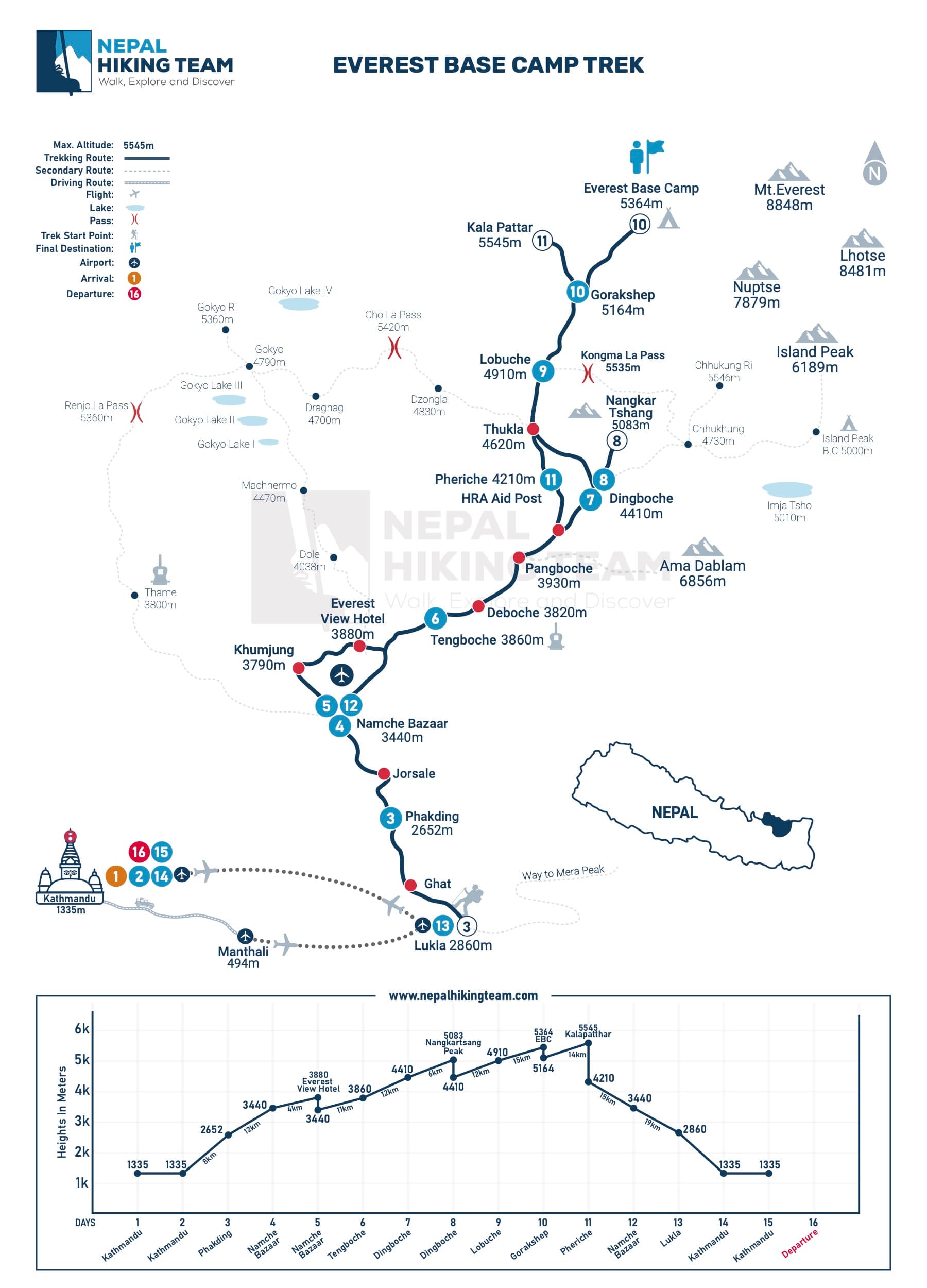
This trek includes two planned acclimatization days, one in Namche Bazaar at 3,440 meters and one in Dingboche at 4,410 meters, both of which are essential for safety at high altitude. The acclimatization day in Namche includes a hike up to the Everest View Hotel, where trekkers can enjoy early views of Everest, Lhotse, and Ama Dablam while giving the body a chance to adjust before pushing higher. In Dingboche, trekkers hike to Nangkartshang Hill at 5,083 meters, which provides outstanding views of Lobuche East, Lobuche West, Ama Dablam, Thamserku, Taboche Peak, and the Pheriche valley. Skipping or rushing these days significantly increases the risk of altitude sickness, and Nepal Hiking Team guides monitor trekker health throughout using oximeters at every overnight stop.
Throughout the trek, accommodation is in the best available locally run lodges and teahouses selected for cleanliness and comfort. The package includes attached bathrooms and hot showers at Phakding and Namche, where facilities are more developed. Above Namche, rooms are unheated and facilities become simpler and shared, as is standard across all EBC routes. A warm sleeping bag, which is provided by Nepal Hiking Team, becomes essential above this point. The dining hall at each teahouse typically serves as the warmest common space and the social heart of the lodge each evening.
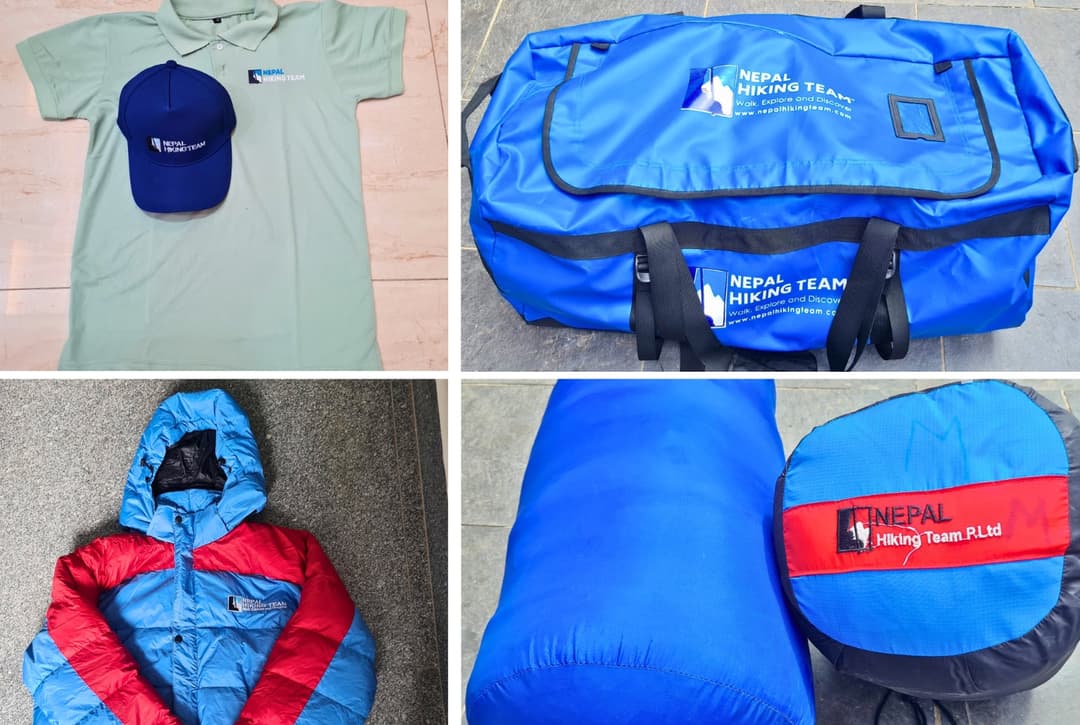
To support trekkers on the trail, Nepal Hiking Team provides a duffel bag for porter-carried luggage, a down jacket and sleeping bag for use during the trek, and a complimentary T-shirt, trekking map, and trip completion certificate. All required trek permits are arranged and included in the package cost, meaning trekkers do not need to source these independently. The down jacket and sleeping bag are particularly important given the sub-zero nighttime temperatures trekkers will encounter above Dingboche and at Gorakshep.
Every trekker on this package is supported by one experienced, English-speaking, government-licensed guide and a porter team assigned at a ratio of one porter for every two trekkers, with each porter carrying up to around 25 kg of combined luggage. The guide leads the group each day, sets a pace suitable for altitude and individual fitness, conducts evening briefings on the following day's route, and monitors health at every stop. All staff costs including food, accommodation, salary, equipment, and insurance are fully covered within the package price, so trekkers have no additional obligations toward the welfare of their team.
Trekkers who complete the journey and prefer not to face the long return road drive have the option of flying back from Phaplu to Kathmandu rather than retracing the jeep route. It is worth noting, however, that during peak trekking seasons in spring and autumn, these domestic flights may depart from Ramechhap rather than Kathmandu, which adds an additional 5-hour drive to the airport. Trekkers considering this option should discuss it with the Nepal Hiking Team before or during the trip so logistics can be arranged in advance.
Nepal Hiking Team has a demonstrated track record of adapting this route when unforeseen conditions make the planned road sections difficult. In one notable case involving flooding in Nepal, the team rerouted the group by driving from Kathmandu to Phaplu on day one, continuing from Phaplu to Jubing on day two, and then hiking from Jubing to Phakding on day three, keeping the group entirely on schedule and at no additional charge. This kind of on-the-ground flexibility is a significant reassurance on a route that depends heavily on variable mountain road conditions.
Trekkers should budget separately for travel insurance, international airfare, the Nepal entry visa, lunches and dinners while in Kathmandu, cold drinks including water and soft drinks on the trail, personal snacks, Wi-Fi access at teahouses, hot showers above Namche, personal trekking equipment and clothing, and tips for the guide, porters, and driver. These costs are not covered within the all-inclusive package price and should be factored into personal trip budgeting before departure.
Read our genuine feedback from past travelers with Nepal Hiking Team sourced from TripAdvisor, Google, Facebook, and Trustpilot.
Although I don’t really know where to start reviewing or talking about my mind-blowing Everest Base Camp trek we completed this October/November, I will try my best.
Firstly, the Nepal Hiking Team nailed it with such friendly and helpful people who planned and executed the whole trip for me.
Our journey started with a two-day off-road jeep journey from Kathmandu through some stunning mountain scenery until we reached our trek start point.
We then trekked upward towards the base camp through one of the most spectacular scenes I've ever seen.
Our guide, Rewanta Basnet, was an awesome individual who looked out for the three of us at all times and kept us safe during our journey. A massive thank you to him for his work. Also, a huge thanks to our amazing porters, who carried our kit, always smiling and working unbelievably hard to make sure we always had our gear at every tea house we stayed at on our trek.
To sum up, our trip was amazing and full of awesome memories, and if you are planning to do the Everest Base Camp Trek, I can highly recommend the Nepal Hiking Team to take care of you on this once-in-a-lifetime (or many) journey.
 +
+ +
+ +
+
We had a truly exceptional experience with our hiking companions, Paban (guide) and Melon (porter), and the Nepal Hiking Team for organizing our itineraries and recommendations. From our arrival in Kathmandu to our departure, everything was meticulously organized. The highlight of this journey was the excitement, cultural immersion, culinary experiences, and camaraderie with our hiking team. This lifetime experience with my brother was made possible by the Nepal Hiking Team, who delivered outstanding service. We are grateful to have entrusted our adventure to you.
Namaste!
- Cid and Gus M.
I had the great opportunity to join the Nepal Hiking Team and experience the two-week base camp Everest trekking during the last week of September and the first of October 2024.
Everything was great from the very first second I set foot in Nepal to the last moment of farewell at the airport. It was such a fulfilling and exciting experience, and this great time was only possible thanks to my guide, Ram and his assistant, Bishnu. They made this journey possible and doable, keeping the spirit high even in the most challenging moments.
There was not a single second where I and the rest of my group companions did not feel safe with them. They were handling everything with the best professionalism and resourcefulness, especially when the most unexpected, snowy conditions occurred.
Thanks a million for this lifetime experience.
Robert
The trek to Everest Base Camp was an unforgettable journey through some of the world's most breathtaking landscapes. The route takes you through traditional Sherpa villages and past ancient monasteries and offers stunning views of peaks like Ama Dablam, Lhotse, and, of course, Mount Everest itself.
My guide, Santosh, was incredible. I picked up a cough in KTM, and by Namche, I was fevering out, he would come and check on me and give me steam inhalation baths to clear my airways, he was amazing. His calm approach kept me going; he never lost confidence.
The trek's challenges - from the thin air at high altitude to the basic teahouse accommodations - are well worth it for the incredible experience. I completely recommend EBC to the Nepal Hiking Team, especially Santosh.
Last month, I trekked alongside five friends to Everest Base Camp on a sixteen-day. Originally, we planned to fly from Rammechap to Lukla, but bad weather meant we could be waiting days for a flight. With our return flights already booked, we didn’t want to risk the delay.
Instead, Nepal Hiking Team quickly stepped in, offering to drive us from Kathmandu to Phaplu on the first day, then from Phaplu to Jubing on the second day, and finally, hike from Jubing to Phakding on Day 3 – all at no additional charge. This way, we avoided days of airport waiting and stayed right on schedule.
Given the recent floods in Nepal, we weren’t sure we’d even be able to finish the trek, however, NHT went above and beyond to make sure the trek wouldn’t be affected.
From start to finish, our guide Deepak made us feel safe and kept us well-informed. He made sure we were always fed, had enough water, a roof over our heads, and were happy every step of the way.
Before the trip, we thought we’d be staying and sleeping in very basic teahouses and eating dal bhat every day. But, surprise, the accommodations and meal options exceeded what we expected through the way up to base camp.
Every place we stayed offered various food options - wifi and power were available either included or for a small fee. We found that most villages even had cafes or restaurants if you wanted other options.
Each day of the trip was an absolute blast. We became close friends with Deepak, who spoke fantastic English, understood our Aussie humor, and gave us great advice for the trail. I honestly don’t think we would’ve had such an amazing experience without Deepak.
I highly recommend this trek to anyone even remotely thinking about it. It was an unforgettable experience, and I’ll remember it forever. Huge thanks to Deepak, Bikash, and Nepal Hiking Team for having us.
Guide: Deepak Dhakal
Assistant Guide: Bikash
Porters: Prem, Suman, and Gyan

Nepal Hiking Team was founded in 2009 by two brothers who together bring over 25 years of hands‑on guiding experience in the Everest region. With more than 2,590 verified reviews on TripAdvisor and five‑star ratings across Google and social media, the company is recognised as one of Nepal’s most trusted trekking operators. For this specific Everest Base Camp Trek by Road, they offer honest, all‑inclusive pricing with no hidden costs, hand‑picked teahouses (including private bathrooms with hot showers in Phakding and Namche), and a dedicated local team of guides and porters who know the unique road‑cum‑trek route intimately. Their close connections with vendors along the trail also mean reliable jeep transport, emergency helicopter arrangements when needed, and the flexibility to adapt itineraries if road conditions change.
Every trekker is accompanied by an experienced, English‑speaking, government‑licensed guide who leads the daily walk, monitors altitude with oximeters, and holds evening briefings about the next day’s route. Porters are provided at a ratio of one porter for every two trekkers, carrying your main duffel bag (provided by the company) so you only need a small daypack. All staff costs — food, accommodation, insurance, and equipment — are fully included, so you never face unexpected expenses for your support team. The team also carries a comprehensive first‑aid kit and has direct access to helicopter rescue services in case of emergencies.
Nepal Hiking Team supplies key high‑altitude gear that would otherwise be a major expense: a durable duffel bag (65–70 L) for porter transport, a down jacket rated to –20°C, and a sleeping bag also rated to –20°C — both essential for freezing nights above Dingboche and the pre‑dawn ascent to Kala Patthar. They also provide a complimentary Nepal Hiking Team T‑shirt, a detailed trekking map, and a trip completion certificate. By including these items, the company ensures you arrive with properly rated gear without needing to buy expensive equipment for a single trek.
The company has a proven track record of rerouting when unforeseen conditions arise. For example, during a period of flooding in Nepal, they adapted the itinerary by driving from Kathmandu to Phaplu on day one, continuing from Phaplu to Jubing on day two, and then hiking from Jubing to Phakding on day three — keeping the group exactly on schedule at no extra cost. This kind of on‑ground flexibility is a major advantage on a trip that depends on variable mountain road conditions, and it reflects their deep local knowledge and close partnerships with drivers and lodge owners.
You can obtain a tourist visa easily upon arrival at Tribhuvan International Airport in Kathmandu. A multiple‑entry tourist visa valid for 30 days costs US$ 40 (or equivalent foreign currency). If you plan to stay longer, a 90‑day multiple‑entry visa is available for US$ 100. You will need two passport‑size photos and your passport, which must be valid for at least six months beyond your arrival date. Nepal Hiking Team’s representative will meet you at the airport and assist with the transfer to your hotel, giving you a stress‑free start.
A representative from Nepal Hiking Team will greet you at the arrivals terminal of Tribhuvan International Airport and drive you to your designated 3‑star hotel in Kathmandu (accommodation and breakfast are included for two nights). Later that day, there is a short orientation meeting at the hotel where your guide will review the itinerary, check your gear, and answer any last‑minute questions. The rest of the day is free to relax or explore Thamel.
Yes, travel insurance is mandatory and not included in the package cost. Your policy must cover emergency high‑altitude helicopter evacuation up to at least 5,500 meters (since Kala Patthar reaches 5,545 m), trip cancellation, medical expenses, and baggage loss. Many trekkers find that policies specifically designed for adventure travel to Nepal work best. You will be asked to provide proof of insurance before the trek begins.
To book, you can contact Nepal Hiking Team directly via their website or email. A deposit of approximately 20–30% of the total trip cost is required to confirm your reservation, with the balance payable upon arrival in Kathmandu (cash in USD, EUR, or NPR is preferred). The company accepts bank transfers, credit cards, and online payment platforms. Because the road‑based trek operates on a fixed departure basis with a minimum of two trekkers, it’s advisable to book at least 2–3 months in advance, especially for spring and autumn seasons.
The package price is quoted per person based on two trekkers sharing a room. If you travel solo, the cost will be slightly higher to cover single accommodation and private transport. For groups of four or more, the per‑person rate becomes more economical because jeep hire and porter costs are shared. Nepal Hiking Team offers transparent, all‑inclusive pricing with no hidden surcharges — all ground transport, trek permits, accommodation, and staff costs are included as listed in the “Cost Includes” section.
Yes, Nepal Hiking Team publishes scheduled group‑joining departure dates for the Everest Base Camp Trek by Road, particularly during the prime seasons of spring (March–May) and autumn (September–November). If those dates do not suit your calendar, you can request a custom departure for a private trek. Private treks allow you to choose your own start date, adjust the pace, and enjoy a more exclusive experience with your own guide and porter — all with the same inclusions as the standard package.
This 17‑day itinerary completely eliminates the flight to Lukla — and all the weather‑related delays and cancellations that often accompany it. Instead, you travel overland from Kathmandu by private 4WD jeep, first to Phaplu (a 7–8 hour drive) and then to Surke village (another 6–7 hours), where the trekking begins. By avoiding the flight, you also gain a unique cultural experience: you walk through the lower Solukhumbu villages that standard EBC trekkers never see, such as the quiet Sherpa settlements around Phaplu, Surke, and Paiyun. These areas offer a more traditional, less touristy glimpse of Sherpa life before you join the main Everest trail at Phakding.
The road approach adds two days of scenic mountain driving, which actually helps with acclimatisation because you gain altitude gradually before you start walking. You begin trekking from Surke (2,290 m) rather than Lukla (2,860 m), giving your body extra time to adjust. Once you join the classic route at Phakding, you still follow the standard EBC trail with two full acclimatisation days — one at Namche Bazaar (hike to Everest View Hotel) and one at Dingboche (hike to Nangkartshang Hill). The slower start often leaves trekkers feeling better prepared for the higher altitudes around Lobuche and Gorakshep.
Yes, you have the option to fly back from Phaplu (or from Lukla if you choose to walk to Lukla after the trek) to Kathmandu instead of driving both ways. However, during peak spring and autumn seasons, domestic flights to/from Lukla often operate from Ramechhap airport, which is about a 5‑hour drive from Kathmandu. If you prefer to fly back, Nepal Hiking Team can arrange the logistics, but it’s best to discuss this before or during the trek so that vehicle and flight bookings can be adjusted accordingly. The standard package includes the return jeep drive to Kathmandu, so flying back would involve an additional cost.
The roads are mostly unpaved mountain roads with winding bends, varied geography, and rough sections. Day two covers 267 km from Kathmandu to Phaplu in about 7–8 hours, passing through terraced hillsides, forests, and small towns. Day three continues about 70 km from Phaplu to Surke in another 6–7 hours. These drives are an adventurous part of the experience, offering sweeping views of the Solu Khumbu region. Because the roads are not fully blacktopped, this trek is only operated in dry seasons (spring, autumn, and winter) — monsoon travel is not recommended as heavy rains can make the roads unsafe or impassable.
The Lukla flight is famously prone to delays and cancellations due to fog, wind, or rain, sometimes leaving trekkers stranded for days. By replacing the flight with a jeep journey, this package completely removes that uncertainty. Your schedule becomes much more predictable: the drive runs regardless of weather (except extreme monsoon conditions), so you start trekking on the planned day without the stress of waiting at the airport. This is especially valuable for travellers with fixed return flights.
All ground transportation is provided in private 4WD jeeps, tailored to your group size. These vehicles are robust enough to handle the rough mountain roads, and the cost is fully included in the package. You will have the same jeep and driver for the airport transfers, the Kathmandu–Phaplu–Surke journey, and the return drive from Phaplu to Kathmandu at the end of the trek. The private arrangement means you can stop for photos or meals along the way without waiting for other groups.
This trek is rated “Moderate” by Nepal Hiking Team. It involves walking 5–8 hours per day on varied terrain: stone staircases, forest paths, glacial moraines, and steep mountain trails. The highest point is Kala Patthar at 5,545 meters, which requires good physical fitness and proper acclimatisation. While previous high‑altitude trekking experience is beneficial, it is not mandatory if you are in good health and train beforehand with regular cardio, hill walking, and strength exercises.
Acclimatisation days are built into the schedule at Namche Bazaar (3,440 m) on day 6 and Dingboche (4,410 m) on day 9. On these days, you do not simply rest; you go on active hikes that help your body adjust. In Namche, you hike to the Everest View Hotel (3,880 m) for panoramic views and visit the Sherpa Culture Museum. In Dingboche, you hike up to Nangkartshang Hill (5,083 m) for outstanding views of Ama Dablam, Lobuche East, and Taboche. These short upward treks followed by a descent back to the lodge are the most effective way to acclimatise and significantly reduce the risk of altitude sickness.
The package has a minimum group size of two trekkers for the scheduled departures. If you are a solo traveller, you can either join an existing group departure (subject to availability) or book a private trek at a slightly higher cost. Private treks can be organised for any date you prefer and are ideal if you want a more flexible pace or a one‑on‑one guiding experience.
Your guide carries a portable oximeter to check your oxygen saturation and heart rate at each overnight stop, especially above Namche. They are trained to recognise early symptoms of Acute Mountain Sickness (AMS) and will advise on the proper course of action, which may include extra rest, hydration, or in rare cases, emergency descent. The guides also hold daily briefings to discuss the next day’s altitude gain, hydration needs, and pacing strategies.
Nepal Hiking Team has established helicopter rescue arrangements for the Everest region. In case of a serious medical emergency, they can coordinate a helicopter evacuation (covered by your travel insurance). The trek route also passes the Himalayan Rescue Association clinic at Pheriche (4,371 m), where trekkers can receive professional medical advice and treatment. Your guide carries a comprehensive first‑aid kit with medications for common altitude‑related issues, but you should bring any personal prescriptions you require.
Yes, all guides are government‑licensed and have extensive experience on Everest region trails. They undergo regular first‑aid and altitude‑illness training. Porters are provided with proper gear, insurance, and fair wages, and they work in pairs to support each other. The staff‑to‑trekker ratio (one guide for the group, plus one porter per two trekkers) ensures that you are never without support.
Layering is key. Bring moisture‑wicking trekking shirts (3–4), thermal tops (2) and bottoms (1), a fleece jacket, an insulated vest, a waterproof shell jacket and pants, and a windproof jacket. For lower temperatures, pack trekking pants (one lighter, one warmer), a fleece or thermal pant for lodge evenings, and comfortable camp shoes. Headwear should include a sun hat, a fleece beanie, a buff or neck gaiter, and UV‑protection sunglasses. For hands, liner gloves and insulated waterproof gloves are necessary, especially for the pre‑dawn hike to Kala Patthar. Footwear: well‑broken‑in waterproof trekking boots, camp shoes/sandals, and 4–5 pairs of wool trekking socks. Microspikes are recommended if trekking in winter (December–March).
The company provides a duffel bag (carried by porters), a down jacket rated to –20°C, a sleeping bag rated to –20°C, a trekking map, and a T‑shirt. You should bring your own daypack (25–30 L) with rain cover, headlamp with spare batteries, water bottles (2 L total; bottles are more reliable than hydration hoses at high altitude), trekking poles, personal toiletries, sunscreen (SPF 50+), lip balm with SPF, and a power bank (20,000 mAh or higher) since charging above Namche is limited. Also bring local currency (NPR 25,000–30,000) for Wi‑Fi, hot showers above Namche, and snacks.
Nepal Hiking Team ensures safe drinking water by providing purified water at the lodges or by guiding you to reliable water sources. However, it’s wise to bring backup water purification tablets or a filter bottle, especially for long trekking stretches like from Pheriche to Lobuche. Bottled water is available but adds extra cost and environmental waste; many trekkers prefer using refillable bottles with purification.
You will stay in the best available local teahouses (lodges) along the route. Nepal Hiking Team pre‑selects lodges for cleanliness and comfort. In Phakding and Namche, your room includes an attached bathroom with a hot shower. Above Namche (Tengboche, Dingboche, Lobuche, Gorakshep), rooms are simpler — usually twin‑share with shared bathroom facilities. The dining hall serves as the warm communal space where meals are taken. All rooms are unheated, so the provided –20°C sleeping bag is essential for warmth at night.
Wi‑Fi is available at most teahouses but is not included in the package cost; you pay per use (usually a few hundred rupees per device). Connection speeds can be slow and may be unreliable above Namche. Charging electronics is also a paid service in most lodges above Namche (solar‑powered, often limited to certain hours). A high‑capacity power bank is highly recommended. In Namche and Phakding, charging may be included or cheaper, but in Dingboche, Lobuche, and Gorakshep, you should expect to pay a small fee.
Nepali mobile networks (Ncell or Nepal Telecom) have coverage in most villages up to Namche and sometimes in Dingboche, but signal is unreliable or absent above that. If you need to stay connected, consider buying a local SIM card in Kathmandu. Your guide will have a satellite phone or radio for emergency communication, but for personal use, Wi‑Fi is the main option above Namche.
During the trekking days, all meals — breakfast, lunch, and dinner — are included, along with tea or coffee. The teahouses offer a variety of meals, including traditional Nepali dal bhat (rice with lentil soup), Tibetan bread, noodles, pasta, soups, and simple international dishes like pizza or fried rice. Breakfast usually includes eggs, toast, porridge, or pancakes. The menus are extensive, so you can choose different options each day. While in Kathmandu, only breakfast is included; lunches and dinners there are at your own expense.
Nepal Hiking Team encourages the use of reusable water bottles. Your guide will arrange purified drinking water at the lodges (boiled or filtered) or advise on safe water sources. You can also use water purification tablets or a SteriPEN as a backup. Bottled water is available for purchase but is increasingly discouraged due to plastic waste and higher cost (prices rise with altitude). We recommend carrying at least two 1‑liter bottles or a hydration reservoir.
Yes, teahouses along the Everest trail are accustomed to accommodating dietary preferences. Most menus offer a range of vegetarian, vegan, and gluten‑free options (e.g., dal bhat is naturally vegan). It’s best to communicate your dietary needs to your guide at the beginning of the trek, and they will inform the lodge owners. In Kathmandu, the included breakfast and any meals you purchase will also have plenty of choices.
Absolutely. Nepal Hiking Team specialises in fully personalised itineraries. You can add extra rest days in Namche or Dingboche, include a side trip to Gokyo Lakes (if you have more time), or arrange a different pace. If you prefer a private trek for just your group, you can choose your own start date and enjoy more flexibility. The company also offers alternative packages like the Classic EBC Trek (16 days, flight to Lukla), EBC Gokyo with Cho La Pass (19 days, strenuous), or a helicopter‑assisted return if you want to shorten the descent.
Tips are not included in the package cost and are a personal way to thank your support team for their hard work. As a guideline, we recommend budgeting around 10–15% of the total trip cost to be distributed among the guide, porters, and driver. A common practice is to tip the guide separately (as they coordinate the team) and then give the porters their share. Your guide can help you split the amount fairly. Tipping is voluntary but greatly appreciated, as it reflects the quality of service provided.
Yes. You should plan for: travel insurance (mandatory), international airfare, Nepal entry visa (US$ 40–100), lunches and dinners in Kathmandu, personal snacks and cold drinks (including water) during the trek, Wi‑Fi and device charging fees, hot showers above Namche, any personal trekking gear not provided, and tips for staff. Having local currency (NPR 25,000–30,000) in small denominations is advisable for these expenses, as ATMs are not available on the trail.