15 Days
Check Our Risk-Free Booking Policy View Details

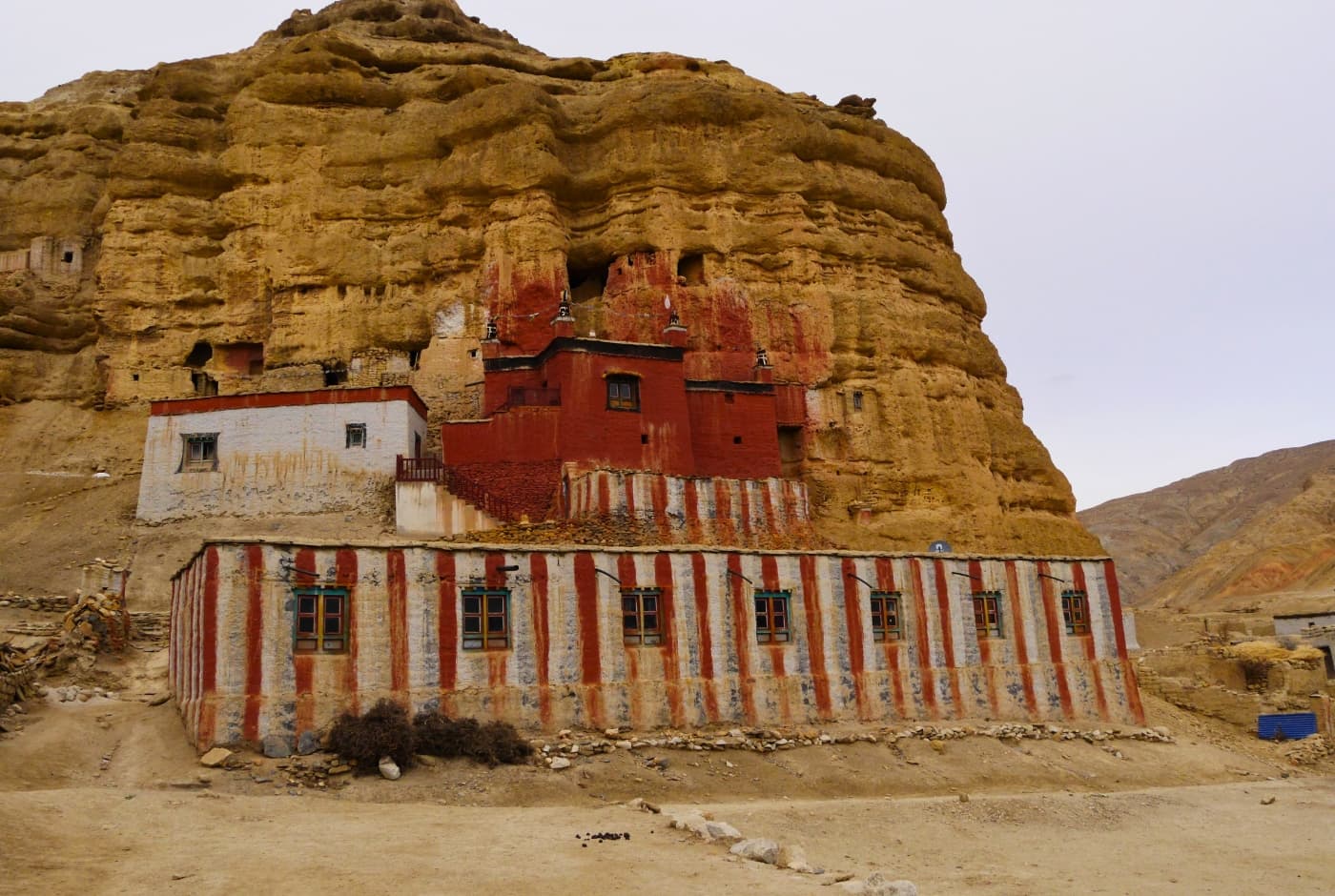
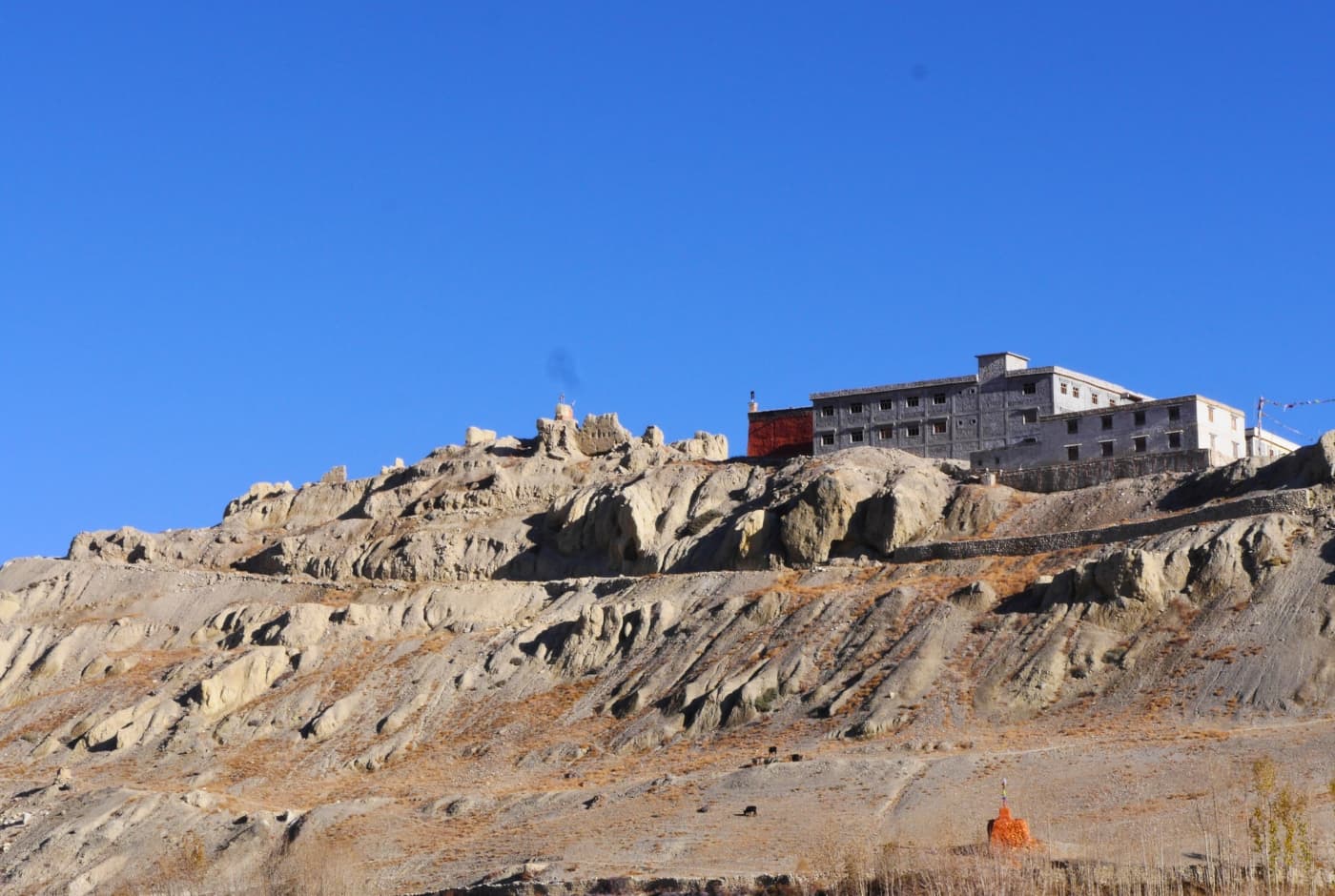
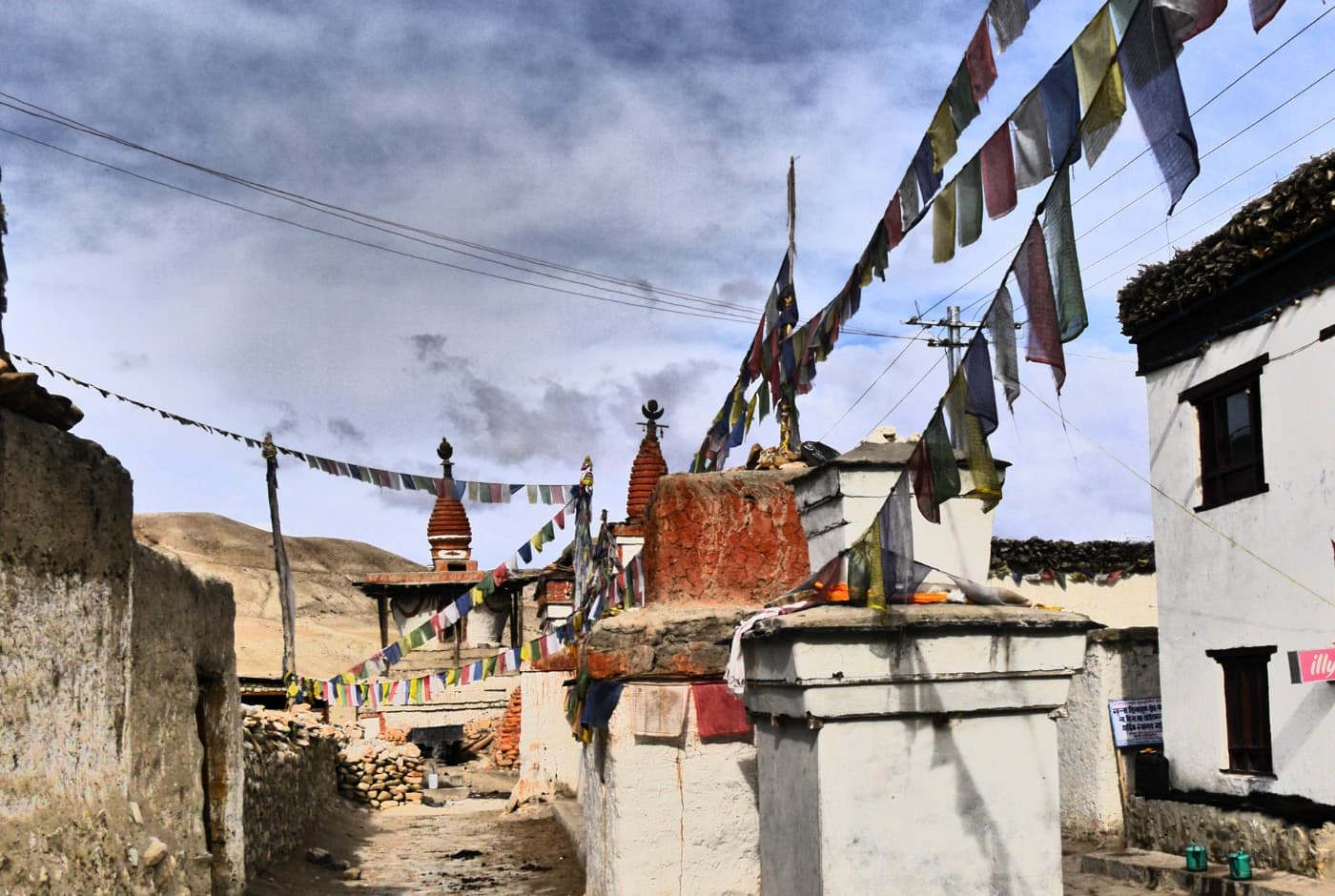
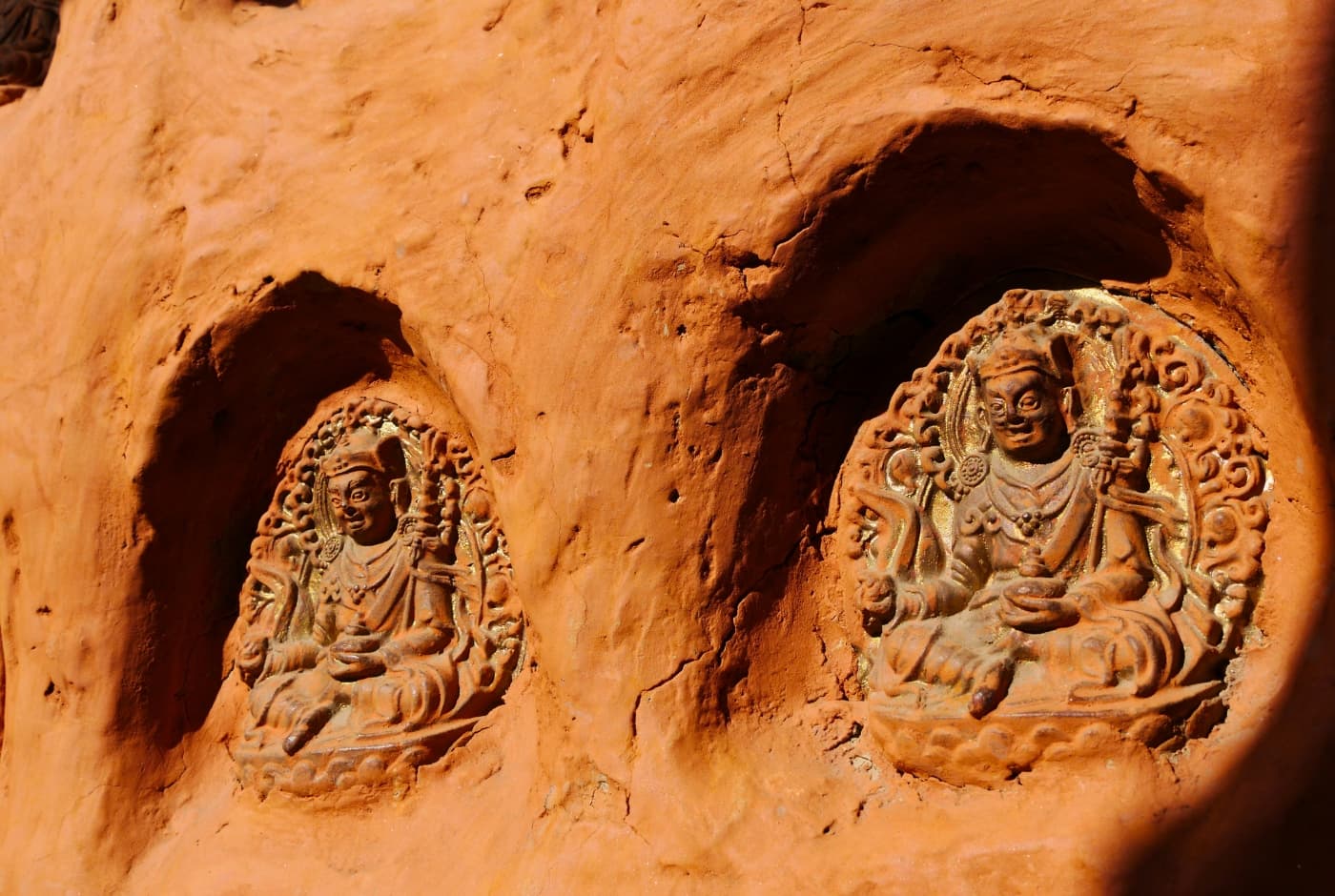
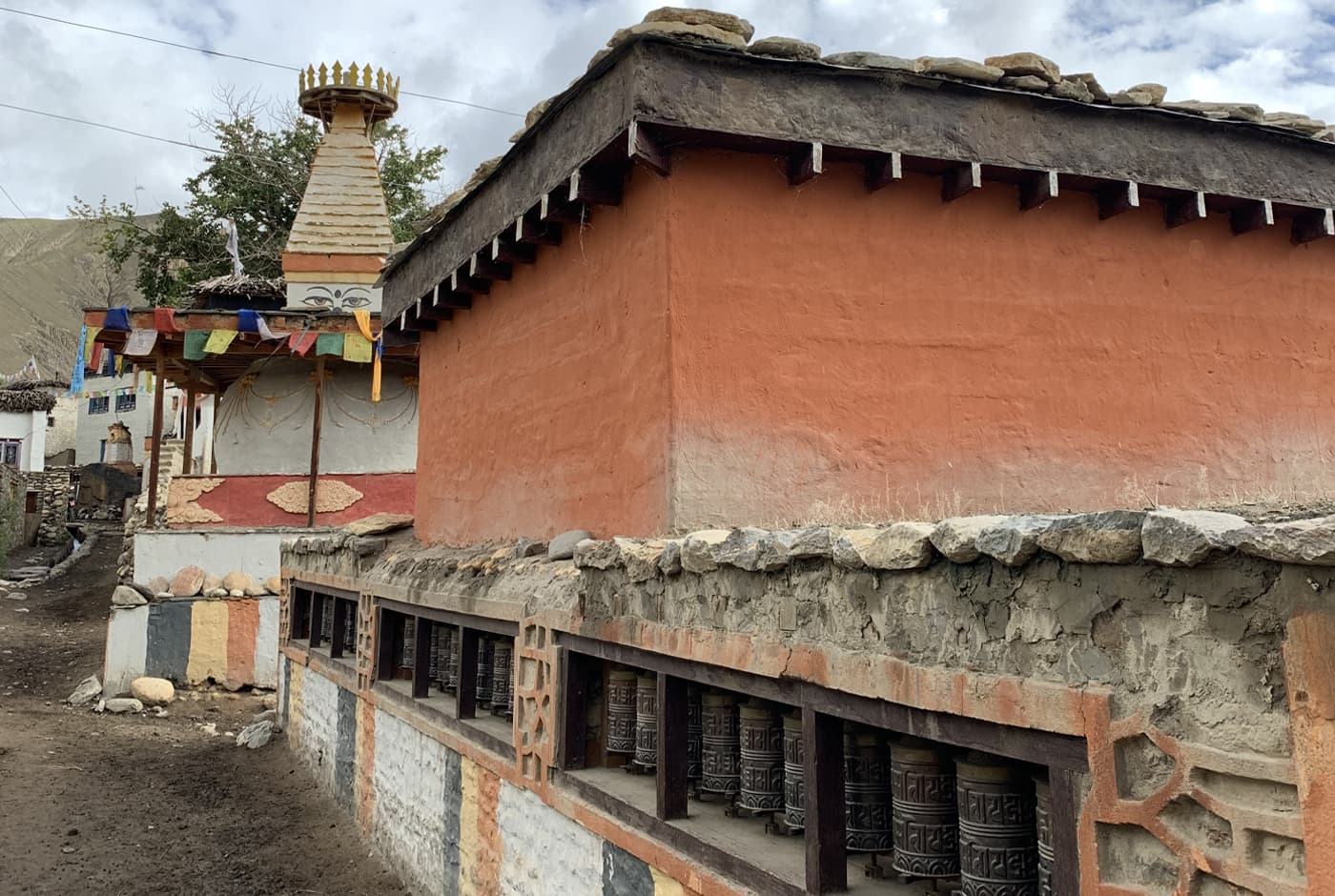
This trek will take you on an ultimate journey up to the forbidden kingdom of Lo-Manthang. This kingdom was once closed to all outsiders and forbidden to all foreigners, until in 1992 it opened its doors to the world. However, you’ll still see the people of this region follow their traditions and culture from the past. Your trek just doesn’t end there, as you’ll also visit the notable hill of Yara, famous for its natural sand castles.
It is pretty barren and dry, so it’ll make you feel like you’re in Tibet. You’ll witness the Tibetan Buddhist culture all over the region. You’ll also interact with the locals and witness their lifestyle. You’ll also visit caves and monasteries that are the heart of the region. Also, get to visit the village of Marpha, a quaint village famous for its apples and its by-products. The region's remoteness, as well as the lifestyle, will take you back in time.
This trek will take you on a unique adventure into the land of Upper Mustang. You’ll witness the difference in landscape and be acquainted with the people who have their roots embedded in Tibetan Culture.
The best time for an Across the Mustang trek is spring (March to May) and autumn (September to November). The weather is dry and clear during these seasons, with little to no rain. The temperature is mild and comfortable for trekking. You'll enjoy your hike with clear skies and great visibility of the mountain views.
It’s important to note that Upper Mustang is a rain shadow area, which means that it receives very little rainfall throughout the year. Hence, trekking during the monsoon (June to August) is also possible.
It is not recommended to trek during the winter (December to February). The temperatures can be freezing this time of the year. The trails can also be covered in heavy snowfall. Thus, it makes the journey more challenging.
Exploring the hidden kingdom of Mustang may sound appealing to most of you. But how adventurous is the journey to reach this ancient kingdom?
The Upper Mustang Trek is graded as an easy to moderate journey, depending on your physical stamina. To give you a little glimpse of the journey, you will walk through the rugged terrain, steep ascent and descent, and remote villages along the way. It requires you to hike for a minimum of 5-6 hours daily. Hence, we recommend you do some cardio exercise and add nutritious food to your diet a month before the trek.
The one thing that can get in your way is Acute Mountain Sickness (AMS). The highest elevation you’ll reach during the trek is 3950 m. At this height, you are not likely to experience altitude sickness but is possible. We have prepared the itinerary with enough acclimatization days. Hence, you’ll have no problem adjusting your body to the high altitude.
The "Across the Mustang Trek" provided by NHT is tailored to enhance your hiking experience by smartly blending driving and trekking. This design maximizes exposure to scenic trails and minimizes time spent on busy, dusty roads
The trekking package effectively uses existing roads for faster access to key starting points, such as Lomangtang, and then switches to trekking in areas where the roads end, such as the route from Lomangtang to Muktinath.
This strategy allows trekkers to spend more time in natural settings and less on crowded paths, offering a unique and seldom-used route compared to other, more road-dependent trekking options.
This approach not only deepens the exploration of nature but also makes the journey less strenuous and more enjoyable. It is ideal for those seeking to engage deeply with the environment without the physical strain of long-distance walking on rough terrain.
Your journey begins when you arrive at Tribhuwan International Airport (TIA) in Kathmandu. A representative from the Nepal Hiking Team will meet you at the airport and take you to your hotel. You will visit several World Heritage Sites in Kathmandu, including Kathmandu Durbar Square, Pashupatinath Temple, Boudhanath Stupa, and Swyambhunath Stupa. The next morning, you’ll drive to Pokhara. This drive is scenic, with views of green hills and the Trishuli River. Once in Pokhara, you can check into your hotel and explore the city.
From Pokhara, you will drive to Marpha, a village where you can see a mix of traditional and modern life. You can also visit apple orchards and try products like apple wines and snacks.
Next, you'll travel to Ghami, a large village in the Mustang region, where you can see prayer flags, Mani walls, and chortens. After staying overnight in Ghami, you'll travel to Lo-Manthang. The journey to Lo-Manthang passes through beautiful Himalayan landscapes and by Ghar Gompa, one of the oldest Gompas in the region. In Lo-Manthang, you can see ancient traditions still being practiced.
From Lo-Manthang, you will trek to Muktinath, passing through Yara, Tangya, and Tetang. Muktinath Temple is a holy site for Hindus and Buddhists, known for its peaceful and spiritual atmosphere. After visiting Muktinath, you'll return to Pokhara. You can relax and enjoy the city before flying back to Kathmandu the next day.
In Kathmandu, you'll have time to explore more of the city before your departure. The Nepal Hiking Team is here to ensure your trip is memorable and stress-free. Feel free to contact us with any questions or needs.
You will be welcomed at the airport by one of our staff members and transferred to your hotel for check-in. Our airport representative will explain further details of the program.
Morning, trip briefing, meet with your guide, then join the sightseeing tour in the Kathmandu Valley, which includes cultural heritage sites such as Kathmandu Durbar Square, Swoyambhunath Temple, Bouddhanath Stupa, and Pashupatinath Temple. Enjoy the artistic palaces, paintings, sculptures, and a brief look at the history of Nepal.
You will be met by your guide early in the morning for the drive to Pokhara. The drive is long but very scenic and interesting. Upon arrival, you will be transferred to Pokhara Hotel for check-in. In the evening, you can enjoy boating on Fewa Lake and you might wish to photograph the reflection of Mount Machhapuchhre and the Annapurna Range on the serene Fewa Lake.
We’ll get on a drive early in the morning, driving across the Snow-Capped Peaks of Annapurna and Dhaulagiri. Marpha is a quaint village, with a modern touch with traditional vibes, and is situated at an altitude of (2566m). It is most famous for apples and its by-products like apple wine, apple snacks, etc. You’ll stay overnight here
Today, you take a scenic drive from Marpha up to Ghami. You’ll pass through a barren but beautiful landscape to one of the largest villages in Mustang. The village is well known for its white-washed houses and intricate carvings on the door and windows. One of the major attractions is the ancient water-driven prayer wheel, located near the entrance of the village. You stay overnight at Ghami.
You start a drive towards the walled city of Lo-Manthang, passing through the desert-like landscape and viewing the mountain ranges.
Along the way, you will visit Ghar Gompa before reaching Lo-Manthang. Once you reach Lo, you’ll stay overnight there.
Today, we will be exploring the town of Lo Manthang, which has remained untouched and unchanged since the 14th century. It features about 150 houses, as well as residences for its many lamas. Within the city, there are four major temples; one of these, Champa Lhakang, contains a huge clay statue of Buddha and elaborate mandalas painted on the walls. The king's palace, an imposing building at the center of the city, is occupied by the current King and Queen.
In the afternoon, we will drive to visit Chosar Cave. Return to Lo-Manthang in the evening for ovenright stay.
You’ll bid farewell to Lo-Manthang and move on to Yara. The trail follows the same route to Tsarang until near the Sungda Chhorten. After crossing the steel bridge, you will trek towards Yaragaon, passing through the Dhigaon and Surkhang villages. The DHI village is full of fields; you can have lunch and a village excursion there. After relaxing for a while, cross a river and follow the path along the left bank to reach Yara.
Our 1 of 5-day Mustang trek starts today. Aren't you excited?
Today's journey takes you to the stunning Luri Gompa, one of the highlights of our route in Yara. Positioned atop a 100-meter cliff, this sacred site is often referred to as one of the Seven Wonders of Upper Mustang. The trek to Luri Gompa is approximately 3.5 km/2.1 miles from Yara, requiring about 6 to 7 hours of walking, offering both a challenge and a rewarding experience with spectacular views.
Early in the morning, you’ll follow a route toward Dhechaeng Khola, which originates from Damodar Kund. Along this route, you'll cross over a small stream of melting ice before ascending to DHI Village. The path then winds through the desert mountains, leading to Tangya, a Lo-Pa town quietly situated among the mountains.
Prepare for the longest and most challenging hike of the Upper Mustang journey with a packed lunch. There are no water sources along the route except at Paha, so ensure you carry enough water and snacks due to the difficult terrain and remoteness. The landscape becomes increasingly rugged and isolated as you progress, highlighting the need for careful planning and self-sufficiency. Today, you'll ascend to the highest point, Paha, at 4,210 meters, which takes about 2 to 3 hours of climbing. From Paha, you’ll enjoy views of both the Damodar Himal and the Saribung Himal.
This trek will take you through a site with Fossil Stones called Shaligram, which holds significant value in the Hindu religion. Muktinath is one of the significant sacred sites for Buddhists as well as Hindus. You’ll witness a serene environment mixed with spirituality and peace.
The road can be quite adventurous because the roads are pretty much off-road all the way but is pretty safe. Once you reach Pokhara, you be checked into a hotel where you’ll rest your tiredness away.
Today concludes your journey to Nepal. A representative from Nepal Hiking Team will drop you off at the airport before your departing flight.
Read our genuine feedback from past travelers with Nepal Hiking Team sourced from TripAdvisor, Google, Facebook, and Trustpilot.
Twelve years ago, Nepal Hiking Team wonderfully organized a solo trek from Jiri to Everest Base Camp that was transformative to my life and worldview.
Just recently, I made my way back to Nepal and again to the organizational finesse of this talented crew. Ganga and Balaram have grown NHT into an incredibly viable company that meets the needs of trekkers while engaging in philanthropic endeavors that support local Nepalese, their communities, and their ways.
My guide, Ram Sapkota, and porter, Nabaraj Thapa, ensured my safety each step of the way and enabled me to push myself during our daily ventures. Through humor, sincerity, humility, and authenticity, these gentlemen introduced me to this semi-arid desert with its incredible vistas and varied landscapes, rich Tibetan influenced cultural history, and a variety of monasteries and temples that are unique to the former Kingdom of Lo. All of the careful arrangements allowed for stress-free trekking, engaging encounters with locals and my guides, and wonderful stays at a variety of unique and exceptional tea and guesthouses.
Guides are required for this region, as is a special visa and NHT is the most reliable and knowledgeable company when it comes to visiting this hidden gem. If you are looking for something truly unique in Nepal, support local business and trust Nepal Hiking Team to plan your Upper Mustang Trek and you will not be disappointed!

I had the incredible opportunity to embark on the Upper Mustang Valley trek as part of a research expedition with three fellow professors from a US university. Our purpose was twofold: to conduct research and also assess the feasibility of bringing students on future trips. During our time in Nepal, we undertook two treks, first exploring the Khumbu Valley and then venturing into the captivating Upper Mustang region.
Throughout our entire journey, we were fortunate to have the exceptional support and guidance of the Nepal Hiking Team, led by the remarkable Ganga Raj Thapa. Even prior to our departure, they were instrumental in assisting us with numerous inquiries, diligently answering our emails, and helping us craft the perfect itinerary tailored to our specific interests.
During the treks themselves, we were accompanied by two exceptional guides, Arjun and Prakash. Their extensive knowledge, thoughtfulness, and flexibility made our experience all the more enriching. As the days unfolded, they transformed from our guides into what we hope will be lifelong friends. Their warm and considerate nature ensured that we felt cared for every step of the way.
The scenery along the Upper Mustang Valley trek was nothing short of awe-inspiring. However, it should be noted that the terrain presented its challenges, with steep paths and demanding hikes. On some days, we covered over 15 miles in a single day. Nevertheless, our guides were attuned to our capabilities, knowing when to encourage us to push our limits and when to allow us time to rest and regain our strength, often enjoying leisurely two-hour lunches amidst the captivating surroundings.
I wholeheartedly endorse both the Upper Mustang Valley trek and the Nepal Hiking Team. Their unwavering commitment to ensuring our satisfaction and their genuine hospitality left an indelible impression on us. If you are seeking a remarkable trekking experience amidst breathtaking scenery, I strongly recommend embarking on this journey with the Nepal Hiking Team.

I was with Nepal Hiking Team in spring this year, doing the Upper Mustang Trek. I choose this company for all the good reviews. Because of this, I was expecting good services from them, and they did not disappoint! When I landed at the Kathmandu airport, I was greeted by Ganga and his team with flower garlands. Then I was transferred to my hotel. As the trek started from Jomsom, I knew that I had made the right choice going with NHT because of their constant reassurance and care that they showed thought the initial days of my time with them. I loved my Kathmandu and Pokhara tour, and even more beautiful was the trek at Mustang itself. I have never seen or experienced such fantastic culture and practices anywhere else, and it was so new and refreshing for me. I was with my guide, Raj, who was my trusted companion on the entire journey. He was unique and brilliant and so funny- he made the trek ten times better than it would have been otherwise. I am so thankful to Nepal Hiking Team for fulfilling my desire for a beautiful trip. I cannot emphasize enough how much I enjoyed my time with them and how much I look forward to joining them again in the future.

Nepal Hiking Team (NHT) is praised for its organizational finesse, reliability, and deep local knowledge, especially for the Upper Mustang region where a guide is mandatory. Past travelers highlight the company’s commitment to safety, personalized service, and the expertise of guides like Ram Sapkota, Arjun, and Prakash, who ensure stress-free trekking and enrich your experience with cultural and historical insights. NHT also designs unique itineraries like this one, blending driving and trekking to minimize time on dusty roads and maximize scenic exposure.
NHT handles all necessary arrangements, including private vehicle ground transportation, airport transfers, and three-star hotel accommodations in Kathmandu and Pokhara. They take care of all required paperwork and permits, such as the ACAP (Annapurna Conservation Area Project) permit and the special Upper Mustang restricted area permit. You’ll only need to bring two passport-size photos for the permits. Their experience ensures you don’t have to worry about complex bureaucratic processes.
Before your trek, NHT offers excellent pre-trip communication, helping you craft the perfect itinerary tailored to your interests. Upon arrival, you’ll receive a warm welcome at the airport with a garland, followed by a detailed trip briefing. They also provide a guided sightseeing tour of Kathmandu's UNESCO World Heritage Sites, allowing you to acclimate and enjoy the cultural richness of Nepal before the trek begins.
You can obtain a visa on arrival at Tribhuvan International Airport in Kathmandu. The process is straightforward with automated kiosks and visa counters. You will need a valid passport, a passport-sized photo, and the visa fee in USD or other major currencies. Visa options typically include a 15-day, 30-day, or 90-day multiple-entry visa. A representative from Nepal Hiking Team will be there to greet you after you clear customs and assist with your transfer to the hotel.
In addition to your standard Nepal entry visa, trekking to Upper Mustang requires a special Restricted Area Permit. This is because the region was a forbidden kingdom closed to outsiders until 1992. The cost of this permit is included in your package, and Nepal Hiking Team will arrange it for you. You must provide two passport-size photos for this special permit, which is separate from the ACAP permit.
Ensure your passport is valid for at least six months beyond your intended stay. Carry a few extra passport-sized photos for permits. It's helpful to have the address of your hotel (provided by NHT) and the contact number for your guide or the company office handy for your arrival card. After you pass through visa and customs, look for the Nepal Hiking Team representative holding a sign with your name.
You can book directly through the Nepal Hiking Team website. The process is designed to be simple, and they offer a step-by-step video guide to assist you. A deposit is required to secure your booking, especially for the group joining option. If the listed departure dates do not fit your schedule, you can contact their team directly to inquire about alternative start dates for a private or customized trip.
The minimum group size for the scheduled departures of the Across the Mustang Trek is 2 persons. This ensures a viable and sociable trekking experience. If you are a solo traveler, you can still join by paying a single supplement or inquire about private trek options. Nepal Hiking Team is happy to discuss customization, whether you prefer a private trip or to join a group.
The cost includes all ground transportation, three-star hotel stays in Kathmandu and Pokhara with breakfast, a guided Kathmandu sightseeing tour with entry fees, full board meals (breakfast, lunch, dinner) during the trek, lodge accommodations, an experienced guide and porter, necessary permits (ACAP and Mustang special permit), and use of a down jacket and sleeping bag. It excludes international airfare, Nepal visa, travel insurance, lunches and dinners in cities, personal expenses (like hot showers, cold drinks), and tips. For specific payment methods and deposit amounts, it's best to check the booking page or contact NHT directly.
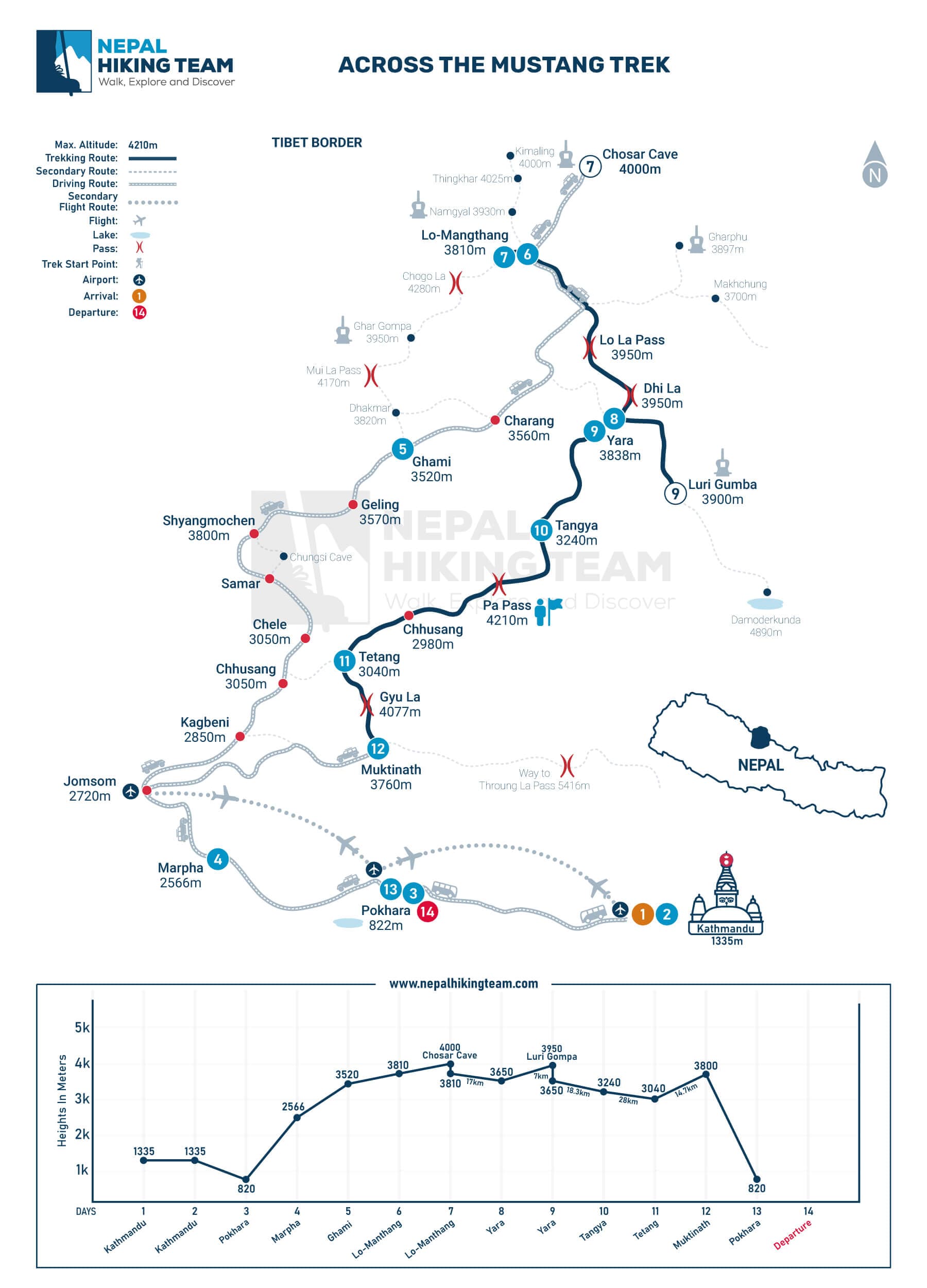
The key unique feature of this itinerary is the smart blend of driving and trekking. Nepal Hiking Team designed this route to maximize your time in scenic, natural areas while minimizing exposure to busy, dusty roads. Instead of trekking on long, monotonous stretches of road, you will use private vehicles to reach key points like Ghami and Lo-Manthang, then switch to trekking on isolated trails where roads end, such as the route from Lo-Manthang to Yara, Luri Gompa, and Muktinath. This strategy makes the journey less strenuous and more enjoyable, allowing you to focus on the dramatic landscapes and ancient culture.
By utilizing drives on days 4, 5, and 6 to reach Ghami and Lo-Manthang, the itinerary saves you days of walking along roads that can be dusty and less scenic. This conserved energy is then used for the most rewarding trekking sections: the 5-day trek from Lo-Manthang to Yara, Luri Gompa, Tangya, Tetang, and finally to the sacred site of Muktinath. This approach allows you to explore deeper into remote areas like the Luri Gompa cliff and the rugged Paha pass without being exhausted by previous long road walks, offering a unique and seldom-used route.
Yes, absolutely. This itinerary is ideal for those who want to engage deeply with the environment of Upper Mustang but are looking to reduce the physical strain of long-distance walking on rough, and sometimes road-like, terrain. The driving segments efficiently cover distances, allowing you to focus your walking efforts on the most pristine and culturally significant parts of the trek, like the remote villages of Yara and Tangya and the climb to the 4,210-meter Paha pass. It offers a more accessible way to experience the hidden kingdom of Lo-Manthang and its surroundings.
All ground transportation is provided by private vehicle as per the itinerary. This includes airport transfers, the scenic 7-8 hour drive from Kathmandu to Pokhara, and all subsequent drives to Marpha, Ghami, and Lo-Manthang. The final drive from Muktinath back to Pokhara is also in a private vehicle. These drives offer breathtaking views of the Annapurna and Dhaulagiri ranges but can be adventurous as the roads are often unpaved, especially in the Mustang region.
Yes, the package includes a one-way flight from Pokhara to Kathmandu as per the itinerary. This saves you a long return drive after your trek. The drive to Pokhara and the flight back provide a balanced mix of overland and air travel, giving you a different perspective of Nepal's varied topography. This flight is included in your cost, with all necessary arrangements made by Nepal Hiking Team.
The drives vary in length. The initial drive from Kathmandu to Pokhara takes about 7-8 hours, winding through scenic green hills and along the Trishuli River. Drives within Mustang are shorter but on rugged terrain: Marpha to Ghami is 5-6 hours, and Ghami to Lo-Manthang is another 5-6 hours. The final drive from Muktinath to Pokhara is a long 7-8 hour journey on adventurous off-road roads, described as "pretty safe." These drives are an integral part of the experience, offering stunning Himalayan vistas.
The trip is graded as "Moderate to Strenuous." While the initial part involves driving, the trekking section from Day 8 to Day 12 includes long hiking days. The terrain is rugged, with steep ascents and descents through a barren, desert-like landscape. You will be hiking for 5 to 8 hours per day. The most challenging day is Day 11, a 28-kilometer trek to Tetang, which includes an ascent to the highest point of the trek at Paha (4,210 meters / 13,812 ft) with no water sources except at Paha. Prior trekking experience and good physical fitness are highly recommended.
This trek is suitable for adventurous trekkers with a good level of physical stamina. It's ideal for those interested in Tibetan Buddhist culture, remote landscapes, and ancient history. While the itinerary includes driving to reduce some walking, the trekking days are long and demanding. It is not recommended for beginners or those with mobility issues. The guide will ensure the pace is comfortable, but participants should be prepared for challenging days, particularly the trek to Luri Gompa and the long day to Tetang.
The highest altitude reached is 4,210 meters at Paha, with a maximum trekking elevation of 3,950 meters at Luri Gompa. While this altitude does not typically cause severe AMS for most people, it is still possible. The itinerary is designed with gradual ascents and includes nights at lower altitudes after peaks (e.g., Tetang at 3,040m after Paha). A full rest day with an excursion in Lo-Manthang (Day 7) also aids in acclimatization. Your guide will monitor your health and carry a comprehensive medical kit. They recommend proper hydration and listening to your body.
Your safety is a priority. Nepal Hiking Team provides an experienced, English-speaking guide who is trained in first aid and altitude sickness awareness. They carry a comprehensive medical kit. The itinerary includes a rest and exploration day in Lo-Manthang to aid acclimatization. The company also ensures that porters are well-treated with insurance, equipment, and fair wages, which contributes to a safer, more reliable support system. Communication is maintained throughout, and the team is prepared to handle emergencies.
You will be accompanied by an experienced, English-speaking trekking guide throughout the journey. They handle navigation, logistics, and provide deep cultural and historical insights into the Mustang region. A porter is provided for every two trekkers to carry your main luggage (up to a reasonable weight limit). This allows you to trek with just a daypack, making the long days more manageable. The guide's expertise is particularly valuable in remote areas and on challenging days like the trek to Paha Pass.
Yes, travel insurance is mandatory and is listed in the cost excludes. Your insurance must cover emergency evacuation, medical expenses, trip cancellation, and lost baggage. Given the remote nature of Upper Mustang and the trek's altitude, high-altitude rescue and helicopter evacuation coverage is essential. Please ensure your policy specifically covers trekking at altitudes up to at least 5,000 meters, as the itinerary includes a point at 4,210m and travel through a restricted area.
Nepal Hiking Team provides a down jacket, a four-season sleeping bag, and a durable duffel bag for your trek. The down jacket and sleeping bag are high-quality, warm items designed for the cold nights in the Mustang desert. These are to be returned after the trip. They also provide a trekking map. You are responsible for your personal trekking equipment, such as boots, clothing layers, and other essentials.
Given the dry, barren landscape and variable temperatures, pack layers. Essentials include sturdy, broken-in trekking boots, moisture-wicking base layers, insulating mid-layers (fleece), a waterproof/windproof outer shell, warm hat, gloves, sunglasses, and a sun hat. The region can be windy and cold, especially at night and at higher elevations like Luri Gompa and Paha. Don't forget a water bottle, high-SPF sunscreen, lip balm, and personal toiletries. A headlamp with extra batteries is also very useful.
For days like the 28-kilometer trek to Tetang, which involves a steep climb to Paha and no water sources, you'll need a sturdy daypack to carry your personal items. It's crucial to pack high-energy snacks (nuts, chocolate, energy bars), a reusable water bottle or hydration system (water purification tablets or a filter are advisable as you can refill from taps), and your camera. Trekking poles are highly recommended for the rugged, steep terrain to reduce strain on your knees.
Accommodation is a mix of city hotels and mountain lodges. In Kathmandu and Pokhara, you will stay in 3-star category hotels with breakfast included. During the trek, the package includes "best available twin-sharing lodge-to-lodge accommodation." This means you'll stay in local teahouses or lodges, which are basic but comfortable, offering a warm place to rest. These lodges provide the opportunity to experience local hospitality.
Basic amenities are available, but at an extra cost. Hot showers are not included in the trek price and are available for a fee at most lodges. Wi-Fi is often available in villages like Marpha, Ghami, Lo-Manthang, and Muktinath, but connectivity can be unreliable, especially in more remote areas like Yara and Tangya. It's best to be prepared for limited connectivity and treat the trek as a digital detox. Electricity for charging devices is usually available for a small fee.
Staying in the lodges of Upper Mustang is a cultural experience in itself. In villages like Ghami, you'll see white-washed houses with intricate carvings and ancient water-driven prayer wheels. In Lo-Manthang, the walled city feels like stepping back in time. The lodges are basic but provide warm meals and a place to rest. The hospitality of the Lo-Pa people, with their Tibetan-influenced culture, is a memorable highlight of the trek.
The package includes full board meals (breakfast, lunch, and dinner) with tea or coffee during the trek. You can expect hearty, energy-rich meals suitable for trekking, such as dal bhat (lentil soup with rice, a staple), noodles, pasta, potatoes, and Tibetan bread. In the city, only breakfast is included at the hotels; lunches and dinners in Kathmandu and Pokhara are at your own expense, allowing you to explore the local cuisine.
One of the unique culinary highlights is in Marpha, a village famous for its apples and apple products. You can enjoy local apples, apple wine, apple snacks, and even apple brandy. This is a delightful treat after the drive. Throughout the trek, you'll also find typical Nepali and Tibetan dishes. Your guide can help you order and ensure your food is prepared safely.
Staying hydrated is crucial, especially in the dry climate of Mustang. Bottled water is available but contributes to plastic waste. A more sustainable and cost-effective option is to bring a reusable water bottle and use water purification tablets, a filter, or a UV pen. The package includes tea/coffee with meals, but you'll need to arrange for your drinking water. Your guide can advise on safe water sources at lodges. The package does not cover the cost of cold drinks or bottled water.
Yes, Nepal Hiking Team can design individualized travel plans. The scheduled departures are for group joining, but if those dates don't work or you prefer a private experience, you can contact them to create a custom itinerary tailored to your preferences, timeline, and group size. This is a great option for families, friends, or solo trekkers who want a more personalized pace and attention.
A private trek offers flexibility in pace, departure dates, and the ability to customize the itinerary. You have the undivided attention of your guide and can adjust the schedule based on your interests or energy levels. A group trek is more economical and offers the chance to meet fellow travelers. Both options come with the full support of the Nepal Hiking Team's logistics, experienced guides, and porters. The "group size min. 2 pax" indicates that even the group option offers a small-group, intimate experience.
Tipping is not included in the package cost and is a way to show appreciation for the hard work of your guide and porter. It is customary in Nepal. The amount is at your discretion and often based on the level of service, trip length, and group size. A general guideline is to budget around 10-15% of the total trip cost for tips, to be distributed between the guide and porter according to their roles. Your guide can provide guidance on fair practices.